Cart
0
There's a Danish teak credenza out there with your name on it — you just haven't found it yet.
Furnishing a vintage living room is one of the most rewarding design projects you can take on. Done right, it costs a fraction of buying new, produces zero furniture-factory waste, and ends with a room that looks like it was curated over decades — because, in a way, it was. Every piece carries a story, a patina, a little mystery about the hands it passed through before landing in yours.
The challenge? Knowing where to start. Walk into a thrift store without a plan and it's easy to feel overwhelmed, or to come home with a pile of mismatched pieces that don't quite work together. Walk in with a strategy, and the hunt becomes genuinely thrilling.
This guide walks you through exactly that strategy — from defining your vision to tracking down the right vintage living room furniture in Montreal, step by step. Whether you're starting from scratch in a Plateau apartment or adding vintage character to a furnished space, consider this your roadmap.
Step 1: Define Your Era and Vibe
Before you buy a single thing, spend fifteen minutes on inspiration. You don't need a degree in design history — you just need to know what era or feeling draws you in.
Are you drawn to the warm, earthy tones and curved silhouettes of the 1970s? The clean lines and honest materials of 1950s–60s Scandinavian and mid-century modern? The eclectic charm of "collected over time" — a mix of decades that feels like a well-lived-in home rather than a showroom?
Pick your anchor era. It doesn't mean every piece has to be from that decade, but it gives your eye a filter when you're browsing. A mid-century modern room wants tapered legs, walnut tones, and low profiles. A 70s-inspired room wants warm amber, ceramic lamps, and a touch of macramé. Knowing the difference helps you walk past what doesn't fit and zero in on what does.
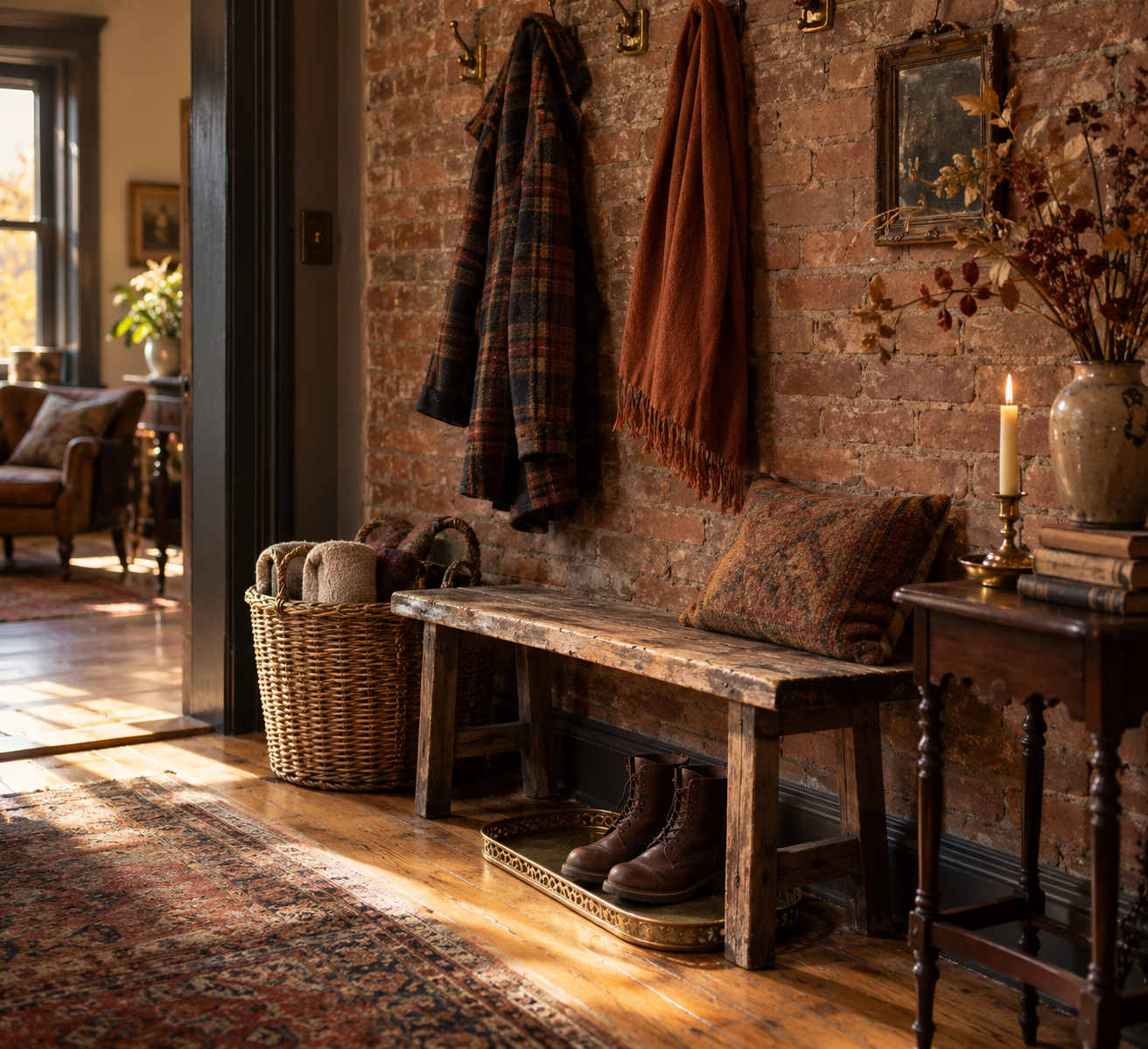
Practical tip: Save 5–10 images to your phone before you start shopping. Montréal apartments — with their original hardwood floors, high ceilings, and brick walls — pair beautifully with almost any vintage era. Let the bones of your space guide you.
Step 2: Start With the Big Three — Sofa, Sideboard, and a Statement Chair
Every great vintage living room is built around anchor pieces. Accessories come later. Start with these three, and everything else follows naturally.
The Sofa
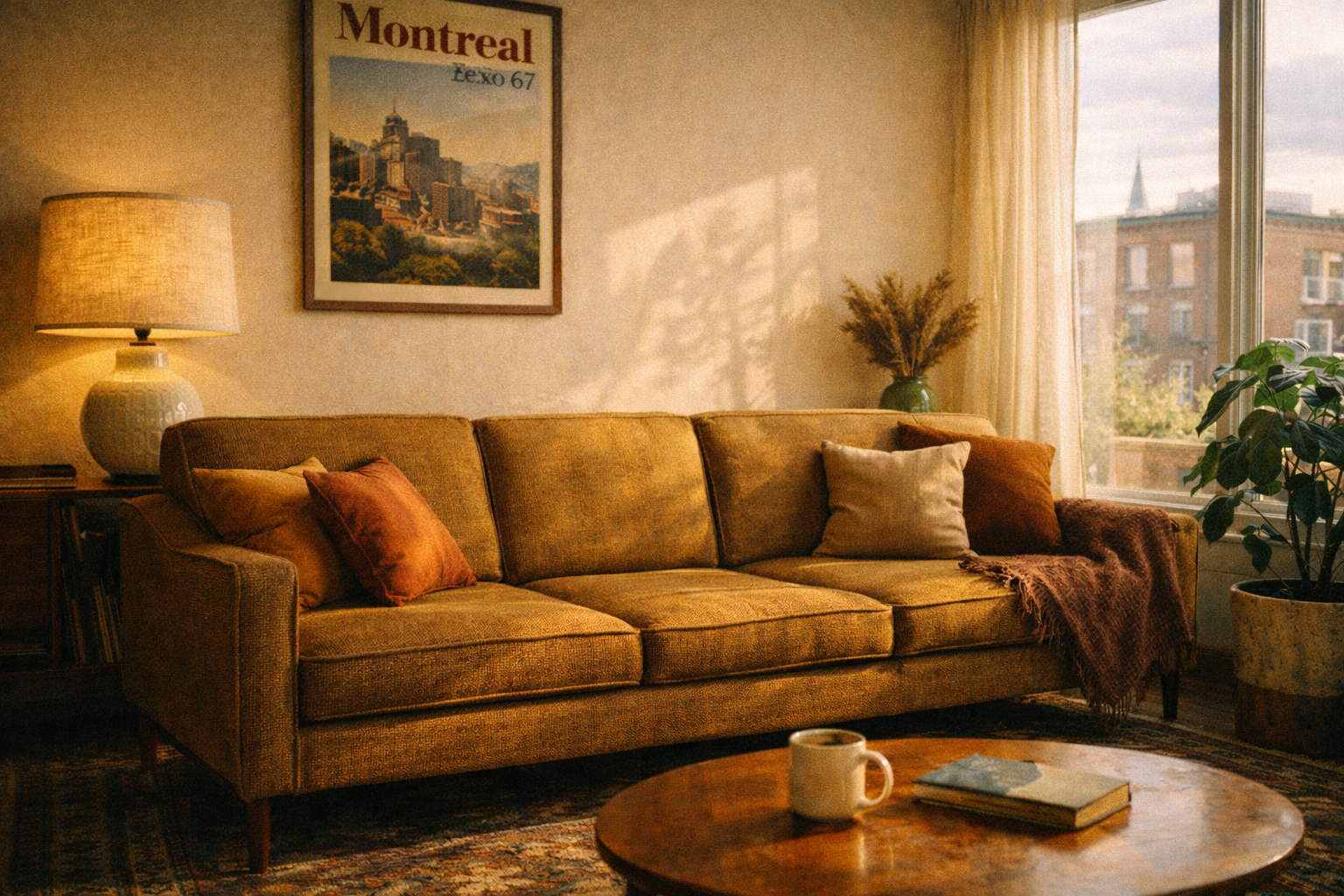
A vintage sofa is your biggest investment — in space, budget, and visual weight. When you find one at a thrift store or depot, focus on the frame first. Sit in it. Does it creak? Does the cushion sink straight to the floor? A solid hardwood frame with good springs can be reupholstered for under $100 in new fabric and give you decades more life. The original upholstery matters less than the bones.
For smaller Plateau walk-ups or Mile End lofts, scale is everything. Look for apartment-sized pieces — a three-seater that doesn't eat the whole room. Mid-century sofas tend to run lower and leaner, which opens up a space beautifully.
The Sideboard or Credenza
This is the workhorse of the vintage living room — storage and style in a single piece. A teak or walnut credenza from the 60s or 70s does everything: it anchors a wall, displays objects beautifully on top, and hides all the things you don't want to look at inside. It's also one of the most common finds at Montreal second-hand furniture shops, which means prices tend to be very accessible.
The Statement Chair
This is the personality piece — the one that makes guests ask "where did you find that?" A mid-century armchair with tapered legs, a sculptural rocking chair, a deep wingback in a bold velvet. It doesn't need to match the sofa. In fact, it often looks better when it doesn't.
Ready to start the hunt? Browse our latest vintage furniture arrivals at EcoDepot Montreal — new pieces come in every week.
Step 3: Layer In the Lighting
Lighting is the fastest way to change the mood of a room — and vintage lighting is where the real magic happens. A single well-placed lamp transforms a generic space into something with genuine warmth and character.
When you're browsing second-hand, look for brass, ceramic, or wooden bases. Fabric shades in warm tones. Floor lamps with an arc or a tripod base. The era doesn't matter as much as the quality of light it throws — always warm, never harsh blue-white.
The warm bulb rule: swap any bulb for a 2700K warm white LED. It's the single cheapest upgrade you can make to any vintage lamp, and it makes everything in the room look better.
Designer pieces turn up at thrift stores more often than you'd expect. Italian fixtures, Scandinavian ceramic lamps, mid-century American designs — they find their way to the floor alongside everyday pieces. This is why regular visits pay off. The inventory changes weekly, and the good finds don't wait.
Don't overlook table lamps. A $20 vintage ceramic lamp on a side table can anchor an entire corner of a room. Layer two or three light sources at different heights rather than relying on a single overhead fixture, and your vintage room will feel genuinely alive in the evening.
Step 4: Ground the Room With a Vintage Rug
A rug does something no other piece of furniture can: it visually ties the room together. It tells your eye where the seating area begins and ends. Without one, even a beautifully furnished space can feel like a collection of orphaned pieces.
For a vintage living room, Persian, Turkish, and woven styles work beautifully — and they're among the most satisfying second-hand finds because an aged rug with real patina looks exponentially better than a brand-new one. The worn-in quality is the whole point.
When buying a used rug, check for wear patterns (even fading is fine; uneven pile loss less so), and give it a good sniff — musty smells usually air out, but some don't. Size matters more than most people think: too small breaks the room. The front legs of your sofa and chairs should sit on the rug, minimum.
A mismatched, slightly threadbare vintage rug under a teak coffee table and a mid-century sofa? That's not a compromise — that's exactly the look.
Step 5: Add Character With Accessories — Without Overdoing It
This is where vintage rooms either sing or become cluttered. The risk is real: once you start finding beautiful old things, it's easy to end up with too many of them competing for attention.
The "edit as you go" rule saves you here. Bring a piece home, live with it for a week, then decide if it belongs. Your eye adjusts. Sometimes that vintage clock that seemed perfect in the store just doesn't work with what you already have — and that's useful information.
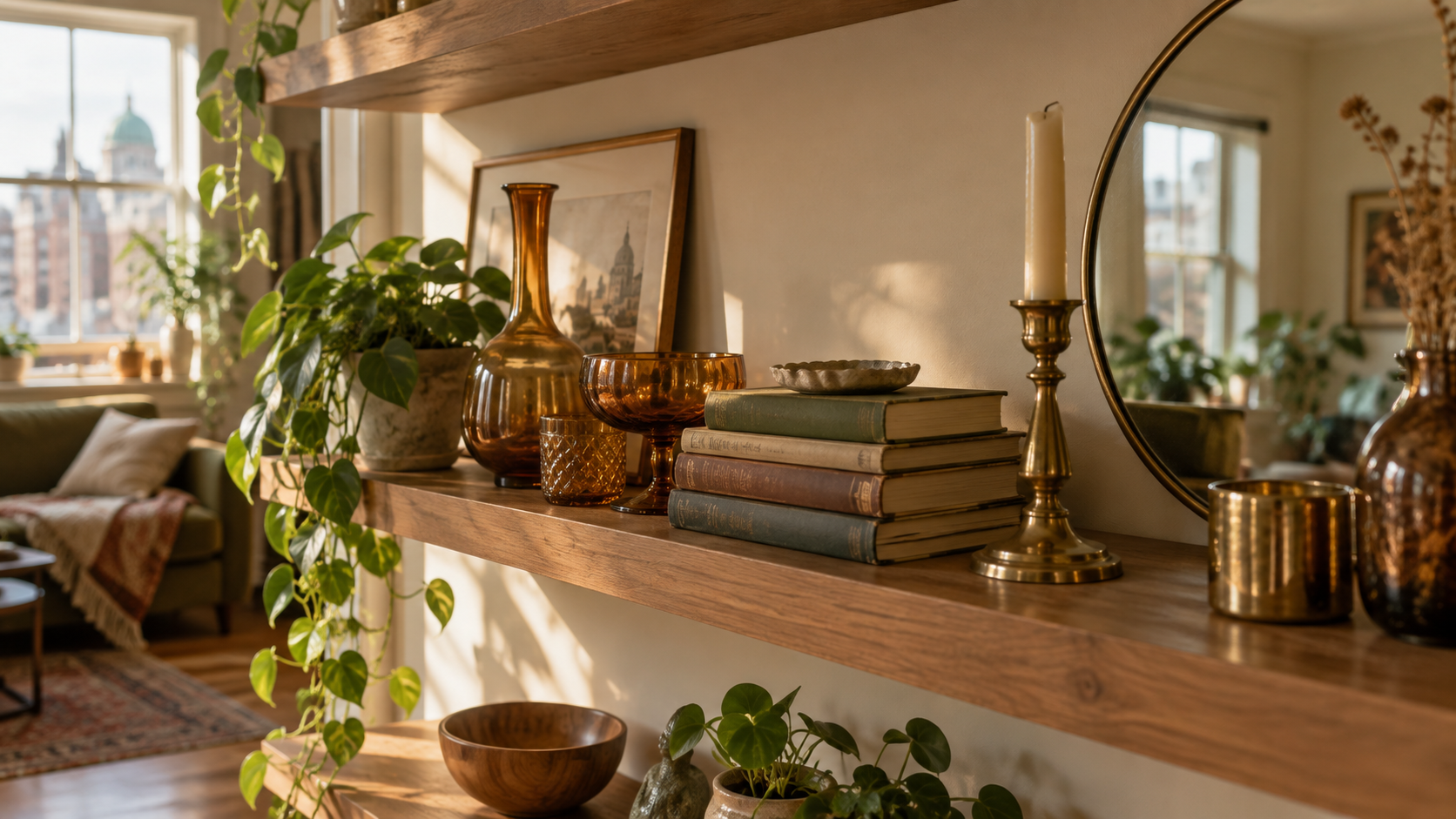
What adds character without chaos: a gallery wall of mismatched vintage frames (black-and-white photos, botanical prints, old maps), a ceramic vase or two, a stack of old books used as a riser, a vintage record player that actually gets used. These are the pieces that make a room feel lived-in rather than styled.
A useful mixing guide: roughly 70% vintage, 30% new or neutral. Keep some surfaces clean. Let your anchor pieces breathe. One great vintage lamp does more than five mediocre accessories.
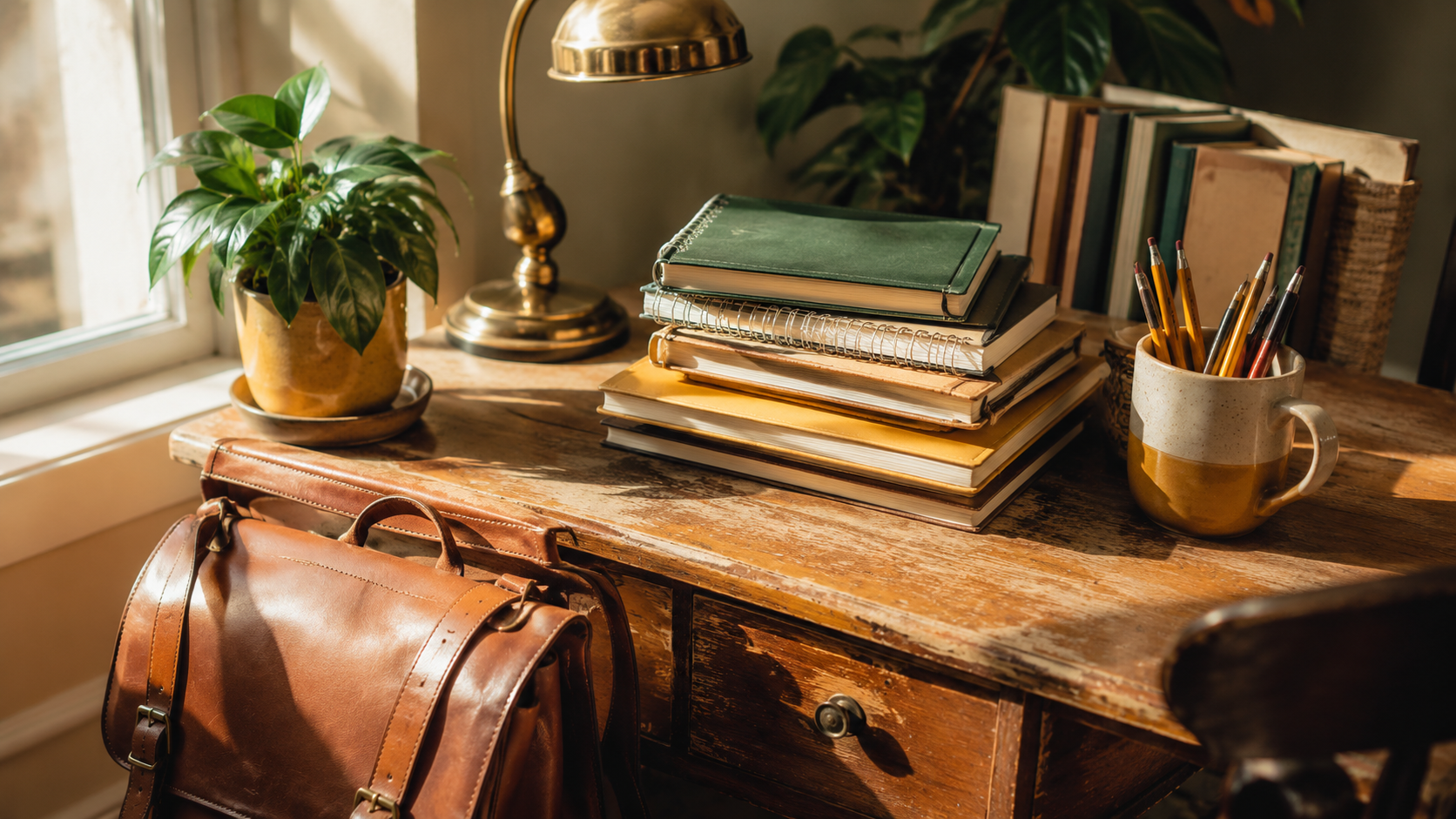
Some of the most effective character pieces are also the smallest — a vintage suitcase stacked as a side table, a ceramic tray corralling objects on a coffee table, a single sculptural piece on the credenza. These don't require a big budget or a lot of space. They just require a good eye, which is exactly what develops when you shop second-hand regularly.
Step 6: Shop Smart — The Second-Hand Advantage in Montreal
Montreal is genuinely one of the better cities in North America for hunting vintage living room furniture. The density of apartments, the constant turnover from students and young professionals, and the city's deep appreciation for design and aesthetic mean quality pieces circulate regularly through the second-hand market.
How to Shop Thrift Stores Effectively
• Visit often. Weekly arrivals mean the inventory is completely different from one visit to the next. A piece that wasn't there Thursday may be gone by Saturday.
• Go with a direction, not a rigid list. Know your anchor era. Know your approximate budget. Stay open to what surprises you.
• Check the bones on upholstered pieces: press the frame through the cushion, check corners for wobble, sit in it. A solid frame is worth almost any fabric.
• For wood furniture, look for solid wood vs. veneer. Solid wood can be refinished almost indefinitely. Veneer requires more care but can still be beautiful when well-maintained.
The financial case is straightforward: furnishing a complete vintage living room second-hand in Montreal typically costs 20–40% of what equivalent new pieces would run — and the pieces you find are genuinely unique, not reproductions.
Bonus: Quick Fixes That Make Any Vintage Room Look Intentional
A few finishing touches that make the difference between "thrifted" and "curated":
• Mix wood tones deliberately. Don't try to match everything — the variation between a walnut credenza and a lighter oak side table is what gives the room depth.
• Keep one wall relatively clear. Let your anchor pieces breathe. A crowded wall competes with great furniture; a clear wall showcases it.
• Warm paint tones amplify vintage pieces. A terracotta, warm white, or deep green wall makes teak and brass pop in a way that cool greys never will.
• Plants in vintage ceramic pots. Instant life, minimal investment. A trailing pothos in a 70s planter costs almost nothing and completes a room.
• Let the room evolve. The best vintage rooms are never "done." They grow as you find new pieces and retire old ones. That's what makes them feel real.
Your Vintage Living Room Starts With One Good Find
Here's the thing about furnishing a vintage living room: you don't need to get it all at once. Start with your anchor era. Find the Big Three. Layer in lighting, ground it with a rug, edit your accessories, and let the room grow over time. The pieces you find this month will be different from the ones you discover next season — and that's exactly what makes the room yours.
Every piece of second-hand furniture you bring home is a sustainability win, a budget win, and a story worth telling. The credenza that survived three families before yours. The ceramic lamp that travelled from someone's Mile End apartment to your shelf. The Danish armchair that's been waiting for exactly the right corner.
That's the vintage living room difference — and it's available at a fraction of what new furniture costs.
Ready to start the hunt? Visit EcoDepot Montreal. New vintage living room furniture arrives every week — and you never know when the piece you've been looking for is already on the floor, just waiting for you to find it.