Cart
0
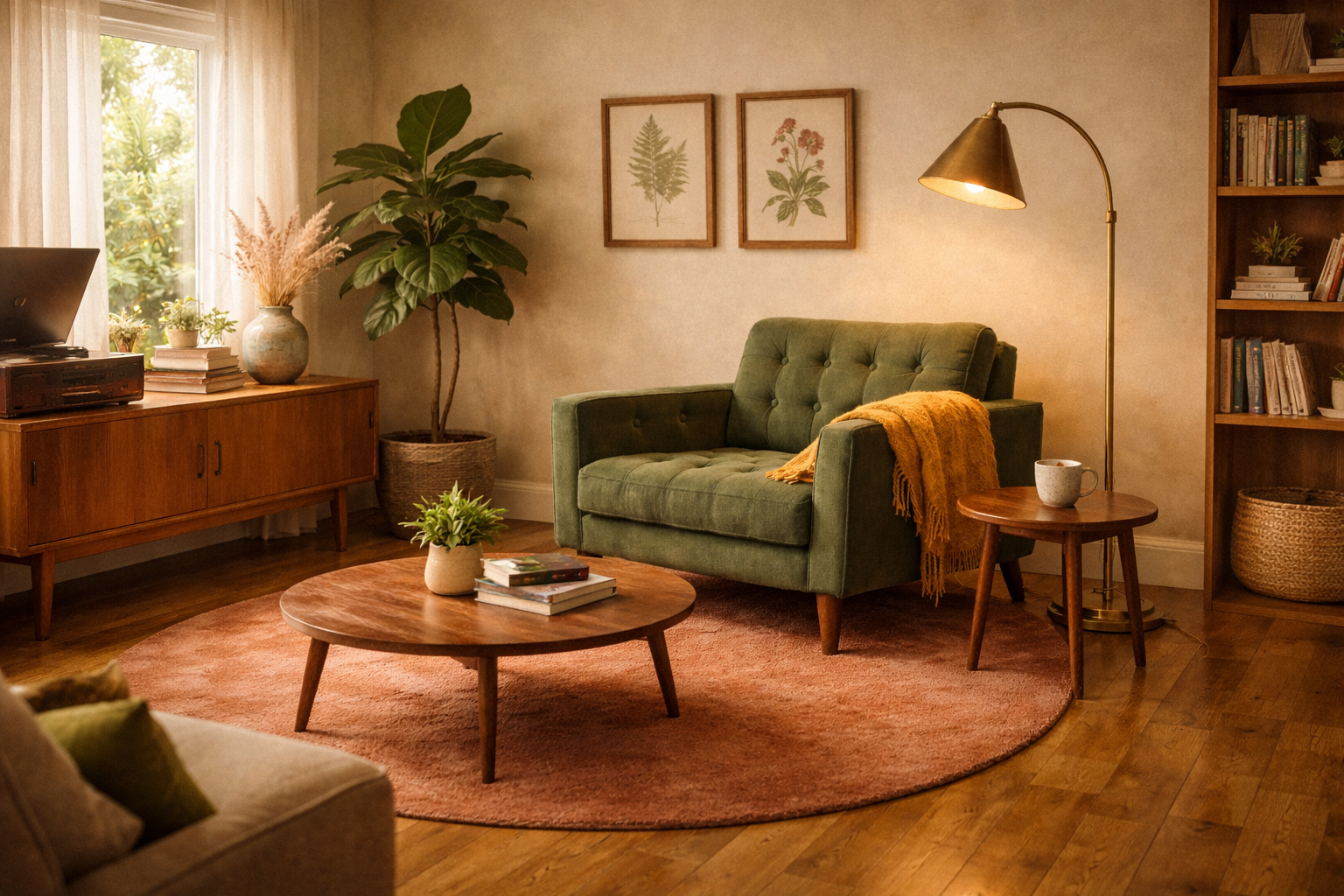
A perfectly sturdy mid-century credenza, hauled to the curb after barely five years because the owners wanted something newer. That's not an unusual story — it's become the norm. The average piece of fast furniture has a lifespan of just five years before it ends up in a landfill, taking the resources, energy, and emissions that went into making it along for the ride.
Here's what makes this interesting: the most sustainable choice and the most stylish choice are often exactly the same thing. Buying used — whether it's furniture, clothing, electronics, or everyday objects — skips the environmental cost of new production almost entirely. And in a city like Montreal, where second-hand culture runs deep and places like Éco-Dépôt are redefining what thrift shopping looks like, making the switch has never been easier or more exciting.
In this article, we break down the real environmental impact of buying used vs. new — not with guilt, but with genuine curiosity. By the end, you'll have a clear picture of what your choices save (in carbon, waste, and resources) and a fresh perspective on why the second-hand hunt is worth it.
What Does "Environmental Impact" Actually Mean?
Before diving into the numbers, it helps to know what we're actually measuring. "Environmental impact" isn't one single thing — it's a bundle of interconnected costs that occur at every stage of a product's life.
Think of it like a relay race. When a brand-new product is made, it runs the full four legs: raw material extraction (logging, mining, farming), manufacturing (energy, water, chemicals), transportation (shipping from factory to store to your door), and eventually, disposal (landfill or incineration). Every one of those legs burns resources and releases emissions.
When you buy used, you skip the first three legs entirely. The item already exists. No new trees cut down, no factory running overnight, no ship crossing an ocean. You step in at the finish line — and give it another full lap.
The key environmental costs we'll look at: carbon emissions, resource extraction (wood, water, minerals), landfill waste, and the chemical footprint of manufacturing. Each one tells a part of the story.
The Hidden Cost of Buying New
The price tag on a new piece of furniture doesn't tell you the full story. Here's what it doesn't show you.
Fast furniture: built to be replaced
Mass-produced furniture — the kind filling big-box retailers and online marketplaces — is manufactured rapidly from low-quality materials like particle board and laminate. It's designed to be affordable upfront, which means it's also designed to fail. When it does, it doesn't get repaired. It gets tossed.
The scale of this is significant. According to the U.S. Environmental Protection Agency, furniture accounted for 4.1% of landfill waste in 2018 — equivalent to 12.1 million metric tons — a figure that has doubled since 1960. And that number keeps climbing as furniture lifespans shrink.
Manufacturing emissions and chemicals
New furniture production is energy-intensive from start to finish: cutting, pressing, coating, assembling, and shipping. Many fast furniture materials also contain VOCs (volatile organic compounds) and formaldehyde — chemicals used in adhesives and finishes that off-gas into your home and contribute to air pollution during manufacturing. The transportation footprint adds another layer: most mass-produced furniture travels enormous distances before it reaches a Canadian retailer.
Fast fashion tells a similar story. Garments are worn fewer times than ever, then discarded. Textile production is water-intensive, chemically polluting, and one of the world's most carbon-heavy industries. Buying a second-hand jacket sidesteps all of it.
What Buying Used Actually Saves
Here's the flip side — and it's a good one. When you buy used, the environmental benefits are immediate and concrete.
Carbon footprint: mostly zeroed out
Buying a second-hand item skips manufacturing and long-distance shipping entirely. If you're also buying locally — say, picking up a find from EcoDepot's Lachine store or our Plateau location — you're compounding that benefit. No factory, no container ship, no warehouse-to-store freight leg. The item's carbon story is already written; you're just adding a new chapter.
Landfill diversion: one less item in the pile
Every pre-loved piece that finds a new home is one less item headed to a landfill. Given that furniture and clothing are among the biggest contributors to waste streams, this matters. A credenza that goes from one Plateau apartment to another never touches a dump truck. A vintage coat that finds a new owner doesn't become microplastics.
Resource conservation: no new trees, no new cotton
Buying used means no new raw materials enter the system. No trees felled, no cotton grown with intensive pesticide use, no plastics moulded from petroleum. The item you're buying already represents that investment — buying new would mean making it all over again.
The durability advantage: a quality signal built in
Here's the part that surprises people: vintage and antique pieces — especially furniture — are often more durable than their modern counterparts. Many were made from old-growth wood, with joinery and construction techniques that fast furniture simply doesn't use. A chair from the 1960s that's still standing is already passing a test that most new furniture never will.
Buying used doesn't mean settling. It means choosing something that already proved it can last — and giving it the chance to keep going.
Beyond Furniture: The Environmental Impact Across Categories
The environmental case for buying used doesn't stop at sofas. It applies across almost every product category — some more dramatically than others.
Clothing
Fashion is one of the world's most polluting industries, responsible for significant water use, chemical runoff, and carbon emissions across its supply chain. A pre-loved jacket, vintage dress, or second-hand pair of boots at EcoDepot bypasses all of that manufacturing and shipping entirely. And the style? Often better than what's on the rack at a fast-fashion chain this season.
Electronics
Manufacturing a new smartphone or laptop is resource-intensive in a very specific way: it requires rare earth minerals, significant water use, and complex global supply chains. Buying a refurbished or second-hand device extends its lifecycle and delays the production of a new one. The longer a device is in use, the better its environmental math looks.
Books, records, games, and more
Even the smaller categories add up. A used book means no new printing. A vinyl record from EcoDepot's collection means no new plastics. A second-hand board game means no new cardboard, no new plastic pieces, no new packaging. These feel like small choices — and they are — but they're also the ones that add up across a community.
Buying New vs. Used: A Practical Comparison
It's worth being honest about this: buying used isn't always the right call for every single item. Some things are genuinely better purchased new — mattresses (for hygiene reasons), safety equipment, certain personal care items, and baby gear where safety standards have changed. For those, new is the right choice.
But for the vast majority of household items? The environmental impact of buying used is dramatically better than buying new across every metric that matters.
On carbon footprint, buying used nearly eliminates production and shipping emissions — the two largest contributors for most goods. On resource use, no new raw materials enter the system. On durability, older pieces — especially furniture — were often built to last decades, not years. On cost, second-hand prices are a fraction of retail. And on uniqueness, there's no mass-produced equivalent to a one-of-a-kind trouvaille from your neighbourhood thrift store.
The one area where new sometimes wins: cutting-edge energy efficiency (think appliances or electronics where newer models use significantly less power). It's worth factoring in total lifecycle impact, not just the purchase. But even there, the gap is often smaller than you'd expect.
How to Make Buying Used Feel Easy (Not Like a Compromise)
The biggest barrier to buying used isn't conviction — most people are already on board. It's knowing where to start and what to look for. Here's how to make the shift feel natural rather than effortful.
Start with one category
Don't try to overhaul everything at once. Pick the category you care about most — furniture, clothing, books, kitchenware — and begin there. One category done well beats five categories done halfheartedly.
Know what to look for
For furniture, prioritize structural integrity over cosmetics. A scratch on a surface can be refinished. Wobbly joints, warped frames, or broken mechanisms are harder to fix. Look at how something is made — solid wood, mortise-and-tenon joinery, and dove-tail drawers are signs of quality that lasts. Cosmetic issues are almost always fixable. Structural ones are not.
Embrace the cadence of new arrivals
One of the best things about shopping at EcoDepot is that the inventory genuinely changes every week. That means each visit is genuinely different from the last — the thrill of discovery is real, not manufactured.
The Bottom Line: Every Second Act Counts
Remember that mid-century credenza, hauled to the curb after five years? Now imagine it instead going to an Éco-Dépôt, cleaned up, and finding its way to a Mile End loft where it becomes the centrepiece of someone's living room for another forty years. That's not an unusual outcome when buying used becomes the norm. It's a compounding return — on sustainability, on affordability, and on the sheer satisfaction of owning something with a story.
The environmental impact of buying used is real, measurable, and meaningful. It's also one of the most accessible choices you can make — no major lifestyle overhaul required, no premium to pay. Just a different starting point for your next purchase.
If you're ready to see what that looks like in person, come find us. Between our Lachine and Plateau locations, new treasures arrive every week — each one a second act worth discovering. Browse our current collections at ecodepotmontreal.ca or come in and see what's waiting for you.