Chariot
0
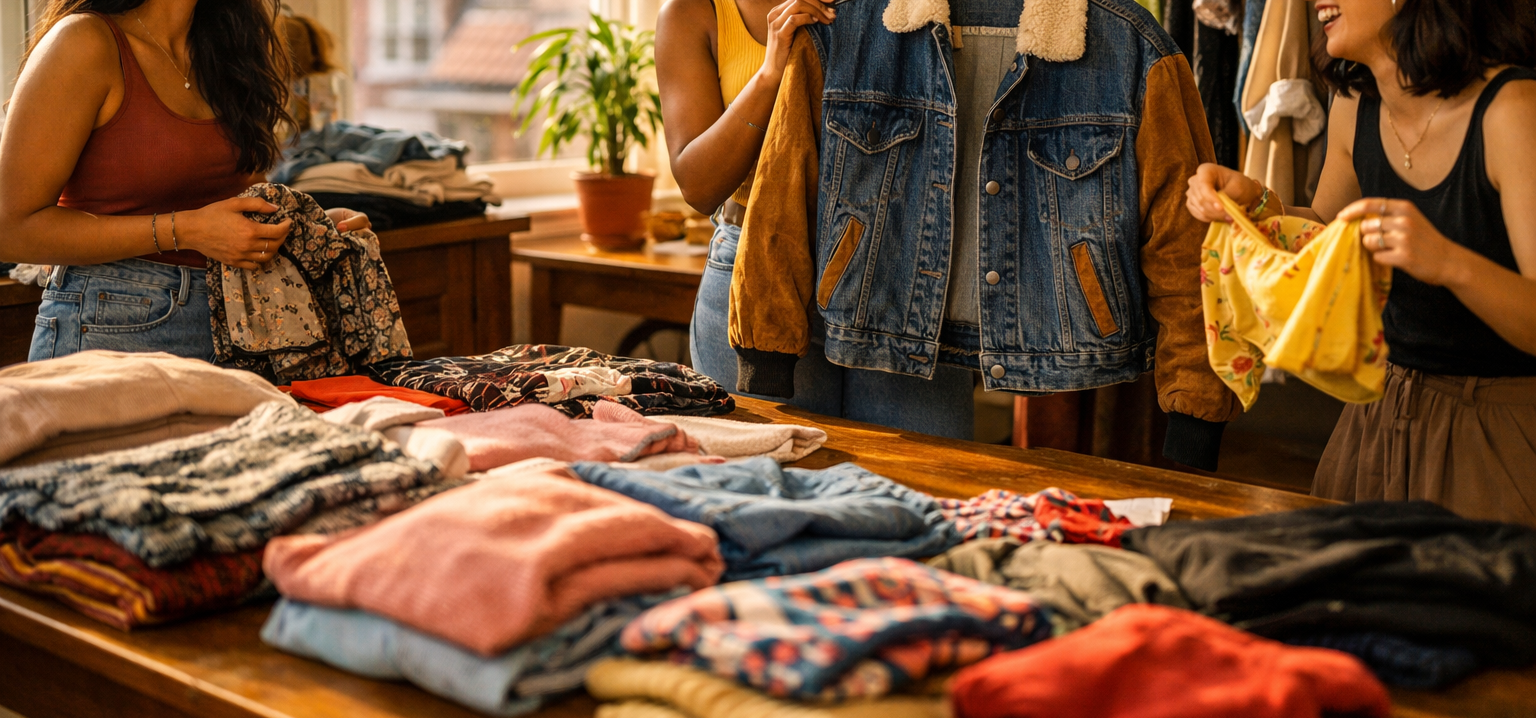
Picture this: your living room, a rail of pre-loved jackets and vintage blouses, a playlist going, and your friends losing their minds over the finds they're uncovering. Someone's holding up a perfectly-worn denim jacket like it's a trophy. Someone else is already wearing a scarf they just claimed. This is a clothing swap — and if you haven't hosted one yet, your next favourite outfit is already waiting in a friend's closet.
This guide will walk you through everything you need to pull off a swap that's organized, genuinely fun, and leaves your closet refreshed — plus what to do with every piece that doesn't find a new home.
Why a Clothing Swap Is the Best Party You'll Throw This Season
Before we get into the how, let's talk about the why — because a clothing swap isn't just a fun afternoon. It's one of the most impactful (and painless) sustainable choices you can make.
The apparel industry is responsible for 4% of global greenhouse gas emissions — roughly equivalent to the combined output of Germany, France, and the UK. Most of that comes from producing clothes that end up worn only a handful of times before heading to a landfill. A clothing swap short-circuits that whole cycle by keeping clothes in circulation and out of the trash.
But here's the thing: it also costs nothing. You're not buying, you're trading. The result is a wardrobe refresh that's both free and genuinely good for the planet — the rare win-win that actually delivers.
In Montreal, this kind of circular thinking fits naturally into how the city already lives. Plateau walk-ups, Mile End lofts, Verdun rowhouses — these are spaces where community is built, where someone's castoff becomes someone else's trouvaille. A clothing swap is just that spirit, made official.
Step 1 — Set the Scene: Choose Your Format
The first decision is scale. A clothing swap can be as intimate as four friends who share a similar style and size, or as lively as a neighbourhood gathering with fifteen people and a full clothing rack. Both work beautifully — they just need slightly different approaches.
The intimate swap (4–8 people): This is the easiest to organize and the most personal. Everyone brings a set number of pieces, you spread everything out, and you browse together. The conversation flows naturally because you know whose style is whose, and you can recommend things to each other in real time.
The bigger swap (10–20 people): More variety, more finds, more energy. This format benefits from a bit more structure — think organized stations by category, a simple ticket system, and a clear set of rules communicated upfront.
Themed swaps add a layer of fun that gets people more intentional about what they bring:
-
Seasonal transition swap: Perfect for late spring or early fall — exactly when Montrealers are cycling through their wardrobes anyway
-
Decade theme: 70s, 80s, 90s — people dig deep and the finds get interesting
-
Workwear swap: Great for professional networks or colleagues
-
Vintage-only swap: For the true treasure hunters
Pick the format that fits your space and your crowd, and build from there.
Step 2 — Spread the Word and Set the Rules
The invite is where you set expectations — and where you make or break the energy of the event. A well-communicated invite means everyone arrives with the right stuff, in the right quantity, and ready to have fun.
What to include in your invite:
-
Quantity: Ask everyone to bring 5–10 items. This keeps the swap balanced — no one's shopping primarily from one person's enormous pile while someone else brought three things.
-
Condition: Items should be clean and wearable. They don't have to be pristine, but they should be pieces you'd genuinely recommend to a friend.
-
Categories: Decide in advance whether you're including shoes (sizing gets complicated, but it can work), accessories, and bags — or keeping it strictly clothing.
-
What to skip: Underwear, anything with major damage or staining, and items that haven't been washed.
A nice touch: encourage guests to include a small tag or note on any piece with a story — "vintage 80s leather belt, adjustable," or "this blazer is amazing for the office but runs small." It adds personality and helps people make faster decisions.
Send invites at least a week out, and use whatever platform your group actually checks — a WhatsApp message, an iMessage thread, or a simple event invite all work perfectly.
Step 3 — Set Up Your Space Like a Mini Boutique
Here's where the magic happens — or doesn't. The single biggest difference between a chaotic pile of clothing and a genuinely enjoyable swap is organization. The more browse-able your setup, the more people find, and the more fun everyone has.
Sort by type, not by person. Organize everything into categories: tops, bottoms, dresses, outerwear, accessories. This way, someone who needs a jacket goes straight to the outerwear section rather than pawing through everything looking for one.
Use what you have. You don't need a boutique's worth of equipment:
-
A clothing rack or a sturdy curtain rod works for anything that hangs
-
Clean table surfaces for folded items
-
Chairs or the back of a sofa for outerwear
-
A small side table for accessories and bags
Create a try-on zone. Even a corner with a full-length mirror and a makeshift curtain (a bedsheet works) gives people the dignity of trying things on properly — and they're far more likely to take something if they can see how it fits.
Make it feel like an event. A good playlist, a small snack spread, wine or mocktails — these details transform "sorting through clothes" into an actual gathering. Think of it as hosting a dinner party that happens to have a clothing rack in the middle of it.
Step 4 — Run the Swap Smoothly
Once your guests arrive and the clothing is laid out, you have two main options for how the swap actually works:
The open browse: Everyone looks freely and takes what they love. First come, first served. Simple, casual, and perfect for smaller groups where everyone knows each other. The main rule: no stockpiling. Try things, put back what doesn't work, and be generous.
The ticket system: Each item you bring earns you one swap ticket. You spend tickets to take items. This works well for larger groups and keeps things fair — no one ends up empty-handed because they arrived a bit late. For higher-quality or harder-to-find pieces, you might make them worth two tickets.
A few things that help any format run well:
-
One item at a time for try-ons: This avoids the "I'm holding ten things while deciding" situation that leaves everyone waiting.
-
The "admire out loud" rule: Encourage people to hold things up and ask the group — "would this work on me?" It generates great conversation and helps people make decisions faster.
-
No pressure: Someone might bring eight things and leave with two. That's perfectly fine. The goal isn't balance per person, it's keeping everything in circulation.
Step 5 — What to Do with Leftover Pieces
Not everything will find a new home on swap day — and that's completely normal. The question is what happens next, because the worst outcome is those pieces going straight back into a neglected corner of someone's closet or, worse, into the trash.
Here are your best options:
Keep for a future swap. If you're planning to make this a recurring event (and you should — seasonal swaps are the sweet spot), set aside the unclaimed pieces for next time. A different mix of people might fall in love with exactly what was left behind.
Sell or rehome online. Facebook Marketplace, Vinted, or Kijiji are great for pieces that didn't find a match but are still genuinely good. Even a small return is better than waste.
Donate immediately — and close the loop. This is the option that transforms a fun afternoon into something truly circular. Drop unclaimed items at EcoDepot Montreal — at our Lachine location or on the Plateau — where they'll be carefully curated and given a real second act. Your pre-loved pieces could become someone else's trouvaille on their next visit.
There's something genuinely satisfying about knowing that nothing from your swap is going to waste. The jacket that didn't fit anyone in your friend group might be exactly what someone discovers at EcoDepot next week.
Tips to Make Your Swap Even Better
Once you've hosted one swap, you'll want to do it again. Here's how to level up:
Make it seasonal. Late spring, early fall, post-holidays, and back-to-school are the natural rhythm points where everyone's closet is in flux. Four swaps a year keeps things fresh without feeling like a chore.
Try a theme next time. Vintage-only, outerwear swap, accessories exchange, or a specific decade — themes make people more intentional about what they bring and create a more cohesive selection to browse.
Invite a mix of styles and sizes. The more variety in your guest list, the better the finds. A swap where everyone has the same taste and wears the same size is fun, but one with real range is electric.
Add a repair corner. If anyone in your group sews, a little mending station — buttons, hemming, minor repairs — can rescue pieces that might otherwise be left behind. It's a Montreal touch that fits the city's DIY spirit perfectly.
Go bilingual. Your swap will naturally reflect Montreal's bilingual reality, and that's a feature, not a complication. Embrace it. Clothing has a way of transcending language anyway.
Document the finds. A group photo or a few outfit shots from the day are worth keeping — and sharing on Instagram with your crowd is a natural invitation for others to want in on the next one.
Ready to Start Swapping?
A clothing swap is one of the most joyful, low-effort ways to live more sustainably — and once you've hosted one, you'll wonder why you didn't start sooner. You refresh your wardrobe for free, spend time with people you love, and keep clothes in circulation where they belong.
The formula is simple: a few friends, a few dozen items, a decent playlist, and a little organization. The rest takes care of itself.
And when the afternoon winds down and you're left with the pieces that didn't find a new home that day, bring them to us. EcoDepot Montreal — at our Lachine and Plateau locations — is where pre-loved pieces get a real second chance. Drop in any day of the week (we're open Monday through Sunday, 10 AM to 6 PM, with extended hours Thursday and Friday until 8 PM). New arrivals every week mean your donations could become someone else's best find.
Start the group chat. Pick a date. Your next favourite outfit is probably already in a friend's closet.