Chariot
0
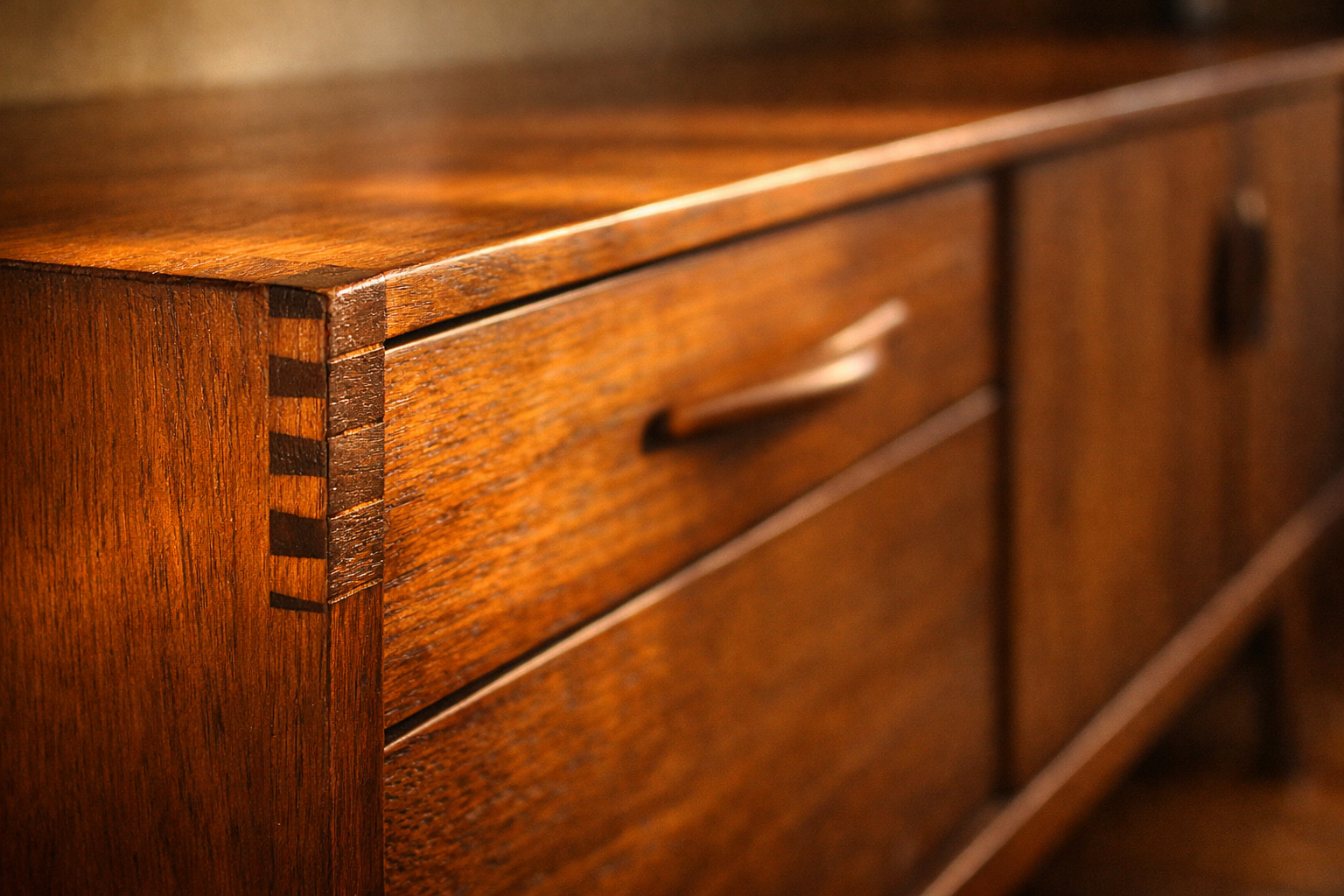
A flat-pack bookshelf, assembled on a Sunday afternoon with an Allen key and a lot of optimism, now wobbling in the corner three years later. Next to it, still sturdy and impossibly handsome, sits a solid oak sideboard from 1962 that someone dragged out of a Plateau triplex. One tells the story of how things are made today. The other tells the story of how things used to be made.
That gap — between objects built to survive a decade and objects built to outlast a lifetime — isn't an accident. It's the result of a fundamental shift in how and why things are manufactured. And understanding it changes everything about how you shop, what you keep, and what you look for on your next thrift run.
So what actually makes older objects more durable? Why do vintage pieces seem to age like fine wine while their modern counterparts age like fast food? This guide breaks it all down — the materials, the philosophy, the construction techniques — and shows you exactly how to recognize genuine quality when you stumble upon it. The durability of older objects is no mystery once you know what to look for.
A Tale of Two Eras: How Manufacturing Changed Everything
For most of human history, objects were made to last. A chair was an investment. A cabinet was an heirloom. A lamp was something you repaired, not replaced. Before the mid-20th century, the craftspeople who made furniture, lighting, and household goods were accountable for every joint, every finish, every choice of wood. Their reputation — and their livelihood — depended on it.
Then came mass production at scale. Beginning in the postwar boom of the 1950s and accelerating through the 1970s and '80s, manufacturing shifted toward speed, volume, and cost reduction. Natural materials gave way to engineered substitutes: particleboard, MDF, synthetic veneers, plastic hardware. Traditional joinery techniques — the mortise-and-tenon, the dovetail — were replaced by staples, cam locks, and glue. The goal moved from building something that lasts to building something that sells.
The good news? The objects built before this shift are still out there, still standing, and still making their way onto the shelves of places like Éco-Dépôt Montréal.
What "Artisanal Quality" Actually Means
"Artisanal quality" gets thrown around a lot. But what does it actually mean when it comes to the durability of older objects? Stripped back to essentials, it comes down to three things: who made it, what they made it from, and how they put it together.
The Joinery Difference
Pull open a drawer on a vintage piece and look at the corner where the front panel meets the side. If you see a row of interlocking, finger-like wedges — that's a dovetail joint. It's been used in furniture construction for thousands of years because it's nearly impossible to pull apart. No glue required. No hardware to strip. Just wood locked into wood in a way that gets stronger over time as the fibres settle.
Compare that to modern furniture, where drawer corners are often held together by a single metal cam lock or a bead of adhesive. It works — until it doesn't. The mortise-and-tenon joint (a peg inserted into a matching slot) served the same purpose in chair legs and table frames for centuries. These aren't just old-fashioned techniques; they're engineered solutions that happen to be better than what replaced them.
The Materials Story
Solid wood — real teak, oak, walnut, maple — doesn't just hold up over time; it often improves. The grain tightens. The colour deepens. A scratch becomes part of the character. Modern "wood-look" surfaces, on the other hand, delaminate, chip, and swell when exposed to humidity. Once the veneer lifts, the piece is done.
The same story plays out in metals. Solid brass develops a patina that many people now actively seek out. Cast iron strengthens with use. Aluminum, by contrast, bends, oxidizes unevenly, and feels flimsy in the hand because it is. Real wool, used in vintage upholstery, is naturally resilient, flame-resistant, and moisture-wicking in ways that synthetic fibres simply aren't.
Natural materials age. Engineered materials expire.
Design Philosophies That Built to Last
It's no coincidence that the design movements most associated with quality are also the ones producing pieces that are still coveted sixty years later.
Scandinavian and Danish Modern design (1940s–1970s) was built on a radical idea: beautiful objects should also be functional, accessible, and made to last. Designers like Hans Wegner and Arne Jacobsen used solid teak and beech precisely because the materials could be repaired and refinished indefinitely. The clean lines weren't just aesthetic — they eliminated the unnecessary joints and ornamentation that were most likely to fail.
Mid-Century Modern shared that philosophy. Whether it came out of an American workshop or an Italian design studio, the emphasis was on structural integrity first. Solid wood frames. Quality foam and natural fabric upholstery. Hardware that was meant to be serviced, not discarded.
The Arts and Crafts movement (early 1900s) was essentially a protest against the first wave of industrialization — a return to handcrafted objects made from honest materials. Furniture from this era is frequently still in active use over a century later. That's not nostalgia; that's engineering.
These traditions arrived in Québec through waves of European immigration and transatlantic trade. The mid-century credenza in a Verdun basement, the brass Danish lamp in a Côte-des-Neiges duplex — they made it here because they were worth keeping.
The Hidden Costs of Cheap: Why "Affordable" New Often Costs More
A mass-produced dining chair might cost $60. It'll likely need replacing within five to eight years — let's call it $120 over a decade. A solid vintage chair at $80 from a thrift shop could comfortably last another thirty years without any meaningful maintenance. Over the same decade, that's $80 total. The "affordable" option was the more expensive one.
But the math goes beyond your wallet. Every new piece of furniture requires raw materials to be extracted, processed, manufactured, and shipped — often from overseas. When it reaches the end of its short life, it typically ends up in a landfill, where it sits for decades. Vintage furniture that already exists requires none of that. Its carbon footprint is essentially zero going forward.
There's an emotional cost, too. Modern furniture is designed to be neutral, non-threatening, easily replaced. Which also means it's easily ignored. Vintage pieces invite attachment — the patina that marks the years, the maker's stamp on the underside of a drawer, the slight asymmetry that proves a human hand was involved. These are the objects people actually keep.
How to Spot Quality When You're Thrifting
Here's the great news: you don't need a design degree or a decade of experience to recognize genuine vintage craftsmanship. Your hands and eyes will do the job — especially once you know what you're looking for.
Check the joints. Grab a chair by the back and give it a gentle wiggle. A well-made piece has zero play. Solid joinery doesn't move because it doesn't need to. If it wobbles, the construction is compromised — either by age or by original quality.
Slide the drawers. On quality vintage furniture, drawers glide smoothly with a satisfying resistance. Look inside the corners: dovetail joints mean quality construction. Cam locks or staples mean budget shortcuts.
Lift a corner. Weight is a reliable shorthand. Solid wood is heavy. Particleboard is deceptively light for its size. Pick up one corner of a small table or cabinet — if it surprises you with its weight, that's typically a good sign.
Read the grain. Real wood has grain that continues across the surface in flowing lines. Printed veneer has grain that looks slightly too perfect — it tiles or repeats. Run your fingernail lightly across the surface edge: solid wood shows no layering. Veneer will reveal a different material underneath.
Look for maker's marks. Turn things over and check underneath drawers, cabinets, and chair seats. Labels from Danish or Swedish manufacturers, Italian design houses, or Quebec furniture makers are strong signals of provenance and quality control.
And then there's feel. Solid brass has a weight and warmth to it that pot metal doesn't. Real leather develops creases; vinyl cracks. Cast iron is cool to the touch and impossibly dense. You'll start to recognize these textures intuitively after a few visits — and every trip to EcoDepot is a hands-on education. Check our new arrivals — fresh inventory comes in every week, and each piece is a new chance to sharpen your eye.
Why Montréal Is a Goldmine for Durable Vintage Finds
Montréal has a particular relationship with quality objects. The city's plexes and triplexes were built to last — and so was the furniture inside them. Waves of European immigration through the mid-20th century brought Scandinavian design sensibility, Italian craftsmanship, and a cultural tendency to keep and maintain things rather than discard them.
The result? An extraordinary quantity of genuinely well-made vintage pieces still circulating through the city — from Mile End lofts to Verdun basements to Lachine living rooms. That Danish credenza didn't make it across an ocean to be thrown out after fifteen years. The brass lamp from a Côte-des-Neiges duplex survived because someone recognized it was worth keeping.
When these pieces eventually find their way to Éco-Dépôt Montréal, they've already passed the ultimate quality test: time. Our shelves are full of objects that have proven themselves — mid-century chairs that are still solid, vintage lighting that still works, teak sideboards that only get more beautiful. The sustainable home décor you've been looking for isn't waiting in a big-box store. It's here, in Montréal, with a history behind it and decades still ahead of it.
The Durability of Older Objects: A Choice Worth Making
The durability of older objects isn't magic — it's the result of better materials, proven construction techniques, and a manufacturing philosophy that put longevity ahead of margin. Understanding that is the first step. The second is knowing where to find those pieces.
At Éco-Dépôt Montréal, every piece on our floor has already proven it can go the distance. These aren't objects waiting to fail — they're objects that have already outlasted the furniture trends of three or four decades, and they're just getting started. From solid teak sideboards to brass mid-century lighting, our pre-loved furniture Montréal collection changes every week as new pieces come in and get a second act.
Come discover what was built to last. New arrivals every week at our Lachine and Plateau locations, or explore what's in store at ecodepotmontreal.com.
Some things were made to be kept. Come find yours.