Chariot
0
You know the feeling: a closet stuffed to the rails, and somehow, nothing to wear. It’s one of fashion’s great paradoxes — and it’s almost always a sign that quantity has crowded out quality. The solution? A capsule wardrobe. And the best place to build one? Not a fast-fashion chain. Your next great wardrobe starts at the thrift store.
Building a capsule wardrobe with vintage pieces gives you something that no algorithm-driven retailer can replicate: clothes that are genuinely one-of-a-kind, built to last, and priced for real life. Whether you’re starting from scratch or refining what you already own, this step-by-step guide will walk you through exactly how to do it — with tips rooted in the Montreal thrifting scene and the kind of insider knowledge you only get from spending real time among the racks.
Let’s find your wardrobe.
What Is a Capsule Wardrobe (and Why Vintage Makes It Better)?
A capsule wardrobe is a curated collection of versatile, timeless pieces that all work together. The idea is simple: fewer items, more outfits, zero decision fatigue. Most capsule wardrobe guides suggest somewhere between 30 and 50 pieces total — a far cry from the overflowing closet most of us are managing.
Here’s the thing though: vintage pieces are actually ideal for a capsule wardrobe, and not just for sustainability reasons (though that matters too). Clothing made before the era of fast fashion was built to different standards. Natural fibres — wool, cotton, silk, linen — show up far more often in pre-loved pieces than in anything made today. Construction details that modern manufacturers have long abandoned — reinforced seams, quality linings, real buttons — are standard in vintage finds. These aren’t clothes you’ll be replacing in two years.
And then there’s the uniqueness factor. A capsule wardrobe is supposed to feel personal. Nothing undermines that faster than realizing three other people at the party own the exact same blazer. Vintage solves that problem entirely.
Step 1: Start With What You Already Have
Before you set foot in a single store, do a closet audit. Pull everything out. Yes, everything. Lay it on your bed by category: tops, bottoms, outerwear, shoes, accessories. Now ask yourself honestly: what do I actually wear?
The pieces you reach for again and again? Those are your anchors — the foundation your capsule wardrobe builds around. The pieces that have been hanging untouched for six months? Those can go (and yes, we’d love to receive them).
Once you have a clear picture of what you own and love, you can identify your gaps. Maybe you’re missing a great structured jacket. Maybe every outfit you love needs a better belt. Maybe you have ten casual tops but nothing that works for dinner with friends. Write down 3–5 specific pieces you’re genuinely missing. This becomes your thrifting roadmap — and it will save you from the very common trap of buying what’s interesting rather than what’s useful.
Step 2: Choose Your Colour Story
Capsule wardrobes live and die by colour cohesion. If everything works with everything else, you’ll always have something to wear. If your wardrobe is a patchwork of disconnected impulse purchases, you won’t.
Start by identifying your neutral base — the colours that anchor most of your outfits. Common capsule bases include camel, navy, charcoal, black, and cream. Pick two or three that genuinely suit your complexion and lifestyle, then add one or two accent colours you actually love. Not colours you think you should love. Colours you wear.
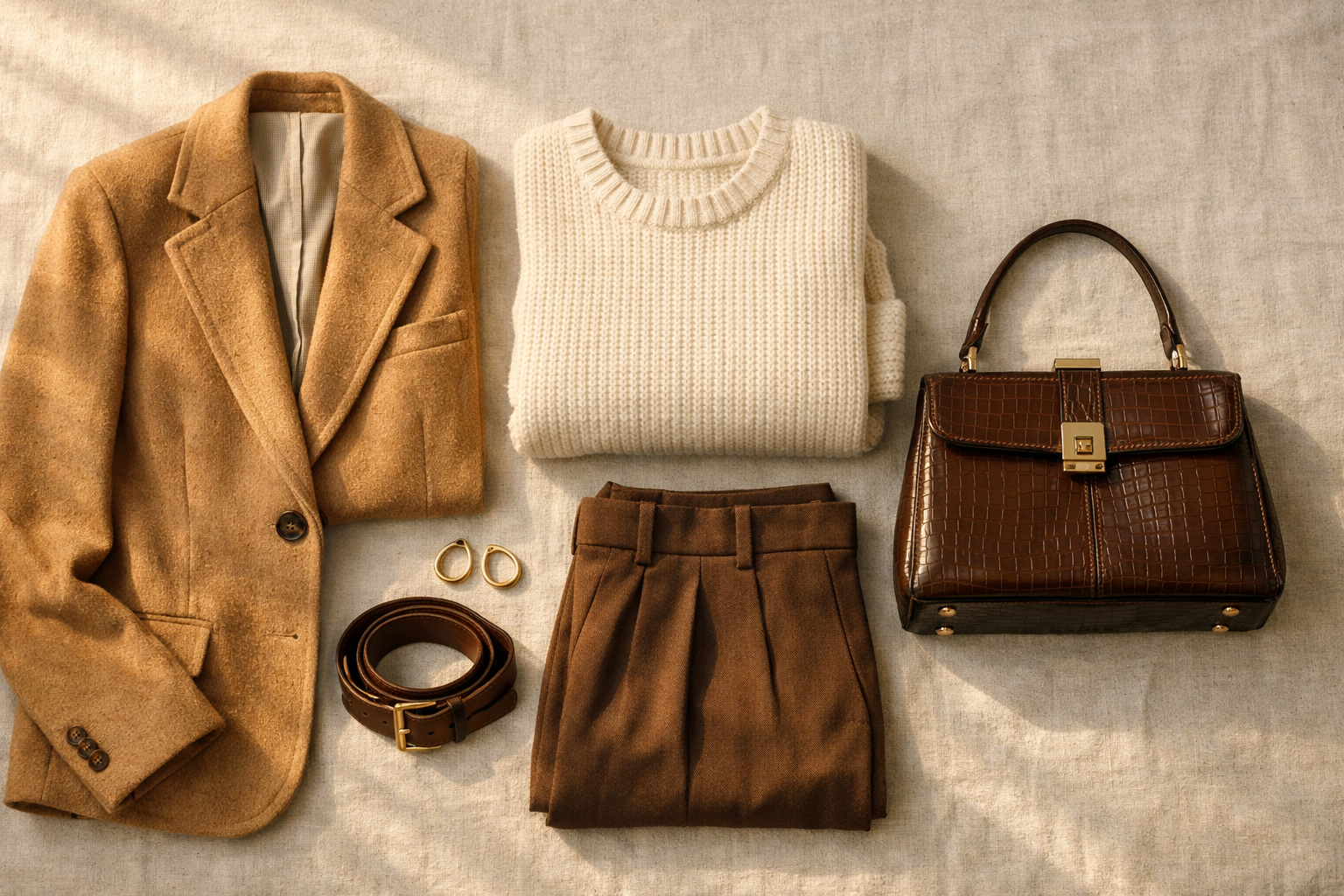
Knowing your palette before you walk into a thrift store is a game-changer. Instead of getting distracted by a printed blouse in a colour you’d never normally wear, you can scan the racks efficiently and zero in on what actually belongs in your wardrobe. In Montreal’s four very real seasons, a palette built around camel, ivory, and burgundy can carry you from a September walk on Mont-Royal to a February dinner in the Plateau with just a swap of layers.
Step 3: Know What to Look For (The Vintage Capsule Essentials)
This is where the fun starts. A well-built vintage capsule wardrobe doesn’t happen by accident — it’s assembled piece by deliberate piece. Here are the categories worth hunting for, and what to keep in mind when you find a contender.
A Well-Cut Blazer or Structured Jacket
The single most versatile piece in almost any wardrobe. 1970s and ’80s blazers often have proportions and construction quality that modern versions can’t touch. Look for natural fibres (wool, linen) and check the shoulders — if the fit is close there, a tailor can handle the rest.
High-Waist Trousers or a Tailored Skirt
Vintage trousers in particular tend to be cut with more intention than their modern counterparts. Important note: ignore the tag size entirely. Sizing has shifted dramatically over the decades. Always try on, or check the actual waist and hip measurements if you’re shopping.
A Quality Knit or Sweater
Wool and cashmere sweaters turn up at thrift stores regularly and represent some of the best value in vintage shopping. Check for pilling, thin elbows, and any moth damage before committing. A small hole in an inconspicuous spot? Totally repairable. A worn-through elbow on a piece you love? Worth the darning.
A Versatile Dress
A 1960s shift or a 1970s wrap dress is one of those pieces that works across almost every occasion with just a change of shoes and accessories. These come up consistently in thrift store inventory — keep your colour palette in mind and don’t overthink it.
A Classic Coat
This is the piece worth spending the most time on. A well-made wool coat from the 1960s or 1970s will outlast almost anything available at retail today — and in a Montreal winter, you will thank yourself for getting this one right. Look for structured shoulders, clean lining, and solid closures. Condition matters most here.
Your Statement Piece
Every capsule wardrobe needs at least one wild card — the piece that’s distinctly, unmistakably you. A printed 1970s blouse. An embroidered jacket. A velvet blazer in a colour you’d never find at H&M. This is where vintage really earns its place in the capsule wardrobe conversation. You won’t find this piece anywhere else.
✨ EcoDepot tip: New clothing inventory arrives weekly at both our Lachine and Plateau locations. If you’re on the hunt for a specific piece — a camel wool coat, say, or a 70s-era blazer in your size — it pays to check in regularly. The best finds don’t stay long.
Step 4: Assess Quality Like a Pro
This is the step that separates intentional capsule building from impulse buying. Vintage shopping rewards patience and a little bit of know-how. Here’s what to check before anything ends up in your cart.
• Seams and stitching: Run your fingers along the seams. Look for puckering, loose threads, or signs that the seam allowance is minimal. A tight, even stitch is a good sign.
• Zippers and closures: Test every zipper. Check that buttons are all present and secure. Metal zippers on vintage pieces often outlast the garment; cheap plastic ones are a red flag.
• Fabric composition: Natural fibres (wool, cotton, silk, linen) age better and feel better. That said, well-preserved polyester from the right era can be genuinely durable — don’t dismiss it automatically.
• Wear points: Check collars, cuffs, and elbows for thinning fabric or fraying. A little wear on a $200 coat is different from a lot of wear on a $30 blouse.
• Stains: Inspect carefully in good lighting. Set-in stains on light fabrics are usually permanent. On darker pieces, a closer look under light will reveal what the rack doesn’t.
Finally, ask yourself the thousand-wear question: would I wear this at least 30 times? If the honest answer is no, put it back. The goal is a wardrobe you love using, not one you feel good about owning.
Step 5: Mix Vintage With What You Own
Building a vintage capsule wardrobe doesn’t mean replacing everything at once — that’s the opposite of the point. The goal is intention, not a total overhaul.
A good starting framework: think of your wardrobe as 70% neutral, versatile foundation pieces (these can be vintage or contemporary), and 30% character pieces that bring personality and story. Your vintage finds will most naturally fill that 30% — though as your eye develops and your thrifting game improves, you might find that ratio shifting.
Styling vintage with modern pieces is also what keeps the look current rather than costumed. A 1970s wrap dress paired with clean white sneakers and a contemporary bag reads as stylish, not retro. A vintage camel blazer over a simple white t-shirt and straight-leg jeans is just a great outfit, full stop.
For Montrealers specifically: think about how your wardrobe needs to function across real life here. A Plateau walk-up doesn’t need the same wardrobe as a Mile End studio or a Verdun apartment with a backyard — but all of them benefit from the same principles. Layering is everything. Pieces that transition between seasons earn their keep. And nothing beats a great coat.
Step 6: Shop With Intention (Your EcoDepot Game Plan)
You have your needs list. You have your colour palette. Now let’s talk strategy.
• Bring your list. Not in your head — on your phone or on paper. It sounds obvious, but the thrill of the hunt can make you forget exactly what you came for.
• Check mid-week. New arrivals at EcoDepot come in regularly, and weekday visits mean you’re often the first to see fresh inventory before the weekend rush.
• Try everything on. Vintage sizing is not modern sizing. The number on the tag is a suggestion at best. If you love it, try it.
• Don’t overthink it. The “sleep on it” rule doesn’t really apply to thrift stores. If a piece checks all your boxes and you genuinely love it, it won’t be there next week. That’s part of what makes this fun.
• Talk to the staff. If you’re looking for something specific — a particular size range, a specific era, outerwear for the coming season — let us know. New inventory is always coming in, and our team knows what’s on the floor.
Your Wardrobe, Your Story
A capsule wardrobe built from vintage pieces isn’t just a style choice — it’s a practical one. Less clutter, more versatility, better quality, and a fraction of the environmental cost of buying new. Every great piece in your closet should have earned its place, and every piece you find at a thrift store has already proven it can go the distance.
The best part? It’s never finished. New arrivals mean new possibilities every week. Your capsule wardrobe grows with your taste, your life, and your next great find.
Follow us on Instagram @ecodepotmontreal for first looks at new arrivals — because the best pieces don’t wait.