Cart
0
The hunt is over — you found the mid-century lamp, the stack of Pyrex, the little brass candlestick that caught your eye at the last EcoDepot visit. But somewhere between "I need this" and "where does this go," a lot of beautiful finds end up crowded on one shelf, half-forgotten in a closet, or scattered with no story to tell. If you're wondering how to organize a vintage collection so it actually looks intentional (instead of like a garage sale mid-setup), you're in the right place.
This guide walks you through a simple system: sort, store, style. By the end, you'll know exactly how to display vintage items so your pre-loved pieces get the spotlight they deserve — whether you've got a sprawling Verdun triplex or a cozy one-bedroom in Mile End.
Step 1: Take Stock — Assess and Sort Your Collection
Before you can display anything well, you need to actually see everything you have. It sounds obvious, but most collections grow in scattered little moments — a lamp here, a set of dishes there — and never get looked at all together.
Set aside an afternoon. Pull everything out of drawers, closets, and forgotten shelf corners, and lay it all out on a bed, table, or clean floor space. Then start sorting:
-
By category — glassware with glassware, textiles with textiles, books with books
-
By era or style — mid-century pieces separate from Victorian-leaning finds, for instance
-
By color story — if your home leans toward a particular palette, group around that
While you're at it, do a quick condition check. Is that chipped mug still charming, or does it need to be retired? Does the vintage lamp need rewiring before it's safe to display? Be honest about what still earns its spot and what's ready to be rehomed — a little editing goes a long way toward a collection that feels curated rather than accumulated.
Step 2: Choose a Home Base — Smart Storage for What's Not on Display
Here's a secret every seasoned collector knows: not everything needs to be out at once. Trying to display your entire collection simultaneously is usually what makes a space feel cluttered instead of curated. The trick is having a proper "home base" for pieces that are resting between rotations.
This is where a good vintage storage piece earns its keep. A vintage cabinet or storage cabinet — found at either of our Montreal locations — does double duty: closed, it keeps overflow items tucked away and protected; open, the top surface becomes prime real estate for your current display. A steamer trunk at the foot of a bed, an old dresser in a hallway, or a glass-front hutch in the dining room can all work the same magic.
For anything delicate — vintage linens, paper ephemera, old photographs — store them flat, away from direct sunlight and humidity, ideally in acid-free tissue if you're holding onto something particularly special. A little care here means your treasures stay treasure-worthy for years to come.
Step 3: Master the Vignette — Grouping for Visual Impact
Once you know what's staying out, it's time to talk styling. The single biggest skill in learning how to display vintage items is the art of the vignette — a small, intentional grouping that feels like a moment rather than a mess.
A few rules of thumb that never fail:
-
Group in odd numbers. Three or five items read as "arranged." Two or four tend to read as "leftover."
-
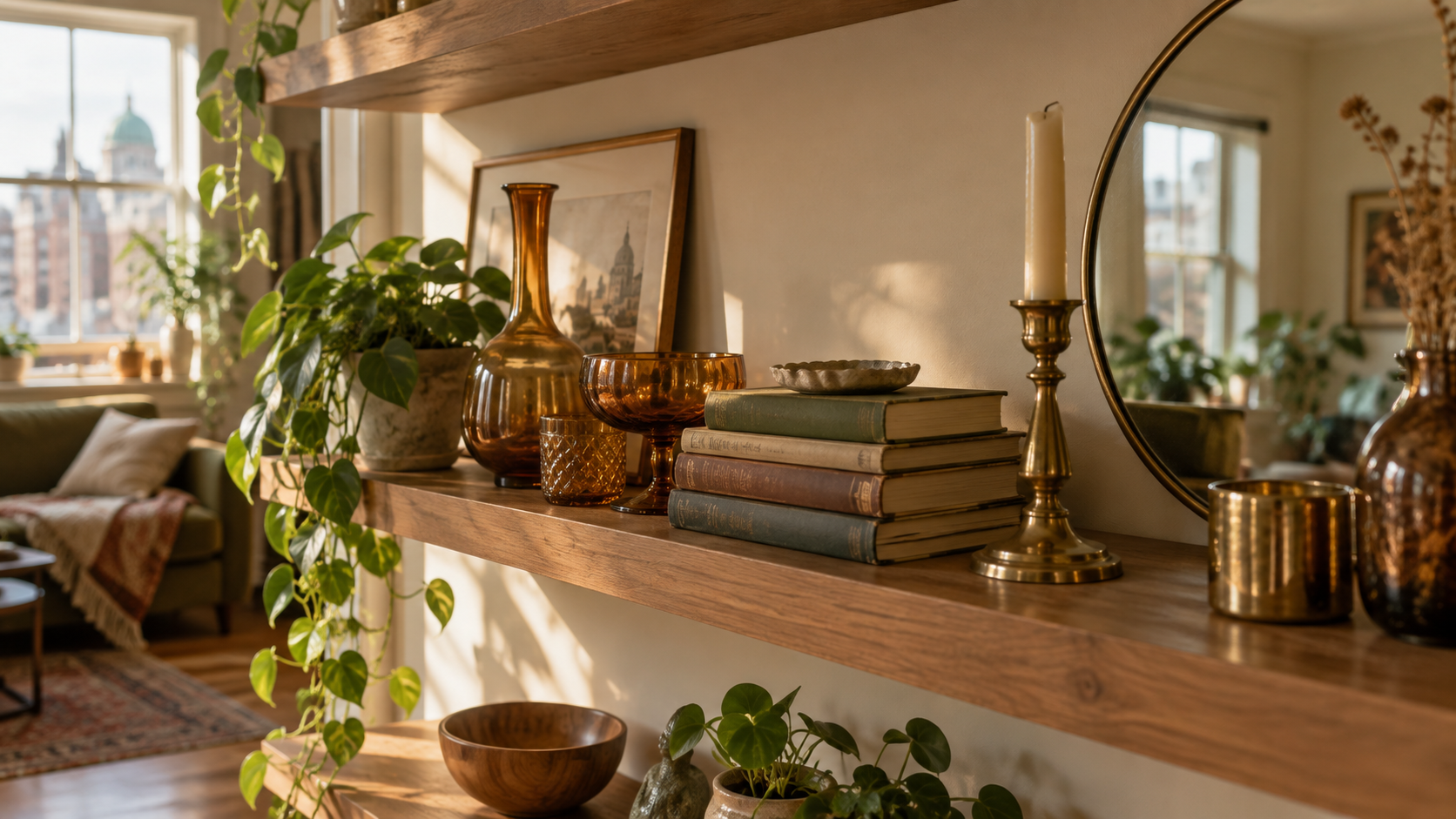
Vary the height. Pair a taller piece (a vase, a stack of books) with shorter ones (a small dish, a candlestick) so the eye has somewhere to travel.
-
Pick one unifying thread. Color, material, or era — something that ties the grouping together so it doesn't feel random.
-
Leave breathing room. Negative space is what lets each piece actually be seen, rather than competing for attention.
A stack of vintage books topped with a small trinket, a trio of amber glass vessels at staggered heights, a single great frame leaned rather than hung — these small, considered choices are what separate "curated" from "cluttered."
Step 4: Room-by-Room Display Ideas for Montreal Homes
Every room has its own vintage-display potential, and Montreal's mix of housing — from Plateau walk-ups to Mile End lofts to Verdun triplexes — means space-smart styling matters more here than almost anywhere else.
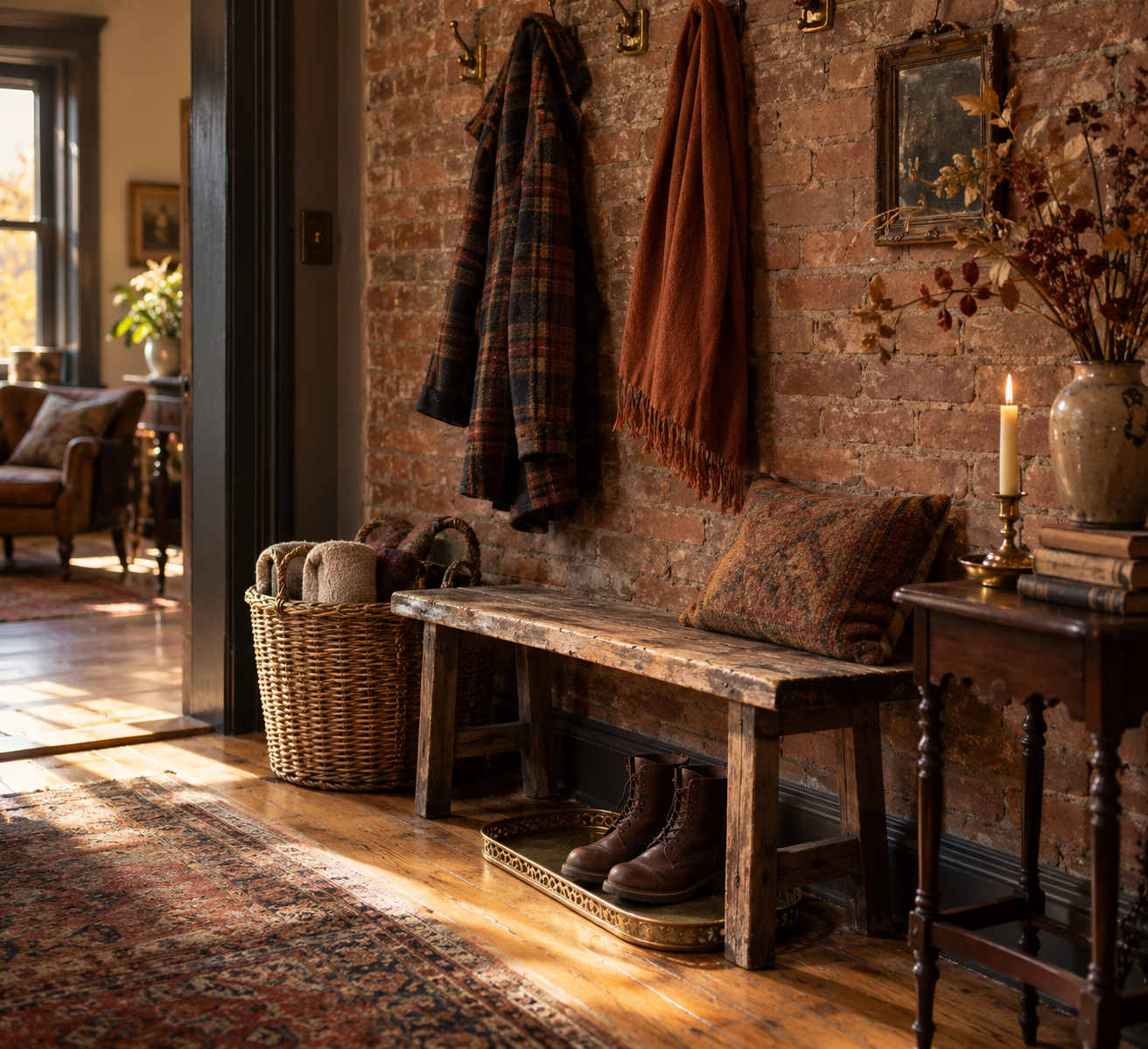
Entryway: A vintage mirror paired with a small catch-all dish for keys and coins turns a functional spot into a first impression worth noticing.
Living room: Floating shelves are a Montreal apartment's best friend, especially in narrower Plateau units where floor space is precious. Layer in framed art, a small stack of books, and one or two sculptural objects for a gallery-wall feel without the commitment of nails in every wall.
Kitchen: Open shelving is having a real moment, and it's the perfect stage for vintage dinnerware and glassware — a stack of mismatched-but-coordinated plates, a row of glasses catching the afternoon light, or a favourite pitcher used daily instead of tucked away.
Bedroom: A small vanity tray for jewelry, a vintage dish for loose change, or a single statement lamp on a nightstand brings personality to a space that's often the last to get decorating attention.
For smaller footprints — hello, Mile End studios — wall-mounted solutions almost always beat floor-standing ones. A single well-placed shelf can hold more visual interest than an entire crowded dresser top.
Step 5: Display Techniques by Collectible Type
Different categories of vintage finds call for different display approaches. Here's how to give each type its due:
Wall-hung plates: Plate hangers (the spring-clip kind) let you build an ever-growing gallery wall without a single drill hole per plate. Group by color or pattern for cohesion.
Books: Mix it up — some spine-out on a shelf for browsing, others stacked flat with a small object on top as a mini pedestal. Bookends made from unexpected objects (a chunk of stone, a small vintage figurine) add character.
Vinyl records: A dedicated vinyl record collection deserves proper record stands or a vintage crate turned on its side — both keep the covers visible as art in their own right, not just storage.
Glassware: Lean toward open shelving or a glass-front cabinet where light can actually hit the piece. Glassware displayed in a dark, closed cupboard loses half its charm.
Textiles: A quilt ladder, a wall-mounted rod, or a simple frame for a smaller embroidered piece all let vintage linens be seen and appreciated rather than folded away in a drawer forever.
Step 6: Rotate Seasonally to Keep It Feeling New
A collection that never changes eventually becomes invisible — you stop noticing pieces you walk past every day. Seasonal rotation solves this. Swap in warmer tones and lighter textures for summer, richer colors and cozier textiles for the colder months, and let a few standout pieces (a special vase, a favourite lamp) take turns being the star of your main vignette.
This is exactly where your Step 2 storage system pays off: whatever's not currently on display has a proper home to rotate back into, rather than getting shoved in a closet and forgotten.
Common Vintage Display Mistakes to Avoid
Even enthusiastic collectors fall into a few predictable traps:
-
Overcrowding. If you can't find visual "resting points" on a shelf, it's time to edit.
-
Skipping measurements. Falling for a gorgeous cabinet only to discover it doesn't fit through your apartment door (or up a narrow Plateau staircase) is a classic — and avoidable — heartbreak.
-
Ignoring sunlight and humidity. Direct sun fades textiles and photographs faster than you'd think; damp basements aren't kind to books or paper.
-
Never rotating. A static display eventually blends into the background. Give your favourites a chance to shine on rotation instead of all at once, forever.
Bring Your System to Life
Every piece in your collection has a story — and now it has a proper way to tell it. Whether you're just starting to sort through what you already own or you're ready to hunt down the perfect storage cabinet or open shelving unit to pull it all together, EcoDepot Montreal's weekly arrivals mean there's always something new to complete the picture. Learning how to organize a vintage collection isn't about perfection; it's about giving your pre-loved finds room to be seen and enjoyed.
Come visit us at our Lachine or Plateau locations to browse this week's arrivals in person, or follow @ecodepotmontreal for daily styling inspiration and a first look at new finds before they hit the floor.