Cart
0
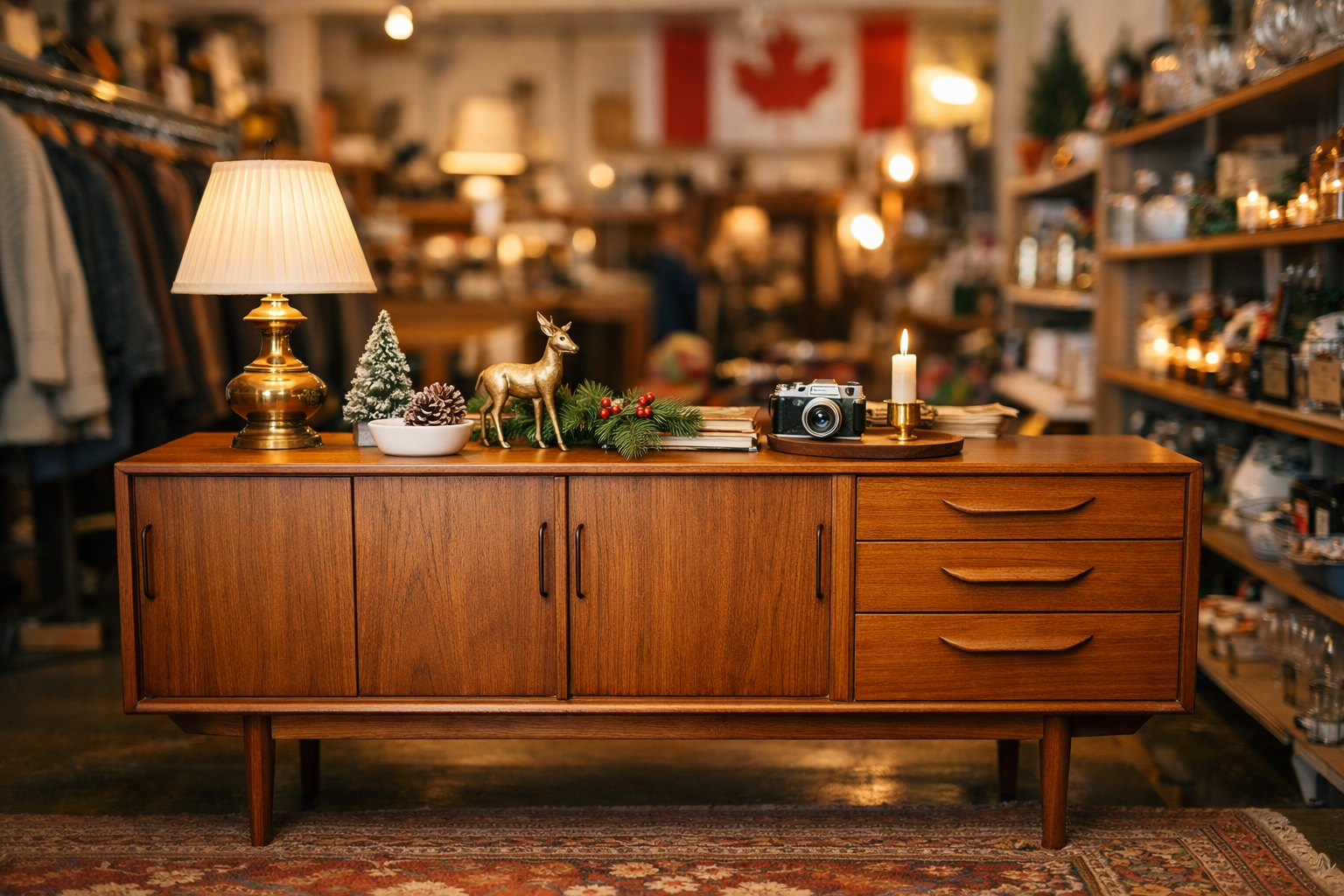
Boxing Day isn't just for electronics anymore. While crowds battle over flat-screen TVs at big-box retailers, Montreal's thrift scene transforms into a treasure hunter's paradise every December 26th—with vintage furniture finds that rival your wildest mid-century modern dreams. That Danish teak credenza you've been eyeing on Pinterest? It might be waiting on our shelves for a fraction of what you'd pay for a mass-produced knockoff.
Here's what makes Boxing Day different for vintage furniture hunters: fresh post-holiday inventory floods thrift stores as Montrealers declutter to make space for gifts, motivated sellers price to move, and you'll face far fewer crowds than Black Friday chaos. You get the trifecta—save money, save the planet, and score one-of-a-kind pieces that actually have character.
The timing couldn't be better. According to recent retail trends, 77% of adult Canadians now purchase pre-owned items, with Gen Z and Millennials leading the charge at 86% and 83% participation respectively. Second-hand shopping has officially gone mainstream, and Boxing Day represents the perfect storm of fresh inventory, motivated pricing, and sustainable choices.
Whether you're hunting for an Artemide lamp to elevate your Plateau walk-up or a solid wood dining table for your Verdun apartment, this guide will show you exactly how to navigate Boxing Day vintage furniture shopping like a pro. You'll learn the reconnaissance strategies that separate casual browsers from serious scorers, the morning game plan that puts you first in line for the best pieces, and the insider knowledge that turns a good find into a legendary one.
Why Boxing Day is Prime Time for Vintage Furniture Scores
Boxing Day sits at the intersection of three powerful forces in the vintage furniture world: timing, inventory, and opportunity. While everyone else fights over retail store discounts, second-hand furniture hunters know this is when the real magic happens.
The post-holiday refresh phenomenon is real. Every January, Montrealers declutter to make space for gifts, start fresh for the new year, and follow through on those "out with the old" resolutions. But here's the thing—most people donate in late December, which means thrift stores receive a massive influx of quality pieces right before Boxing Day. Shops spend the holiday week processing donations, assessing quality, pricing items, and bringing fresh pieces to the floor. Walk in on December 26th, and you're seeing inventory that literally wasn't there a week ago.
The competition factor works in your favor too. Most Boxing Day shoppers focus on retail stores and traditional sales, leaving thrift stores and vintage shops relatively peaceful. You're not fighting crowds the way you would on Black Friday at a furniture chain. This means more time to inspect pieces carefully, measure that credenza, and ask staff about provenance without feeling rushed.
Better negotiation opportunities emerge as stores clear space for January inventory. Many shops run special Boxing Day promotions—percentage-off sales, tag-color discounts, or bundle deals—specifically designed to move volume. Staff members are often more flexible on pricing during this window because they know more donations are coming and floor space is valuable.
Montreal's bilingual market creates unique advantages. Not everyone shops bilingually, which means you can access different inventory pools depending on which language you use to search online or negotiate in-store. The Plateau's vintage scene differs from Lachine's offerings, and Verdun's treasures aren't the same as Mile End's finds. Understanding these neighborhood patterns multiplies your success rate.
At EcoDepot Montreal, we typically process 30-40% more donations in late December than any other time of year. This isn't just holiday generosity—it's Montrealers making space, moving between apartments, and choosing sustainable disposal over landfills. For furniture hunters, it means Boxing Week brings fresh finds daily, not just on December 26th.
The mainstream acceptance of second-hand shopping has transformed Boxing Day dynamics too. With 77% of Canadians now embracing pre-owned purchases, the quality of donated items has improved dramatically. You're no longer sifting through pure castoffs—you're discovering pieces from people upgrading their style, downsizing, or simply rotating their collections. The stigma is gone, replaced by treasure-hunt excitement and environmental consciousness.
Step 1: Do Your Pre-Boxing Day Reconnaissance (Week Before)
The best Boxing Day scores go to shoppers who've already done their homework. Think of the week before as your intelligence-gathering mission—laying groundwork that separates casual browsers from serious treasure hunters.
Take photos of pieces you're considering but don't urgently need. This serves two purposes: you can research designers and styles at home, and you'll know immediately on Boxing Day morning if those pieces received additional markdowns. Use your phone to Google any designer names or maker marks you spot. That unremarkable-looking lamp might be an Artemide worth ten times its tag price.
Ask staff directly about Boxing Day sale structures. Not all stores discount the same way. Some run flat percentage-off sales (20% off everything), others use tag-color systems (blue tags 50% off), and some focus on specific categories (furniture 30% off). Knowing the system in advance lets you calculate deals quickly on the big day. The question is simple: "Avez-vous des spéciaux pour le Boxing Day?" or "Do you have Boxing Day specials planned?"
Sign up for email lists and follow social media accounts. Many stores announce early access opportunities, preview major pieces hitting the floor, or share Boxing Day hours through these channels. At EcoDepot, our Instagram (@ecodepotmontreal) often previews incoming vintage furniture pieces before they hit the floor—giving followers a head start on planning their shopping strategy.
The measurement phase is crucial for Montreal apartments. Measure your space before you shop—not just wall space, but doorways, stairwell widths, ceiling heights in your walk-up, and turning radii. Montreal's older buildings, especially in the Plateau and Mile End, feature narrow staircases with tight corners. A beautiful credenza means nothing if it won't fit up your stairs. Write measurements in your phone notes or carry a small notebook.
Create your wishlist strategically. Divide it into "specific pieces I need" (dining table, bookshelf, desk) and "style guidelines I'm following" (mid-century modern, industrial, French provincial). Specific pieces get priority attention, but style guidelines keep you flexible enough to spot unexpected treasures. Budget the same way—set a maximum spend but build in 20% cushion for those "I can't believe this exists" moments.
Consider the practical shopping logistics. Bring a friend or partner for second opinions and heavy lifting. Two sets of eyes catch details one person might miss, and vintage furniture shopping works better as a team sport. Plus, if you're buying larger pieces, you'll need help moving them to checkout and loading them into your vehicle.
Research current market values for pieces you're targeting. Browse Facebook Marketplace, Kijiji, and vintage furniture sites to understand what mid-century credenzas, teak dining tables, or vintage lighting typically cost in Montreal. This knowledge helps you recognize genuine deals and negotiate confidently.
Step 2: Master Your Boxing Day Morning Game Plan
Boxing Day morning separates casual shoppers from serious scorers. Your success depends on preparation, timing, and a structured approach that maximizes those crucial first hours.
Arrive 30-60 minutes before opening. This isn't about desperation—it's strategy. Early arrival lets you be first through the doors when shops open, giving you the cleanest shot at freshly-stocked inventory. At EcoDepot Montreal, both locations typically open at 10 AM on Boxing Day (check our website to confirm current year hours). Arriving at 9:15-9:30 AM puts you in prime position without requiring an unreasonable wake-up time.
Pack your shopping toolkit the night before. You'll need: a 25-foot measuring tape (not the tiny keychain kind), a small flashlight for inspecting dark wood grain and furniture undersides, reusable bags or old blankets for protecting pieces during transport, your phone fully charged for research and photos, and cash for negotiation leverage. Some sellers offer small discounts for cash payment since it eliminates processing fees.
Dress strategically in removable layers. You'll start outside in December cold, potentially waiting in line. Once inside, thrift stores heat up quickly as you browse actively and other shoppers generate body heat. Wear comfortable shoes you can walk in for hours—vintage furniture shopping involves constant standing, bending, and moving between sections.
Bring your friend or partner, but establish your communication system beforehand. Decide on hand signals or quick texts for "found something" vs. "keep looking." You want to split up to cover more ground initially but stay connected for group decisions on major purchases.
The first-hour strategy requires discipline. When doors open, resist the urge to stop at the first interesting piece. Instead, do a speed walkthrough of the entire furniture section—10-15 minutes maximum. Walk every aisle, scan quickly, and mentally note your top 3-5 pieces worth detailed inspection. This prevents you from anchoring on a decent find while missing a spectacular one three aisles over.
After your speed scan, return to your top pieces for thorough inspection. This is where your preparation pays off. Pull out that measuring tape, check your phone notes for your space dimensions, and verify fit before falling in love. Use your flashlight to inspect wood grain for water damage, check undersides for maker marks or labels, and examine construction quality.
Our Lachine location typically carries larger furniture selection and benefits from more floor space for big pieces like dining tables and sectional seating. The Plateau location sees faster turnover on mid-century modern pieces, designer lighting, and smaller credenzas that fit urban apartments. Both receive strong inventory, but your target pieces might determine which location you prioritize.
Staff can hold items for 30 minutes while you continue browsing—but use this privilege wisely. Request holds only for pieces you're seriously considering, not as a strategy to eliminate competition. Be respectful of other shoppers and staff time. The relationships you build with employees often lead to insider tips about incoming inventory or pieces held in back that haven't hit the floor yet.
Master the quality inspection checklist. For structural integrity, test every joint by applying gentle pressure—chairs shouldn't wobble, table legs should feel solid, and drawers should slide smoothly without sticking. Check wood condition by looking for water rings, veneer lifting at edges, deep scratches through finish, or signs of insect damage. Run your hand along surfaces feeling for smoothness.
Drawer and door function matters more than you'd think. Open every drawer fully, checking for smooth operation and proper alignment. Cabinet doors should swing freely without sagging or scraping. Misalignment often indicates warped wood or damaged hardware—fixable, but factor repair costs into your offer.
For upholstered pieces, assessment gets trickier. Look for obvious stains, but also smell the fabric—smoke odors and mildew are nearly impossible to remove. Press cushions firmly to test the foam's integrity; if it doesn't spring back, you're looking at replacement costs. Check frame integrity by lifting one corner of a sofa—it should feel solid, not creaky or rickety.
Embrace the "good bones" philosophy. Perfect vintage furniture barely exists, but solid structure with minor cosmetic issues? That's a winner. You can refinish scratched wood, reupholster dated fabric, and replace hardware easily. You cannot easily fix wobbly joints, warped frames, or structural instability. Prioritize accordingly.
Use your phone strategically during inspection. Photograph maker marks, designer labels, and construction details, then Google them while you're standing there. "Knoll Associates vintage chair" might reveal you're holding a $2,000 piece priced at $150. This research happens in real-time, not later when someone else has claimed your find.
Step 3: Know What Vintage Furniture Styles to Prioritize
Boxing Day donations follow patterns, and certain furniture styles consistently appear in late December. Understanding what to prioritize—and what to skip—turns browsing into strategic hunting.
Mid-century modern (1950s-1960s) dominates Montreal's vintage market and peaks during holiday donations. Look for teak and walnut woods, clean lines without excessive ornamentation, tapered legs (often angled outward), floating credenzas with sleek drawer pulls, and sculptural curves that feel intentional rather than decorative. Danish makers like Hans Wegner, Arne Jacobsen, and Finn Juhl set the standard, but North American manufacturers like Lane, Broyhill, and Kroehler produced quality pieces too.
The 1970s aesthetic is experiencing a major comeback, making these pieces both available and increasingly valuable. Watch for brass accents that catch light beautifully, rich wood tones deeper than mid-century's lighter woods, geometric patterns in fabric or wood inlay, and bolder proportions than their 1960s predecessors. These pieces often get overlooked by shoppers focused exclusively on mid-century, creating opportunity for savvy hunters.
French provincial furniture perpetually thrives in Montreal's market, reflecting Quebec's cultural heritage. You'll find ornate carved details, curved legs (cabriole style), distressed or antiqued finishes, and Provincial motifs. These pieces suit traditional tastes but also mix surprisingly well with modern aesthetics when styled thoughtfully. Expect abundant availability—many Quebecois families pass down or donate these pieces during life transitions.
Industrial and vintage metal furniture from Montreal's manufacturing era offers unique character. Metal filing cabinets from offices and factories, steel shelving units with adjustable heights, factory stools and work tables, and vintage lockers make striking statement pieces. The industrial aesthetic suits loft apartments and modern spaces perfectly, and these pieces often price lower than wood furniture despite similar appeal.
Designer name recognition accelerates decision-making when you've got minutes to evaluate. For lighting, Artemide represents Italian design excellence, Laurel lamp company produced iconic vintage pieces, and industrial brands from Montreal's manufacturing past carry local history. In furniture, Herman Miller and Knoll designed revolutionary modernist pieces, while Canadian makers Gibbard, Kroehler (Canadian division), and Sklar produced quality domestic furniture.
Learn to spot quality even without designer labels. Check joinery—dovetail joints in drawers indicate superior construction, solid wood shows better craftsmanship than veneer over particle board, and heavy weight often signals quality materials. Examine hardware for substantial metal (not plastic), smooth drawer glides, and original brass or chrome fixtures.
Certain pieces consistently represent smart investments. Solid wood chairs sold individually let you mix-and-match dining sets, creating eclectic charm impossible to achieve buying new. Small credenzas and sideboards (under 60 inches) suit Montreal apartments perfectly and command high demand. Quality mirrors in dated frames become statement pieces with simple reframing. Vintage storage pieces solve the perpetual Montreal apartment challenge: where to put everything in limited square footage.
Know what to avoid unless you're prepared for serious restoration work. Particle board furniture from 1980s-2000s rarely justifies revival effort—it lacks structural integrity and aesthetic appeal. Heavily damaged veneer on curved surfaces requires professional repair that often exceeds the piece's value. Upholstered pieces with mysterious odors or deep staining present challenges that even professional cleaning can't always solve. Glass-top tables with chips or cracks pose safety hazards; replacement glass is expensive.
Montreal's market reflects local specifics. French provincial pieces appear frequently due to Quebec heritage and cultural traditions. Industrial furniture from Old Port warehouses and manufacturing districts carries authentic local history. Mid-century pieces show climate impact—check carefully for water damage in older buildings prone to humidity issues.
Hidden gem categories fly under most shoppers' radar but offer exceptional value. Vintage barware and serving carts suit Montreal's entertaining culture and price reasonably. Small accent tables (plant stands, side tables, telephone tables) add character without requiring major space commitment. Vintage desks and secretary furniture gained new relevance with work-from-home trends. Outdoor/patio furniture stored indoors often hibernates in thrift store back rooms until spring—ask specifically about off-season inventory.
Develop your eye for "potential" pieces. A solid wood table with dated finish becomes stunning with simple refinishing. Quality upholstered chairs with ugly fabric transform with reupholstering. Brass hardware buried under tarnish shines like new with proper polish. Learning to see past surface issues to underlying quality is the treasure hunter's superpower.
Visit EcoDepot Montreal's current furniture collection to see examples of the vintage styles and quality pieces regularly featured in our inventory. The more you familiarize yourself with quality indicators before Boxing Day, the faster you'll spot genuine treasures when they appear.
Step 4: Perfect Your Negotiation Strategy
Negotiation in vintage furniture shopping isn't about aggressive haggling—it's relationship building that respects everyone involved while securing fair prices. Understanding when, how, and whether to negotiate separates knowledgeable buyers from awkward encounters.
First, recognize when negotiation is appropriate. Fixed-price retail environments don't welcome haggling. But thrift stores, vintage shops, and estate sale scenarios often build flexibility into pricing. At EcoDepot Montreal, pricing reflects quality assessment and market value, but conversations about bundling multiple pieces or noting condition issues can lead to adjustments.
Building rapport with staff matters more than any negotiation tactic. Remember, these are people who love their jobs, know their inventory intimately, and genuinely want pieces to find good homes. Start conversations by asking about an item's history—where it came from, how long it's been in store, whether they know anything about its previous owner. This builds connection and often reveals information that helps your decision.
The bundle strategy represents your strongest negotiation lever. Purchasing multiple pieces together signals serious buying intent and helps stores move volume. Phrase it positively: "I'm interested in this credenza and those two chairs—is there any flexibility if I take all three?" This approach shows respect for the business while acknowledging the value of a larger sale.
Cash offers genuine leverage in some situations. Processing fees for credit cards cost businesses money, so some sellers discount 3-5% for cash payment. Ask politely: "Would you consider a small discount for cash?" But never assume or demand this—it's a courtesy when offered, not an entitlement.
Pointing out flaws justifies lower pricing when done respectfully. If you've noticed structural issues, cosmetic damage, or functionality problems that affect value, mention them factually: "I love this piece, but I noticed the drawer doesn't slide smoothly and there's water damage on this corner. I'm still interested, but could we adjust the price to account for the repair work I'll need to do?" This demonstrates you've done your inspection homework and understand the piece's condition.
Montreal's bilingual context creates unique negotiation opportunities. French phrases for polite price discussion include: "Est-ce que le prix est négociable?" (Is the price negotiable?), "Pourriez-vous faire un meilleur prix?" (Could you offer a better price?), and "J'achète plusieurs articles—est-ce qu'il y a un rabais?" (I'm buying several items—is there a discount?). Quebecois culture appreciates respect and relationship-building over aggressive bargaining. Rushing straight to price demands without building rapport misses the cultural context.
At EcoDepot Montreal specifically, understand our transparent pricing philosophy. Prices reflect quality assessment, market research, and fair value for both buyers and our sustainable business mission. We offer bundle deals on complementary pieces and occasionally run promotions for seniors, students, or specific inventory categories. Building relationships with our team leads to insider tips about incoming inventory, pieces matching your wishlist, and advance notice of special items.
What NOT to do in negotiations matters as much as technique. Never aggressively haggle over already-discounted Boxing Day items—if something's marked 40% off for the sale, that's already the negotiated price. Don't compare thrift store prices to Facebook Marketplace flips; stores have overhead, staff, rent, and business operations that basement sellers don't. Never pressure staff on high-traffic days like Boxing Day; they're managing dozens of customers and don't have time for extended back-and-forth.
Remember the bigger picture: you're supporting sustainable businesses that divert items from landfills, employ local workers, and contribute to Montreal's circular economy. Saving an extra $20 through aggressive tactics costs you the goodwill that leads to better deals long-term. Staff members remember kind, reasonable customers and often alert them when special pieces arrive.
Realistic expectations about condition versus price prevent disappointment. A $150 vintage teak credenza won't be flawless—it's vintage, it has history, and minor wear is part of its character. If you want perfect condition, buy new (and pay five times as much). Vintage shopping means accepting character marks while prioritizing structural integrity.
Think of negotiation as collaborative problem-solving rather than adversarial bargaining. You want a great piece at a fair price. The store wants to move inventory and serve customers well. These goals align more often than they conflict. Approaching conversations with this mindset creates positive interactions that benefit everyone.
Step 5: Handle Transportation and Home Integration
You've found the perfect mid-century credenza—now you need to get it home without drama, damage, or disaster. Transportation planning prevents the heartbreak of losing your treasure to logistics failure.
Plan transportation before you buy, not after. Nothing's worse than falling in love with a piece only to realize you have no way to transport it. Survey your options before Boxing Day: does a friend have a truck you can borrow? Can you rent a pickup from Communauto or a traditional rental company? Do you need professional movers for fragile or valuable pieces?
Montreal transportation options include CAA-Quebec for members needing vehicle assistance, Communauto's pickup truck options available through their car-sharing platform, Home Depot and U-Haul truck rentals for larger loads, and professional furniture movers for delicate or high-value items. For single pieces, borrowing a friend's truck beats rental costs and builds karma for when you help them move next summer.
Thrift stores typically allow same-day pickup but may offer short-term holds (24-48 hours) for larger items you need to arrange transportation for. At EcoDepot Montreal, speak with staff about hold policies—we understand not everyone arrives with a truck ready to load. Communicate clearly about pickup timing and follow through reliably.
Protecting pieces during winter transport requires planning. Montreal's December weather poses risks: road salt damages wood finishes, moisture from snow can warp wood, and cold temperatures make some materials brittle. Wrap furniture in old blankets or moving pads, use plastic sheeting if transporting in open truck beds, and secure everything firmly to prevent shifting during transport.
The Montreal walk-up reality deserves serious attention. Many apartments in the Plateau, Mile End, Rosemont, and other historic neighborhoods feature narrow staircases with tight corners. Measure your stairwell before buying large furniture: width at narrowest point, ceiling height on landings, any 90-degree or 180-degree turns, and distance from ceiling to handrail (pieces need to pivot on turns).
Bring your stairwell measurements to the store when evaluating large pieces. Staff can help assess whether that credenza will navigate your turns. When in doubt, measure twice and buy once. A beautiful piece that won't fit up your stairs becomes an expensive mistake or gift to a friend with an elevator building.
Consider disassembly options for modular furniture. Many vintage pieces were designed to disassemble—legs unscrew from tables, backs remove from sideboards, and sectional sofas separate into pieces. Ask staff whether items disassemble (and whether they have the original hardware). This flexibility can make impossible pieces suddenly manageable.
Immediate home care once you've successfully transported your treasure ensures longevity. Let wood furniture acclimate to your home's temperature and humidity for 24 hours before intensive cleaning or use. Montreal apartments in winter run dry from heating—dramatic humidity changes can cause wood to contract and crack. Give pieces time to adjust.
Initial cleaning should match the material. Use wood soap (not harsh cleaners) for wood furniture, appropriate upholstery cleaner for fabric pieces, and metal polish for brass or chrome hardware. Clean gently first to assess the piece's true condition—sometimes what looks like damage is just decades of dirt.
Assess refinishing or repair needs after cleaning reveals the true surface. Some pieces need nothing but cleaning. Others benefit from simple wood oil or wax application. Major refinishing projects (stripping and restaining) require more commitment—decide whether you'll DIY or hire professionals based on the piece's value and your skill level.
Styling integration helps vintage furniture shine in modern Montreal apartments. Mix eras intentionally—a mid-century credenza grounds contemporary décor, while industrial pieces add edge to traditional spaces. Let vintage furniture be focal points rather than filling every surface. Montreal's abundant natural light (when we get it) showcases wood grain beautifully—position pieces near windows strategically.
Small apartments benefit from multi-functional vintage finds. A credenza provides storage, display surface, and visual interest. Vintage barware carts add personality while solving entertaining needs. Secretary desks create work-from-home spaces in studio apartments. Think functionally about how pieces serve your life, not just how they look.
For DIY enthusiasts interested in refinishing or upcycling their vintage finds, explore resources and inspiration online. The satisfaction of restoring a piece to its former glory adds personal connection to your treasure and develops skills for future finds.
Boxing Week Strategy: Days 2-7 Are Golden
Here's the secret seasoned vintage furniture hunters know: December 26th gets the hype, but December 27-31 often delivers better finds. While everyone focuses on Boxing Day itself, the days that follow offer unique advantages that smart shoppers exploit ruthlessly.
Why late Boxing Week can exceed opening day comes down to several factors. Stores continue processing the donation deluge throughout the week—pieces that arrived on December 23rd or 24th might not hit the floor until December 28th. Staff work through backlogs systematically, bringing fresh inventory daily rather than dumping everything on the 26th. This means each visit reveals different pieces.
Competition drops dramatically after Boxing Day. Casual shoppers already got their deals and moved on. The treasure hunters remain—serious buyers who understand that consistency beats one-time shopping sprees. Less competition means more time to inspect pieces carefully, ask questions without rushing, and make thoughtful decisions rather than panicked ones.
Staff become significantly more available as the week progresses. Boxing Day itself brings crowds that keep employees constantly busy with questions, checkout, and inventory management. By December 28th or 29th, the rush subsides, and staff have time for real conversations. They'll share stories about pieces, offer opinions on condition, and sometimes reveal upcoming inventory they're excited about.
Additional markdowns often appear as the week progresses. Stores motivated to clear space for January inventory sometimes run secondary sales mid-week. That credenza priced at $300 on December 26th might drop to $250 on December 29th as staff reassess pricing and push remaining holiday inventory. Following daily allows you to catch these markdowns immediately.
At EcoDepot Montreal, new furniture typically hits the floor Tuesday, Thursday, and Saturday throughout Boxing Week. Understanding this pattern lets you plan strategic visit days rather than checking daily. Our Instagram stories preview incoming pieces, giving followers advance notice of particularly special items before they reach the sales floor. Following along means you know when to make that trip to Lachine or Rachel Est.
The daily visit strategy beats marathon sessions. Rather than spending four hours on Boxing Day, consider 20-30 minute check-ins every couple days throughout the week. Quick visits let you scan new arrivals, monitor pieces you're considering, and stay fresh rather than decision-fatigued. This approach works especially well if a store sits on your commute route or near other errands.
Building relationships with staff throughout Boxing Week pays incredible dividends. When employees recognize you as a serious buyer who visits consistently, they start setting aside pieces that match your stated interests. That "I saved this for you" moment happens specifically because you've established yourself as a knowledgeable, respectful customer who follows through on expressed interest.
Energy management matters in vintage furniture hunting. Boxing Day demands speed and competitive spirit—you're moving fast, making quick decisions, and maintaining high alertness. Later in the week, slow down. Take time with pieces, really evaluate whether they fit your space and style, and make thoughtful rather than reactive decisions. Balance excitement with patience.
The New Year's Eve phenomenon deserves mention. December 31st often brings final Boxing Week clearance as stores prepare for January inventory cycles. Some shops run "clear the floor" specials or accept aggressive offers on pieces that haven't moved all week. If you've been watching a specific item linger, New Year's Eve might be your moment to make an offer.
Social media becomes your Boxing Week ally. At EcoDepot, we announce special pieces, preview incoming inventory, and sometimes offer Instagram-exclusive flash deals throughout the week. Setting notifications for our stories ensures you catch these announcements immediately rather than hours later when the credenza is already claimed.
Consider your calendar realistically. If Boxing Day itself conflicts with family obligations or travel, don't stress. You're not missing the only good day—you're strategically targeting less crowded, equally productive days. December 27-30 often outperforms the 26th specifically because expectations shift and pressure decreases.
Weather factors into late-week strategy too. Montreal's December weather fluctuates unpredictably. If December 28th brings a snowstorm that keeps casual shoppers home, serious hunters brave the conditions and enjoy empty stores with full attention from staff. Conversely, if New Year's Eve brings gorgeous weather, everyone's out—maybe skip that day and hit January 2nd instead.
The persistence principle applies: consistent presence beats one-time intensity. The shopper who visits three times during Boxing Week sees more total inventory than the shopper who spends six hours on Boxing Day alone. Vintage furniture shopping rewards patience and consistency over frantic rush tactics.
What Makes EcoDepot Montreal Your Boxing Day Vintage HQ
Two strategic Montreal locations position EcoDepot perfectly for Boxing Day treasure hunting. Our Lachine store at 187 Rue Richer offers extensive floor space ideal for large furniture selection—dining tables, sectional sofas, bedroom sets, and oversized credenzas benefit from the room to properly display and evaluate. Parking accessibility makes loading large pieces straightforward, and the space allows for comfortable browsing even during busier periods.
Our Plateau location at 2117 Rue Rachel Est sits in the heart of one of Montreal's most walkable neighborhoods, accessible by multiple bus lines and the metro system. The location attracts different inventory patterns—more apartment-sized furniture, mid-century modern pieces that suit urban living, designer lighting, and compact storage solutions. The faster turnover here reflects the neighborhood's density and active vintage shopping community.
Weekly new arrivals distinguish EcoDepot from stores that restock monthly or sporadically. Every week brings fresh inventory from Montreal's donation stream, meaning Boxing Week truly offers daily discoveries rather than one-time deals. This consistent influx keeps experienced shoppers returning regularly and rewards loyalty with first looks at exceptional pieces.
The curated quality-over-quantity approach means you're browsing pieces that passed inspection for structural integrity, authentic vintage character, and genuine value. We don't accept everything donated—damaged particle board furniture, structurally unsound pieces, and items without restoration potential get rejected. This selective process saves you time sorting through junk to find treasures.
Our sustainable mission alignment adds meaning to every purchase. Every vintage credenza, teak chair, or designer lamp you buy diverts materials from landfills, reduces demand for new furniture production, and supports Montreal's circular economy. You're not just decorating your apartment—you're participating in environmental responsibility without sacrifice or compromise.
The price range diversity ensures something for every budget. From everyday essentials priced for students furnishing first apartments to designer pieces attractive to collectors and interior designers, inventory spans the affordability spectrum. A $50 solid wood chair sits alongside a $500 mid-century credenza, both representing fair value for their respective quality levels.
Staff expertise enhances the shopping experience beyond transaction. Our team members develop knowledge about furniture styles, designer histories, restoration potential, and Montreal's vintage market. They can identify maker marks, share provenance stories when known, and offer honest assessments about whether pieces suit your stated needs. This expertise becomes advisory rather than sales-focused—we'd rather you buy the right piece than just any piece.
The community fixture aspect matters more than corporate retail ever could. EcoDepot participates in Montreal's neighborhoods as a fixture, not just a business. Supporting local sustainable operations means your furniture budget stays in the community, employing Montreal residents and contributing to local economy rather than flowing to distant shareholders.
Bilingual staff reflect Montreal's reality. Whether you're more comfortable in French or English, conversations flow naturally without language barriers creating awkward transactions. This inclusivity extends to the diverse communities we serve across Lachine and the Plateau.
Real talk about inventory expectations: we cannot predict specific Boxing Day finds. The treasure hunt nature of vintage shopping means uncertainty is built into the experience. That's part of the excitement—you might discover an Artemide lamp, a Herman Miller chair, or a pristine teak credenza, but you won't know until you walk through the door.
Recent notable finds from EcoDepot's floors include an Artemide Tolomeo lamp for a fraction of retail price, a 1960s teak credenza that could have come straight from a Danish showroom, Herman Miller shell chairs in excellent condition, and industrial metal storage pieces bearing Montreal factory stamps. These aren't guarantees of what you'll find Boxing Day 2025—they're examples of what flows through our inventory regularly.
This Boxing Day, skip the big-box chaos and discover what Montreal's most unique thrift store has waiting. Both our Lachine and Plateau locations open at 10 AM—and with fresh donations arriving throughout Boxing Week, every visit brings new possibilities. The vintage furniture of your dreams might have been donated yesterday, priced this morning, and placed on the floor just before you walk in.
Your Boxing Day Vintage Furniture Action Plan
You're now equipped with insider knowledge that transforms Boxing Day from retail chaos into strategic treasure hunting. Let's recap the game plan that separates casual browsers from legendary scorers.
Pre-Boxing Day reconnaissance gives you competitive advantage—visit stores the week before, understand layouts, ask about sale structures, measure your space, and create targeted wishlists. Knowledge is preparation, and preparation is confidence when you're evaluating a $400 credenza in three minutes on Boxing Day morning.
Boxing Day morning strategy determines success: arrive early but not desperately so, pack your toolkit (measuring tape, flashlight, bags, cash), dress in layers, and execute the speed-scan before detailed inspection. First through the door doesn't guarantee the best finds, but strategic scanning combined with thorough evaluation does.
Know your styles, designers, and quality indicators. Mid-century modern's clean lines, 1970s brass accents, French provincial carved details, and industrial metal pieces each offer distinct appeal. Understanding construction quality—dovetail joints, solid wood, substantial hardware—lets you spot genuine treasures even without designer labels.
Negotiation as relationship-building rather than combat creates positive outcomes. Bundle multiple pieces, mention condition issues respectfully, leverage cash when appropriate, and always build rapport before discussing price. Supporting sustainable businesses like EcoDepot means fair pricing that respects everyone's interests.
Transportation planning prevents heartbreak. Measure your Montreal walk-up staircases, arrange vehicle access before you buy, protect pieces during winter transport, and let wood furniture acclimate to your apartment's temperature before intensive cleaning. That perfect credenza means nothing if it won't fit up your stairs or arrives damaged.
Boxing Week days 2-7 often deliver better finds than opening day itself. Stores process donations throughout the week, competition drops after the 26th, staff become more available for conversations, and additional markdowns appear as week progresses. Persistence beats intensity—consistent visits throughout Boxing Week expose you to more total inventory than one marathon Boxing Day session.
EcoDepot Montreal's two locations, weekly arrivals, and curated quality position us as your Boxing Day vintage furniture headquarters. We bring sustainable mission commitment, expert staff knowledge, fair pricing, and the treasure-hunt excitement that makes vintage shopping addictive.
That Danish teak credenza isn't just furniture—it's a piece of history finding its second act in your Montreal home. It's savings that let you invest in other dreams. It's one less piece in a landfill, one more story in your space. Boxing Day 2025 is your chance to score vintage furniture treasures while supporting Montreal's circular economy. The hunt starts December 26th, but remember: Boxing Week's best finds often reveal themselves when everyone else has gone home.
Follow us on Instagram @ecodepotmontreal for Boxing Week arrival previews and join thousands of Montrealers choosing sustainable, unique, affordable furniture. Your next vintage masterpiece is waiting—probably in this week's donations.