Cart
0
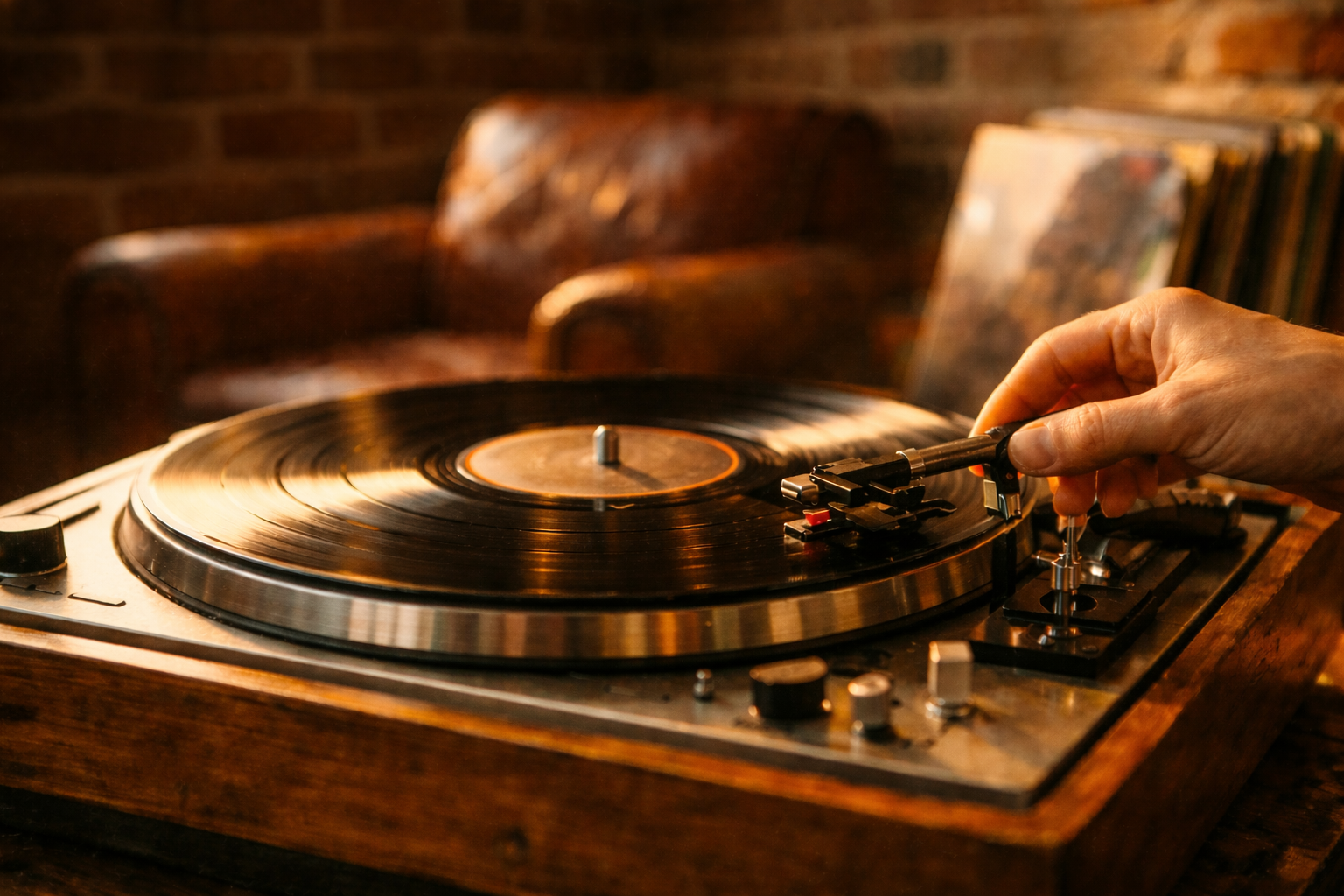
Pull a record from its sleeve. Set it on the platter. Drop the needle. Wait for that familiar crackle before the first note blooms into the room. In a world where 100 million songs are a tap away, why are more people choosing to do this?
It's not nostalgia for its own sake. Vinyl records have now outsold CDs for several years running — and a growing share of buyers are under 35. Something real is happening here, and it goes beyond hipster cred or retro aesthetics.
This article isn't a verdict on which format is "better." It's an honest exploration of what vinyl records actually offer that streaming music simply can't replicate — and why collectors keep coming back to the crates. By the end, you'll understand the collector's case for vinyl, and you'll know exactly how to start (or restart) your own collection without spending a fortune.
What Makes Vinyl Records Different? The Basics
A vinyl record is an analog audio format. Sound is physically etched as a continuous groove into the surface of the disc, and a needle (stylus) reads those grooves as it travels across the spinning record, translating the physical vibrations back into sound.
Streaming music works entirely differently. Digital audio converts sound into binary data — a series of sampled "snapshots" of a sound wave — and delivers it over the internet. The quality depends on the sampling rate and compression level used.
The key distinction: analog captures the full sound wave as a continuous curve. Digital samples it at intervals and reconstructs the shape. To most listeners, this difference is subtle — but to collectors, it's the whole point.
And vinyl is anything but a relic. After being declared dead in the '90s, vinyl has now seen 19 consecutive years of sales growth. It's not a fad. It's a format that refuses to disappear because it offers something the algorithm can't.
The Experience Gap — What Streaming Music Can't Give You
This is the heart of the matter. The technical debate about sound quality is real, but it misses the bigger story. The reason collectors choose vinyl records over streaming goes far beyond waveforms. It comes down to four dimensions of experience that streaming simply doesn't offer.
Ritual and Intentionality
Streaming is engineered for passive, frictionless listening. You shuffle, skip, half-listen while scrolling. Surveys consistently show that around 80% of streaming users are doing something else while the music plays. It's ambient. Background.
Vinyl demands the opposite. You choose a record deliberately. You flip it at the halfway point. You stay with it. The act of listening becomes the activity, not the backdrop — and that changes the music itself. Albums reveal themselves differently when you actually sit with them.
In a culture that prizes speed and infinite choice, there's something quietly radical about a format that asks you to slow down.
Sound and Warmth
The "warm" sound of vinyl isn't just romantic mythology. Analog playback preserves the full audio waveform, giving the music a richness and depth that many listeners describe as more natural, more present. The pops and crackles that come with a well-played record aren't flaws to collectors — they're character. They're proof that this music lived somewhere before it found you.
To be fair: hi-fi streaming services like Tidal and Apple Lossless have significantly narrowed the technical gap. On the right equipment, both can sound extraordinary. But the feeling of vinyl — the warmth, the room-filling presence — remains distinct. Equipment matters too; a quality turntable is a genuine investment, and a $40 toy record player won't show you what vinyl is capable of.
Ownership vs. Renting
Here's something that gets lost in the convenience conversation: with streaming, you don't own anything. You're renting access to a catalog that can change without notice — artists pull albums, licensing deals expire, services shut down.
A vinyl record is yours. A physical object with real resale value, emotional weight, and permanence. A record collection tells a story about who you are and what you've loved. That's not something an algorithm can curate for you.
Artwork and Packaging
A 12-inch album cover is a canvas. The artwork, liner notes, lyrics, and photographs that come with a vinyl record are part of the experience in a way that a 2-inch phone thumbnail simply isn't. Pulling a gatefold album apart and actually reading the credits, the lyrics, the thank-you notes — that's a relationship with an album that streaming can't replicate.
The Sustainability Case for Vinyl Records
Most vinyl conversations skip this angle entirely. They shouldn't.
Pre-loved vinyl records are arguably the most sustainable music format available. No new manufacturing. No supply chain. No rare earth materials in your earbuds. No planned obsolescence. When you buy a second-hand record that was pressed in 1972, you're extending the life of an object that was already built to last decades — and keeping it out of landfill.
Streaming music has its own environmental footprint, too. Data centres that power global streaming platforms consume enormous amounts of energy — a cost that's largely invisible to the listener pressing play. Physical formats, especially pre-loved ones, sidestep that entirely.
Choosing second-hand vinyl is a win for your ears and the planet. It fits squarely into the kind of circular economy that's becoming more important to Montreal shoppers — and according to the Savers Thrift Report 2024 (Canada), Canadians are embracing pre-owned shopping at record rates. Vinyl is part of that story.
How to Start (or Grow) Your Vinyl Collection Without Breaking the Bank
The barrier to entry is lower than most people think. Here's what you actually need.
The Gear
A turntable is the essential starting point — but please, don't buy a $40 toy. Budget suitcase-style record players use a cheap stylus that can actually damage your records over time, and they won't give you anywhere near the sound quality vinyl is capable of. A decent entry-level turntable from a brand like Audio-Technica, Pro-Ject, or Rega starts around $150–$250 and makes a genuine difference.
You'll also want speakers or a receiver with an integrated phono preamp. Second-hand audio gear — receivers, amplifiers, bookshelf speakers — is widely available at thrift stores and can dramatically upgrade your setup for a fraction of the cost of buying new.
Where to Find Vinyl in Montreal
This is where the hunt gets exciting. Thrift stores and second-hand shops are the best-kept secret in vinyl collecting — and in Montreal, Éco-Dépôt Montréal is one of the best places to start.
At both the Lachine (187 Rue Richer) and Plateau (1307 Mont-Royal Ave E) locations, vinyl records are a regular part of the rotating inventory. New arrivals come in every week, which means the selection is always changing — and the finds can be genuinely surprising. Classic pressings of jazz, rock, classical, and soul turn up regularly alongside more unexpected treasures.
What makes EcoDepot especially useful for new and seasoned collectors is that vinyl doesn't arrive alone. Vintage turntables, amplifiers, receivers, and speakers turn up in the same space — so you can often build out an entire listening setup in a single visit. That's rare.
Insider tip: stop by on weekdays after new stock has been processed. Competition is lighter, and the crates are fresh. Weekends bring the crowds — great for the energy, but the gems go fast.
Browse EcoDepot's electronics and audio section to get a sense of what's currently available — or better yet, come in and dig through the stacks yourself.
Tips for Buying Second-Hand Vinyl
A few things to keep in mind when buying pre-loved records:
• Check for visible scratches in good light. Light surface marks are often fine; deep radial gouges that catch your thumbnail are worth skipping.
• Give the sleeve a sniff — musty but not mouldy is fine. A soft wipe with a microfibre cloth handles most surface dust.
• Original pressings vs. reissues: both are valid, but originals often carry more value and collector cachet. Look for matrix etchings in the dead wax near the label.
• Don't overlook the "un-hip" bins. Jazz, classical, easy listening, and soul sections are often treasure troves — less picked-over, frequently excellent pressings, and priced to move.
Vinyl vs. Streaming — Do You Have to Choose?
Most serious collectors don't. They use both — and that's actually the most sensible approach.
Streaming is brilliant for discovery. You hear something on a playlist, follow a rabbit hole through an artist's back catalogue, find an obscure label you've never encountered. Then, when something genuinely moves you, you buy the record.
The vinyl collection becomes curated and meaningful precisely because you can't own everything. Every record you bring home represents a real decision — an album you wanted to live with, not just sample. That's a different relationship with music entirely.
For inspiration on building a listening space worthy of your collection, check out EcoDepot's vintage audio and home décor finds — a vintage receiver on a mid-century console, a good pair of bookshelf speakers, a well-lit corner of your Plateau walk-up. The room matters.
The Record Always Finds Its Next Home
Back to that opening ritual — the sleeve, the platter, the needle, the crackle. It turns out that's not a quirk. It's a feature. Vinyl records have endured not despite the streaming era, but because of what streaming revealed was missing: presence, ownership, intentionality, and the joy of holding something real.
The sustainability case is real. The sound case is real. The collector's joy is very, very real. And in a city like Montreal — with its neighbourhood record shops, its flea markets, its bilingual musical soul — the trouvaille is always just around the corner.
Whether you're rediscovering vinyl after years away or picking up your very first record, Éco-Dépôt Montréal is one of the best places to start. Both our Lachine and Plateau locations carry a rotating selection of vinyl records, vintage turntables, and audio gear — all pre-loved, all waiting for their next chapter. Come dig through the crates. You never know what's waiting for you.