Chariot
0
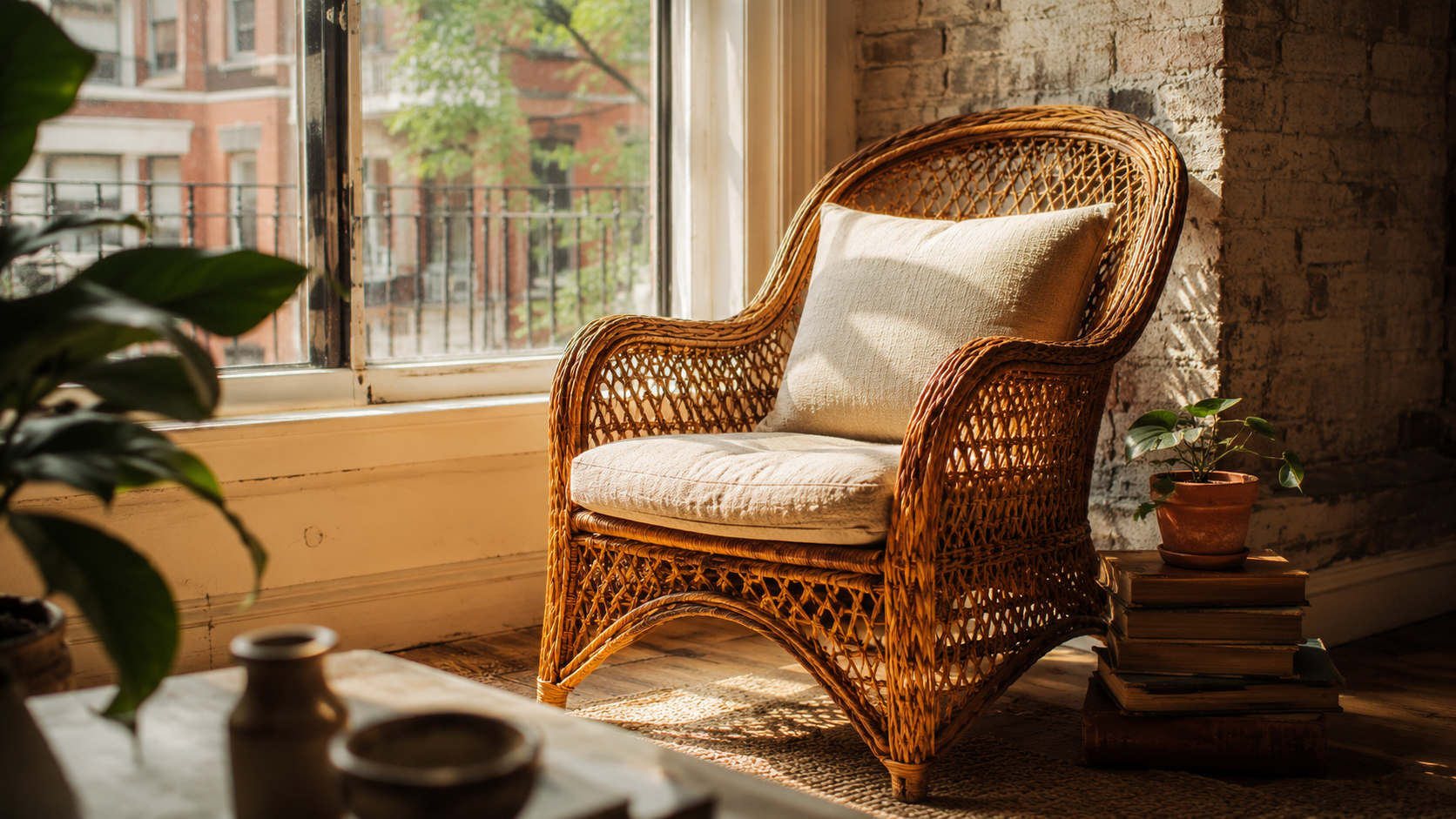
You spotted it the second you walked in: a sun-warmed rattan armchair tucked between the lamps and the dinnerware, its weave catching the light just right. It's the kind of find that makes a trip to EcoDepot feel less like errand-running and more like treasure-hunting. But then comes the hesitation — will this actually hold up?
Here's the good news: wicker and rattan furniture has been surviving decades of daily life long before it landed on our shelves, and with a little regular care, it'll happily outlast plenty of flat-pack furniture built yesterday. That durability is exactly why so many gorgeous vintage pieces are still around for us to rescue and give a second life. This guide walks you through everything you need to know about how to care for wicker furniture, plus rattan furniture care tips specific to Montreal's climate — so your new-to-you piece stays sturdy, story-rich, and beautiful for years to come.
Wicker vs. Rattan vs. Cane: A Quick Primer
Before you start cleaning, it helps to know exactly what you're working with, since these terms get used interchangeably but mean different things.
Rattan is the plant material itself — a fast-growing palm harvested mostly in Southeast Asia. Wicker isn't a material at all; it's a weaving technique, and it can be done with rattan, willow, bamboo, paper cord, or even synthetic resin. Cane is the smooth, glossy peel taken from the outer layer of the rattan stem, often used for the flat, woven seats and backs on bentwood chairs.
Why this matters: solid rattan poles tend to be sturdier and more forgiving, while delicate cane webbing and fine wicker weaving need a gentler touch. Knowing which one you've got will save you from over- or under-treating it.
What You'll Need
-
A soft-bristle brush (an old toothbrush works for tight spots)
-
A vacuum with a brush attachment
-
Mild dish soap or wood soap
-
Soft, lint-free cloths
-
Boiled linseed oil or furniture wax
-
Fine sandpaper (220 grit or higher)
-
Wood glue
-
A humidifier (optional, but helpful come winter)
Routine cleaning takes about 30 minutes. A full deep-clean-and-repair session is more of a half-day project — perfect for a slow Sunday.
Step 1: Dust and Vacuum Regularly
Start with the simplest habit: a light dusting every week or two, and a vacuum pass with the brush attachment once a month. Work in the direction of the weave, getting into the grooves and crevices where dust likes to settle.
This isn't just about appearances. Dust trapped deep in the weave attracts moisture and, eventually, pests — so a quick weekly pass is your cheapest form of long-term protection.
Step 2: Deep Clean Without Damaging the Fibers
Every few months (or as soon as you bring a new piece home), give it a proper clean. Mix mild soap with warm water, dip a soft brush or cloth, and gently scrub along the direction of the weave rather than against it. Rinse with a barely-damp cloth to remove soap residue.
The golden rule: never soak wicker or rattan. These are natural fibers, and too much water can cause warping, splitting, or mildew down the road. Once you're done, let the piece air-dry completely — ideally indoors, out of direct sun, since strong sunlight while damp can cause fibers to crack or discolour unevenly.
Step 3: Tackle Mold, Mildew, or Musty Smells
If your vintage find spent time in a damp basement or garage before it found its way to you, a musty smell is common — and completely fixable. Wipe the affected area with a solution of one part white vinegar to four parts water, then set the piece somewhere with good airflow and indirect sunlight to fully dry out. For lingering odours, a light sprinkle of baking soda left overnight (then vacuumed off) works wonders.
Catching this early matters, since mildew left untreated can weaken the fibers over time. And if you're still building your collection, browse our current furniture finds — every piece is checked over before it hits the floor.
Step 4: Repair Loose Weave or Small Breaks
A little give in the weave or a small snapped strand doesn't mean the piece is done for. For sagging or loose sections, lightly mist the area with water using a spray bottle — natural fibers tighten back up as they dry, often pulling the weave back into shape on their own.
For small breaks, a dab of wood glue on the split, held with a clothespin while it dries, is usually enough. Sand any rough, splintered edges gently with fine sandpaper so nothing snags on clothing later.
Know when to call it: cosmetic fixes like these are simple weekend jobs, but if you're looking at a collapsed frame or extensive structural damage, that's a job for a furniture restorer rather than a DIY fix.
Step 5: Condition and Protect the Material
Once or twice a year, give your piece a light coat of boiled linseed oil or furniture wax with a soft cloth. This keeps the natural fibers from drying out and becoming brittle — the same way you'd condition leather boots to keep them supple.
Keep wicker and rattan furniture a comfortable distance from radiators, wood stoves, and fireplaces. Direct heat is one of the fastest ways to dry out and crack natural fibers, even faster than sunlight.
Step 6: Manage Montreal's Humidity Swings
Here's the rattan furniture care tip that's easy to miss if you didn't grow up with these pieces: our climate is genuinely tough on natural fibers. Montreal winters bring bone-dry indoor heat, while our summers swing humid — and that back-and-forth expansion and contraction is exactly what causes fibers to loosen or crack over time.
A humidifier near your wicker or rattan pieces during heating season helps keep fibers from drying out too fast. And when it comes to storage, skip the damp basement or an uninsulated three-season porch — both trap the kind of moisture that leads to mildew. A closet or spare room with stable temperature and humidity is a much better home for an off-season piece. Natural fiber furniture is particularly sensitive to humidity extremes, and conservators generally recommend keeping relative humidity as stable as possible to prevent long-term warping and splitting.
Common Mistakes to Avoid
A few habits can undo all your good care work fast:
-
Power-washing or soaking — too much water, too fast, is the number one cause of warped or split wicker
-
Using furniture polish or silicone sprays — these can leave a sticky residue that traps dust and grime deeper into the weave
-
Leaving pieces in direct, prolonged sun — great for a photo, rough on the fibers over time
-
Ignoring small breaks — a tiny snapped strand left alone tends to unravel further with regular use
Your Vintage Wicker, Ready for Its Next Chapter
A little regular care — a weekly dust, an occasional deep clean, and a yearly conditioning — is really all it takes to keep vintage wicker and rattan furniture beautiful for another twenty years or more. That's exactly the kind of second life every piece deserves, and it's why we love giving these finds a place on our shelves in the first place.
Ready to find your own vintage wicker or rattan piece? Drop by our Plateau or Lachine locations!