Chariot
0
You open a few home décor sites and feel the familiar one-two punch — everything beautiful costs a fortune, and somehow everything affordable looks exactly like everything else. There has to be another way.
There is. And it's been hiding in plain sight.
Vintage home decor isn't a trend or a niche obsession — it's one of the smartest, most sustainable, and honestly most exciting ways to build a home you actually love. In this guide, we'll walk you through exactly how to do it: from finding your style anchor to caring for your finds, step by step. No design degree required. No unlimited budget needed. Just curiosity, a little patience, and the willingness to go on a trouvaille or two.
Why Vintage IS Sustainable Home Decor
Before we get into the how, let's settle the why — because it matters more than most people realize.
Every year, millions of pieces of furniture and décor end up in landfills. "Fast furniture" — the flat-pack, assemble-it-yourself variety — is often built to last five years, not fifty. The materials are resource-intensive to produce, the supply chains are long and carbon-heavy, and when it breaks or goes out of style, it mostly just becomes waste.
Vintage home decor sidesteps all of that. The piece already exists. No new trees felled, no factory emissions, no overseas shipping. When you bring a 1960s teak credenza or a brass lamp from the 70s into your home, you're extending its life by decades — and keeping it out of the landfill. That's the circular economy in action, and it's one of the most tangible sustainability wins available to any Montrealer on any budget.
The numbers back this up. According to the Value Village 2024 Thrift Report, 90 per cent of Canadian consumers have now engaged with a thrift store through shopping or donating — and furniture and home décor rank among the top secondhand categories Canadians actively seek out. This isn't a fringe movement. It's mainstream, and Montreal is very much part of it.
There's also the quality argument. Furniture built in the 1950s through 1980s was often constructed from solid wood, with joinery meant to last generations. Compare that to many of today's alternatives. Vintage wins almost every time.
Step 1: Identify Your Style Anchor
Here's the most common mistake people make when decorating with vintage: they try to do everything at once. They fall in love with a mid-century chair, a maximalist Victorian mirror, an industrial pipe lamp — and suddenly their apartment looks like a prop warehouse.
The fix? Start with a style anchor.
Your anchor is one overarching aesthetic that you'll commit to as the backbone of a space. It doesn't mean every piece has to match — in fact, the most interesting rooms never do. But one dominant visual thread creates coherence that makes mixing feel intentional rather than chaotic.
Some anchors that work especially well with vintage finds include:
-
Mid-century modern — clean lines, organic shapes, teak and walnut woods, the 1950s–70s sweet spot
-
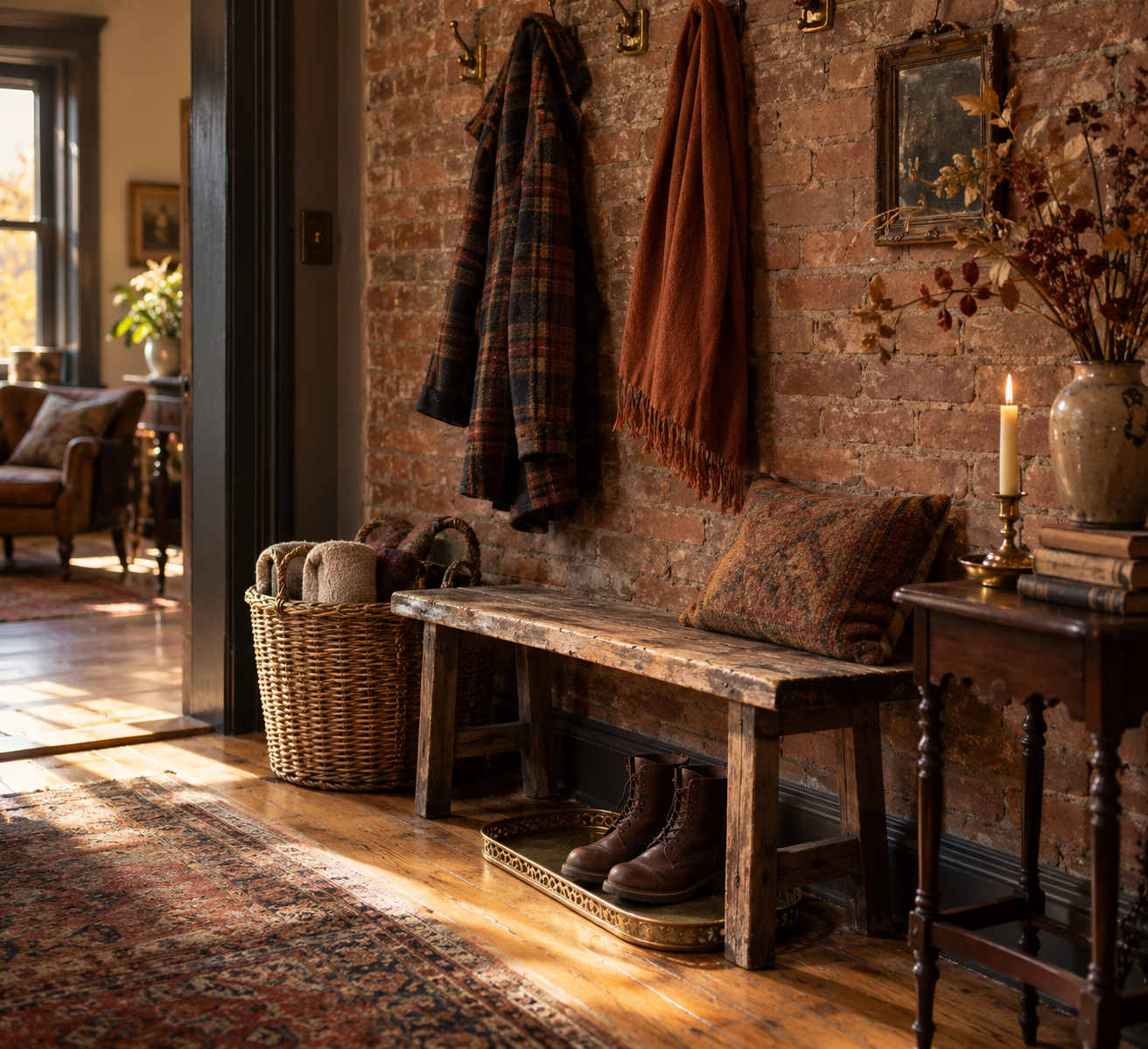
Industrial — raw metals, leather, exposed wood grain, factory-era hardware
-
Eclectic maximalist — bold colours, layered patterns, pieces from multiple eras that connect through colour palette
-
Scandinavian/Nordic — light woods, functional forms, quiet elegance
Not sure which speaks to you? Scroll through your saved Instagram posts or Pinterest boards for ten minutes without overthinking it. The patterns in what you've saved will tell you everything.
The good news for Montreal vintage hunters: mid-century modern and Danish modern pieces show up consistently and in remarkable quality. At EcoDepot, these are among the most beloved categories — credenzas, dining chairs, side tables, lamps. The style is timeless, and the pieces were built to outlast us all.
Step 2: Start With the Biggest Impact Pieces
Once you have your anchor, start with the pieces that will do the most work in a room: furniture first, lighting second.
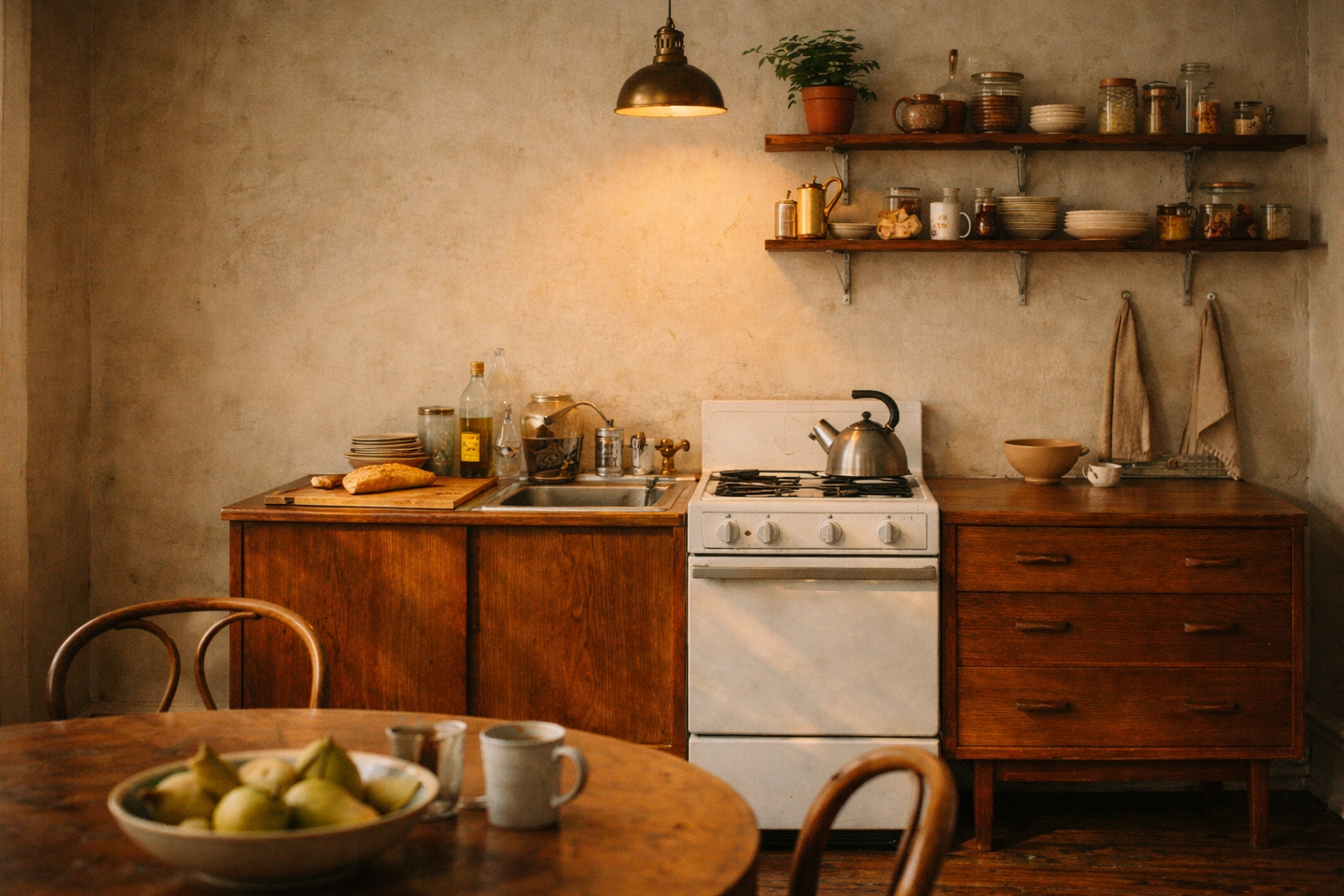
A vintage sofa, armchair, credenza, or dining table fundamentally changes the character of a space. These are the pieces that command attention — they set the tone for everything else. A good vintage dining table with solid wood construction and beautiful patina will make even the most basic chairs around it look considered.
Lighting is your second priority. Nothing — and we mean nothing — transforms a room's atmosphere faster than a great vintage lamp. The warm glow of a mid-century floor lamp, the architectural presence of a sculptural pendant from the 70s, a pair of ceramic bedside lamps: these create mood in a way that overhead lighting simply can't. And the good news? Vintage lamps are one of the most affordable categories in the whole pre-loved universe.
Why focus here first? Because these are also the most expensive categories to buy new. A solid wood dining table from a contemporary furniture brand can run $800 to $2,000+. The vintage equivalent — often better-made, with real character — might be a fraction of that. The sustainability win and the financial win arrive together.
When assessing a furniture piece, here's a quick checklist:
-
Structure: Sit in chairs, press on tabletops, open and close drawers. Wobble is often fixable; structural breaks are harder.
-
Surface: Scratches, dents, and patina are features, not flaws. Deep gouges or water damage are trickier. Use your judgment.
-
Upholstery: Fabric can always be replaced. Don't let tired upholstery turn you away from a beautiful frame.
-
Smell: Musty odours usually air out with time. Trust your nose on this one.
At EcoDepot, new furniture and lighting arrive every single week. If the perfect piece isn't there today, it might be there Thursday. Browse our latest arrivals at ecodepotmontreal.com — or better yet, come in and see what's waiting.
Step 3: Layer In Vintage Decor and Accessories
With your anchor defined and your major pieces in place, the fun really begins. This is the layer where a room stops looking decorated and starts feeling like a home.
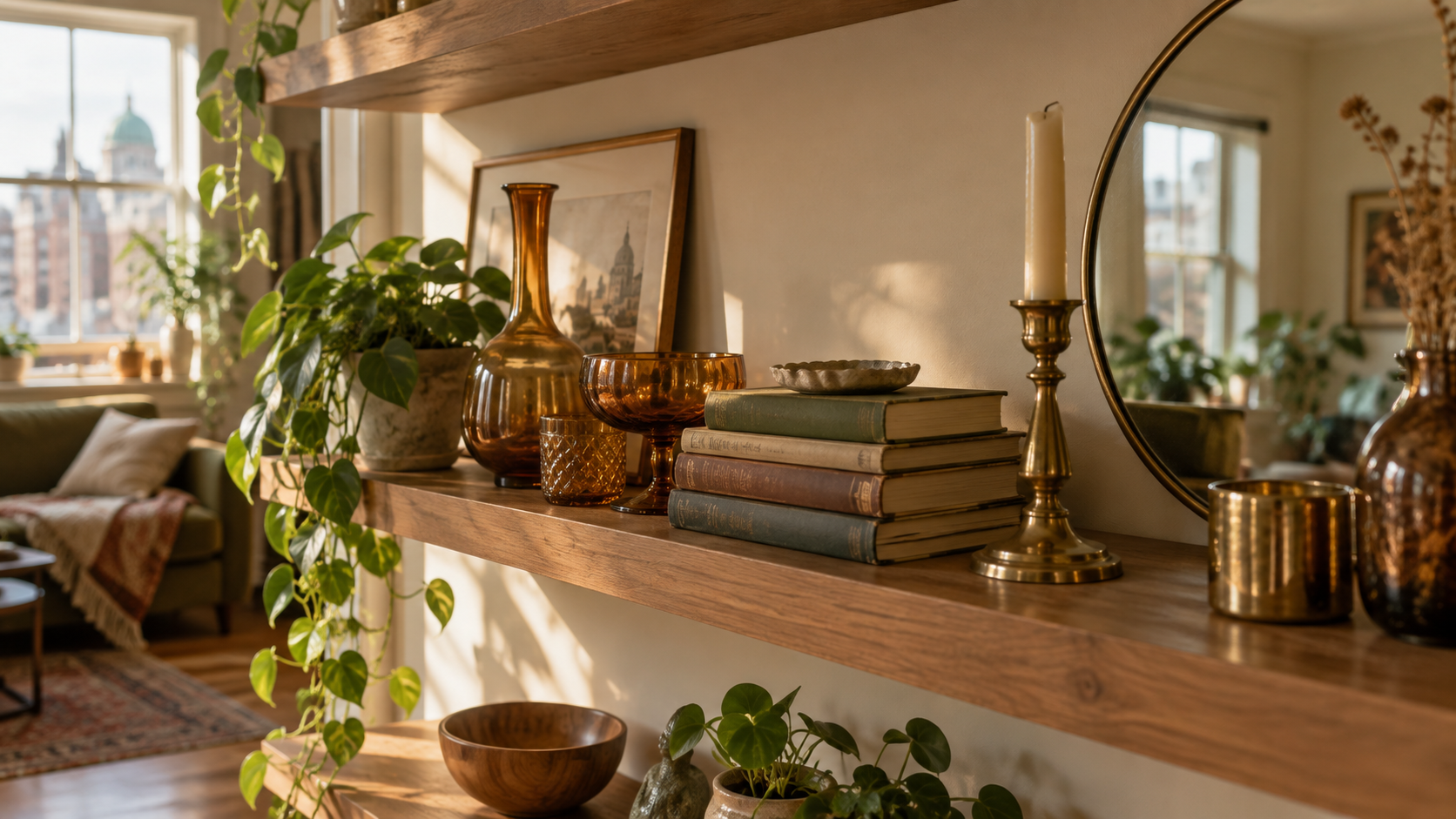
Vintage accessories and décor are the ideal second act. Think: frames in interesting shapes and finishes, ceramic vessels and vases, decorative mirrors, textile throws and cushions, collectible objects. These are low-commitment, high-impact additions — and they're often the most affordable finds in any thrift store.
A few principles that work every time:
The rule of three. Group objects in odd numbers, at varying heights. Three ceramics of different sizes on a shelf read as a collection; two look accidental. This is one of those interior design rules that actually holds up.
Mix vintage with new freely. The goal isn't a museum. A beautiful vintage ceramic vase on a modern open shelf, a 1970s brass mirror above a simple IKEA dresser — this is exactly how great rooms are built. Contrast creates interest.
Colour is your connector. If you're mixing pieces from different eras and styles, pull them together through a consistent colour palette. A warm amber, a dusty sage, a recurring note of natural wood — these threads tie disparate objects into something coherent.
For those in Montreal's Plateau or Mile End — where apartments often have high ceilings, original wood floors, and character to spare — vintage accessories find their home naturally. A single well-chosen art print in an interesting vintage frame, a stack of old hardcovers, a quirky lamp: these things cost almost nothing and make a rental feel completely yours.
Step 4: Shop With a (Flexible) Plan
Vintage shopping is a skill. It gets better with practice. And the single best thing you can do to improve your results is to arrive prepared — but not rigid.
Before you head out, bring three things:
-
The measurements of your key spaces. Know the length of the wall where you want a credenza, the ceiling height in a room where you're hunting for a pendant light, the footprint available for a new armchair. A piece you love is useless if it doesn't fit.
-
A photo of the space. Phone photos are fine. Being able to visually reference what you're working with — the floor colour, the existing pieces, the light quality — helps enormously when you're holding a potential purchase and trying to imagine it home.
-
An open mind. The best vintage finds are rarely the ones you planned for.
A few habits of experienced vintage hunters worth borrowing:
-
Visit often, with low expectations. Inventory at EcoDepot turns over every week. A single visit gives you a snapshot; regular visits build your eye and your luck.
-
Prioritize the unrepeatable. Pass on the basics you can find anywhere. Grab the one-of-a-kind piece that makes you stop in your tracks.
-
Move quickly on things you love. This isn't a retailer restocking the same SKU. If it's there and it speaks to you, it won't be there next week.
Step 5: Care for Your Vintage Finds
Here's the part most decorating guides skip entirely: what happens after you bring something home.
Vintage pieces often need a little attention before they're at their best. This isn't a drawback — it's actually part of the story. Giving a pre-loved item its next act is one of the most satisfying things about vintage decorating, and the repairs and refreshes involved are almost always simpler than people expect.
Wood furniture responds beautifully to a good clean and a coat of beeswax or natural oil. Scratches often diminish or disappear entirely. Dull finishes come back to life. The grain that was hiding under decades of dust suddenly shows itself — and it's usually gorgeous.
Metal pieces — lamps, frames, hardware — can be cleaned with appropriate metal polish or given new life with spray paint. A can of matte black or brass-toned spray paint has transformed thousands of tired pieces into statement objects.
Upholstered frames are worth keeping even when the fabric is worn. Reupholstering a vintage chair frame is a weekend project (or a job for a local upholsterer, of which Montreal has many). The result is a custom piece at a fraction of the cost of buying new.
When to call a professional: anything involving structural wood repairs, rewiring of vintage lamps, or intricate restoration of a piece you truly love. A small investment in professional care often extends a piece's life by decades.
The act of repair is the sustainability story coming full circle. You rescued something. You brought it home. You made it better. Now it belongs here — and it will for years to come.
Start Your Hunt at EcoDepot Montreal
That bare wall, that empty corner, that dining room crying out for a table with some history — imagine it with the right vintage piece. A 1960s teak credenza with the patina of decades well-lived. A brass lamp catching the late afternoon light. A ceramic vase in exactly the right shade of earthy green, found for twelve dollars on a Tuesday.
Sustainable home decor doesn't have to mean spending more, sacrificing style, or hunting through endless online listings. It means choosing pieces that already exist, that were made to last, and that carry genuine character no algorithm can generate.
The hunt is the thing. And it's waiting for you.
Visit EcoDepot Montreal at our Lachine or Plateau locations — new arrivals every week, across furniture, lighting, décor, and more. Follow us on Instagram @ecodepotmontreal for first looks at what's just come in. Your next favourite piece is already on our shelves. Will you find it before someone else does?