Chariot
0
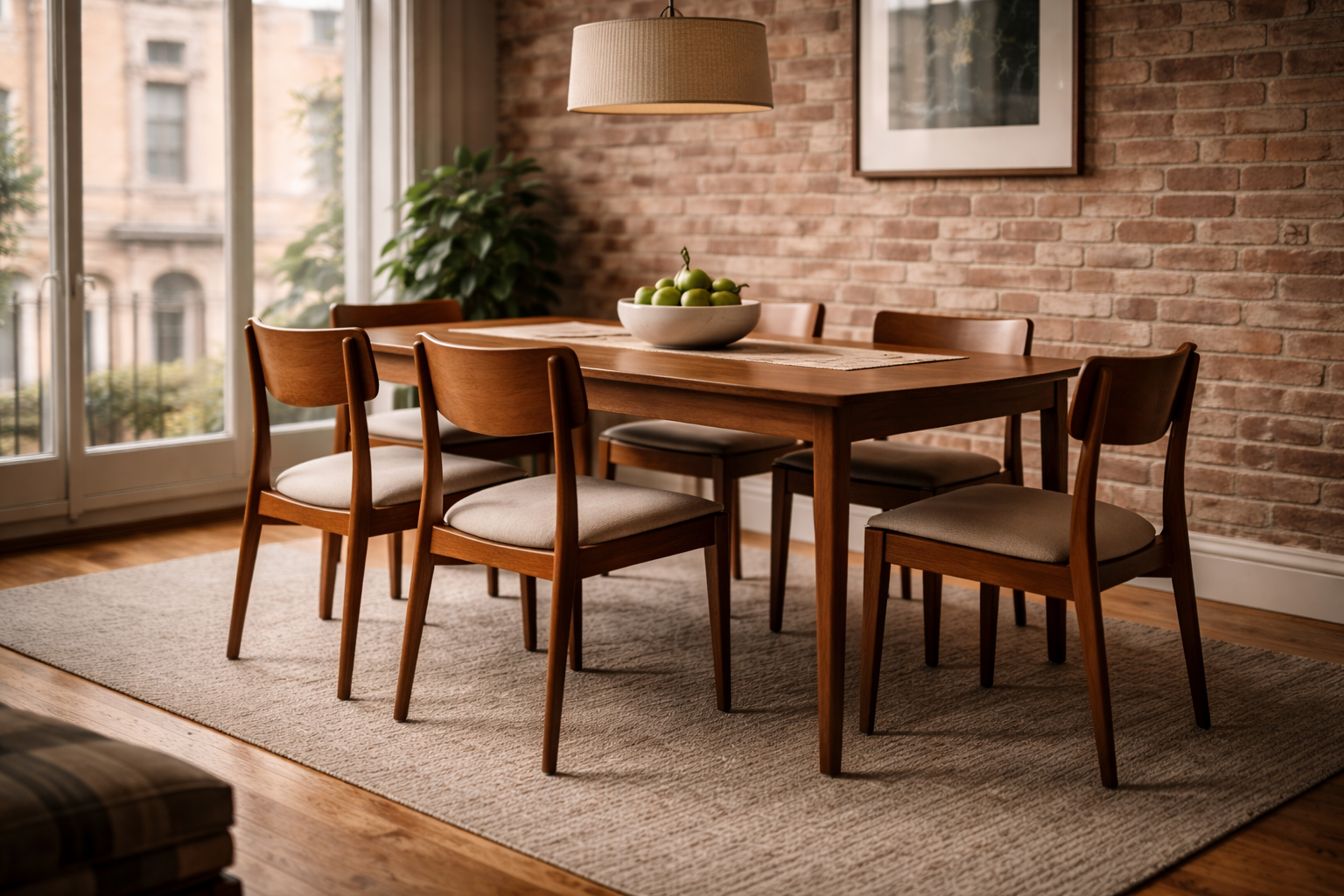
You're browsing a Montreal thrift shop when your hand runs across a teak credenza. The wood has weight—real weight. You crouch down to examine the joinery, and there they are: hand-cut dovetails connecting each drawer, brass hardware with the satisfying heft of 1960s craftsmanship, and a maker's mark stamped underneath that makes your heart skip. This isn't a reproduction. This is the real thing.
Montreal's architectural heritage and design history make it one of Canada's best cities for discovering authentic mid-century modern furniture. From the Expo 67 influence that shaped neighborhoods to the generations of original owners now downsizing from Westmount homes, the city offers a treasure trove for collectors who know where to look. But here's the challenge: the market is flooded with reproductions marketed as "mid-century modern style," and distinguishing an authentic Scandinavian teak sideboard from a particle board imitation requires knowledge.
Understanding Mid-Century Modern Design
Mid-century modern refers to a design movement that flourished from 1945 to 1969, emerging from post-World War II optimism and revolutionary manufacturing techniques. The aesthetic is immediately recognizable: clean lines without fussy ornamentation, organic curves that feel natural rather than forced, and a philosophy that form should follow function. This wasn't design for design's sake—it was democratic design, intended to bring beautiful, well-made furniture to everyday families rather than just the wealthy.
The materials tell the story as much as the shapes. Authentic mid-century modern pieces showcase teak, walnut, and rosewood—hardwoods chosen for their warm tones and durability. Bent plywood technology, perfected during the war for medical splints, suddenly enabled designers to create the flowing curves of iconic Eames chairs. Molded plastic, another wartime innovation, allowed for mass production without sacrificing design integrity. Brass hardware, glass tabletops, and wool upholstery in vibrant geometric patterns completed the aesthetic.
Three major influences shaped the movement. Scandinavian design, particularly from Denmark and Sweden, emphasized functionalism and craftsmanship—those beautiful teak pieces with exposed joinery and minimal ornamentation. American designers like Charles and Ray Eames, Eero Saarinen, and Harry Bertoia pushed boundaries with new materials and manufacturing processes, creating furniture that looked toward the future. Italian manufacturers like Artemide and Cassina brought sophistication and elegance, producing lighting and furniture that became instant classics. Even Canada contributed to the conversation—designers like Robin Bush and Jacques Guillon created pieces that are now highly collectible.
The movement endures because it solved real problems. Mid-century modern furniture fits contemporary living perfectly—the low profiles work in apartments with standard ceiling heights, the clean lines don't compete with modern technology, and the quality craftsmanship means these pieces are still functional 60 years later. From a sustainability perspective, choosing authentic vintage mid-century modern keeps beautifully made furniture in circulation rather than sending it to landfills. And for collectors, authentic designer pieces have proven to be sound investments, with values appreciating steadily over decades.
Montreal's Mid-Century Modern Heritage
Montreal's relationship with mid-century modern design goes deeper than most North American cities, thanks to a perfect storm of architecture, culture, and timing. The 1960s brought a building boom that transformed the city's skyline—Place Ville Marie's cruciform tower rose in 1962, Habitat 67's revolutionary modular housing debuted for Expo 67, and brutalist Metro stations like Berri-UQAM showcased bold concrete forms. This wasn't just architectural grandeur for public spaces; the design philosophy filtered down into residential buildings across neighborhoods like Outremont, Westmount, and the Plateau.
The architecture influenced what furniture went inside. When developers built mid-century apartment buildings with floor-to-ceiling windows, open floor plans, and minimal ornamentation, residents furnished them with furniture that matched that aesthetic. Montreal's bilingual culture meant design influences flowed from both Europe and the United States—Scandinavian functionalism appealed to the city's European sensibilities, while American innovation reflected Montreal's North American context. The result was a distinctive local take on mid-century modern that blended both traditions.
For today's collectors, this history translates to opportunity. Montreal homes naturally housed mid-century modern furniture during the era, which means authentic pieces surface regularly from original owners or their estates. The city's aging population, combined with downsizing trends, brings quality furniture to market from families who purchased it new in the 1960s and cared for it for decades. Unlike major U.S. markets where mid-century modern has been heavily picked over by collectors and dealers, Montreal's vintage furniture scene still offers discoveries at reasonable prices.
The architectural context also means mid-century modern furniture simply works in Montreal homes. Those Plateau apartments with 10-foot ceilings, original hardwood floors, and exposed brick? They were built during the same era as the furniture. The proportions align, the aesthetic complements, and the scale feels right. A Danish modern credenza doesn't look like a museum piece in a Montreal walk-up—it looks like it belongs there, because functionally and historically, it does.
How to Identify Authentic Mid-Century Modern Furniture
Walking into a vintage shop and claiming "I want mid-century modern" without knowing what distinguishes authentic pieces from reproductions is like treasure hunting without a map. The market overflows with furniture marketed as "mid-century modern style" that's actually particleboard construction from last year. Authentication comes down to understanding construction, materials, and design details that can't be faked economically.
Start with construction quality. Authentic mid-century modern furniture showcases joinery techniques that require skill and time. Flip over a drawer and look for dovetail joints—those interlocking wedge-shaped cuts that hold drawers together without glue or hardware. Check connections between legs and table tops for mortise and tenon joints or dowel construction, not staples or screws driven through particleboard. The difference is immediately tactile—solid wood furniture has weight and heft that particleboard cannot replicate. A genuine teak credenza from 1965 feels substantial when you try to slide it. A reproduction made to mimic the look weighs half as much.
Materials matter enormously. Mid-century modern designers chose hardwoods for their beauty and longevity—teak, walnut, rosewood all age gracefully, developing rich patinas that add character. Particle board, MDF, and veneer over cheap substrates weren't options in the 1960s. Original hardware tells its own story: solid brass pulls and hinges with patina, proper metalwork that operates smoothly after decades of use. Many reproductions use cheap zinc hardware or thin brass plating that reveals its true nature quickly. The finish should show appropriate wear for age—genuine patina from years of use looks different from artificially distressed finishes applied yesterday.
Design authenticity requires attention to proportions and details. Mid-century modern furniture has specific characteristics: low profiles (sofas and chairs sit closer to the ground than contemporary furniture), tapered legs (often splayed at precise angles), and specific curves that flow naturally rather than arbitrarily. Original upholstery, when present, typically features wool or high-quality cotton in geometric patterns or solid bold colors—harvest gold, avocado green, burnt orange. Many pieces retain manufacturing marks, labels, or stamps underneath surfaces: "Made in Denmark," maker's marks from specific manufacturers, or designer signatures. These aren't always present, but their absence on supposedly high-end designer pieces should raise questions.
Red flags signal reproductions or misattributed pieces. Particle board or MDF construction appears in any piece marketed as vintage. Stapled joints mean modern manufacturing, not 1960s craftsmanship. Furniture described as "mid-century modern style" rather than vintage or antique explicitly acknowledges it's a reproduction. Fresh stain attempting to mimic aged teak usually looks too uniform, without the natural variation that decades create. Missing maker's marks on pieces claimed to be Herman Miller, Knoll, or specific Scandinavian designers warrant skepticism—legitimate manufacturers marked their work.
Here's a practical authentication approach: Always flip furniture over to check underneath for stamps, labels, and construction details. Feel the weight—solid hardwood is significantly heavier than particleboard alternatives. Examine joinery at drawers and where legs connect to bodies. Look for wear patterns consistent with decades of use: lighter patches where hands opened drawers, slight scuffs on leg bottoms, patina on brass hardware. Check that hardware appears original—mismatched screws or different finish metals suggest replacements.
Canadian consumers are increasingly embracing pre-owned furniture as a mainstream choice, with sustainability and value driving purchasing decisions. Understanding authentication helps ensure you're investing in genuine quality rather than paying vintage prices for modern reproductions.
Where to Find Authentic Mid-Century Modern in Montreal
Montreal's vintage furniture market spans from highly curated boutiques to estate sales where you might discover a Svend Langkilde credenza in someone's basement. The key is knowing what each venue offers, when to shop, and what price expectations make sense. Some sources provide authentication and expertise; others require you to bring your own knowledge and assessment skills. The best collections emerge from strategically combining multiple sources rather than relying on just one.
EcoDepot Montreal
EcoDepot Montreal operates as Montreal's largest curated vintage and second-hand furniture destination, with 3 locations specifically chosen to serve different neighborhoods and shopping needs. The Lachine location tends toward larger furniture items—credenzas, dining sets, full living room pieces—while the Plateau/Rachel location focuses on items scaled for smaller Montreal apartments and features excellent selections of accent pieces, lighting, and smaller mid-century treasures.
What distinguishes EcoDepot from typical thrift stores is the curation process. Staff members identify quality pieces from estate sales and donations, separating authentic mid-century modern furniture from reproductions and damaged goods. This means when you walk through either location, you're seeing furniture that's already passed initial quality assessment. The weekly arrival schedule keeps inventory fresh—new pieces hit the floor consistently, and serious collectors know to check back regularly rather than assuming they've seen everything.
Occasionally, remarkable pieces surface. Last month, a 1965 teak credenza by Svend Langkilde arrived from a Westmount estate—original hardware, beautiful dovetail joinery, brass details that had developed perfect patina. Priced at $425, it sold within 48 hours to a Mile End designer who recognized its value immediately. These discoveries happen regularly enough to make checking new arrivals worthwhile, but rarely enough that acting quickly matters when something special appears.
Shopping strategy matters at EcoDepot. Follow @ecodepotmontreal on Instagram to see new arrivals before they hit the floor—serious collectors often call ahead about specific pieces spotted online. Thursday and Friday evenings are prime time: new stock from the week's estate acquisitions gets displayed, and you're shopping before the weekend crowd. Staff members possess genuine knowledge about pieces—asking about provenance or specific details often yields helpful information about where furniture originated and whether other matching pieces might arrive.
Pricing at EcoDepot reflects the accessibility mission. Most mid-century modern pieces range from $50 for smaller items to $500 for substantial furniture like credenzas or dining sets. Occasional designer pieces or exceptional items may be priced higher, but the focus remains on making quality vintage furniture attainable rather than maximizing profit margins. This pricing structure means you can build a collection gradually without requiring a massive budget upfront.
The sustainability angle matters here too. Every purchase keeps furniture in circulation, prevents waste, and supports a local business committed to environmental responsibility. When you buy that teak sideboard, you're participating in the circular economy while acquiring furniture that will likely outlast anything manufactured today. That's the intersection of sustainability, affordability, and uniqueness that makes the hunt worthwhile.
Contact & Hours:
-
Monday-Wednesday: 10 AM-6 PM
-
Thursday-Friday: 10 AM-8 PM
-
Saturday-Sunday: 10 AM-6 PM
-
Email: info@ecodepotmontreal.com
Building Your Mid-Century Modern Collection in Montreal
Starting a mid-century modern collection feels overwhelming when you're staring at an empty apartment or contemplating replacing everything you own. The key is approaching collection-building strategically, thinking about anchor pieces, mixing eras, and understanding that great collections develop over months or years, not weekends.
Anchor pieces provide the foundation. Start with one substantial item that defines your space's aesthetic: a credenza that functions as both storage and statement piece, a dining table where you'll gather with friends, or a sofa that establishes the living room's character. This first major piece should be something you love—you're building around it, and it sets the standard for quality. Investing $400-$600 in an authentic teak credenza from EcoDepot makes more sense than buying three lesser pieces at $150 each. Quality over quantity establishes the collection's direction.
Mixing eras prevents your space from feeling like a museum. Pure mid-century modern in every detail can feel sterile or overly curated—rooms that look like stage sets rather than homes where people actually live. Instead, blend your mid-century pieces with contemporary elements. A Danish modern credenza looks stunning against white IKEA shelving. That Eames-style chair works beautifully with a contemporary sofa. The juxtaposition between vintage and modern creates visual interest and makes spaces feel collected rather than decorated. Montreal apartments particularly benefit from this approach—the architectural features like exposed brick and original hardwood already provide character, so furniture can establish clean lines without everything matching perfectly.
Scale matters enormously in Montreal living spaces. Many city apartments feature smaller rooms than mid-century homes did—those Plateau walk-ups and Mile End apartments weren't designed for massive sectional sofas and oversized furniture. Choose mid-century pieces that fit your actual space: compact credenzas rather than 8-foot sideboards, dining tables sized for your room, chairs that don't overwhelm. The beauty of authentic mid-century modern is that designers created pieces for efficient living, understanding that not everyone inhabited sprawling homes. Those compact designs work perfectly in contemporary urban apartments.
Montreal's climate and winter darkness actually complement mid-century modern aesthetics. Those clean lines and light wood tones brighten spaces during grey months, while the furniture's low profiles make rooms feel more spacious. Layer in cozy textiles for Canadian winters—wool throws, warm cushions, area rugs—that soften mid-century's sometimes austere aesthetic. The Scandinavian origins of much mid-century modern furniture mean it was designed for northern climates and long winters; designers understood the need for warmth alongside clean design.
The sustainability angle matters here. Every authentic mid-century modern piece you choose keeps furniture out of landfills, supports the circular economy, and avoids the environmental costs of new furniture manufacturing. That teak credenza you're considering has already been manufactured, shipped, and used for decades—purchasing it adds no additional carbon footprint. Contrast that with buying new furniture that requires harvesting resources, manufacturing, and international shipping.
Quality mid-century modern furniture offers decades of continued use. Those dovetail joints and solid hardwood construction mean your pieces will likely outlast you. When you eventually move, upgrade, or change styles, authenticated mid-century pieces retain resale value—you can pass them along to another collector, recouping much of your investment. This isn't true for contemporary manufactured furniture, which typically becomes worthless after a few years of use.
Building a collection also means accepting patience. The perfect piece doesn't appear on command. You might search for three months before finding the exact credenza you envision. Estate sales don't align with your schedule. That listing on Kijiji that looked promising was actually a reproduction. These frustrations are normal, and experienced collectors will tell you that the hunt itself becomes enjoyable—checking EcoDepot's new arrivals, scrolling estate sale listings, visiting flea markets on Sunday mornings. The discovery, when it happens, feels earned.
Montreal offers unique advantages for mid-century modern collectors. The local supply remains strong thanks to original owners downsizing, prices haven't reached the peaks of major U.S. markets, and the architectural context means pieces work naturally in local homes. Your Plateau apartment's exposed brick and hardwood floors? They're the perfect backdrop for that Danish modern credenza. The high ceilings and large windows? They showcase mid-century's clean lines beautifully. You're not forcing a design aesthetic into an incompatible space—you're choosing furniture that historically belonged in exactly this type of home.
Conclusion
Montreal's mid-century modern furniture scene offers rare advantages: strong local supply from original owners, architectural context that makes the aesthetic feel natural, and prices that remain accessible compared to markets in major U.S. cities. Understanding what distinguishes authentic pieces from reproductions—the joinery, materials, construction quality, and design details—transforms shopping from guesswork into informed hunting. When you recognize dovetail joints and can identify teak by weight and grain, you're equipped to find value wherever it appears.
The mix of sources matters as much as knowledge. EcoDepot Montreal's curated selection provides reliable quality and weekly new arrivals without requiring you to authenticate every piece yourself. Estate sales offer the thrill of discovery and potential bargains when you find families selling grandma's furniture without recognizing its value. Online marketplaces require maximum vigilance but can yield extraordinary deals. Flea markets and specialized vintage shops each serve different needs—investment pieces versus treasure hunting, authentication certainty versus accessible pricing.
Building a mid-century modern collection doesn't happen overnight, and that's precisely what makes it satisfying. Starting with one anchor piece and gradually adding items you genuinely love creates spaces that feel personal rather than showrooms. Mixing vintage with contemporary prevents museum-like sterility. Patience rewards you with pieces that tell stories—that credenza from a Westmount estate, that lamp discovered at a Canal Lachine market, those dining chairs that finally appeared on Kijiji after months of searching.
Montreal's treasure hunt for mid-century modern doesn't have to be overwhelming. At EcoDepot Montreal, we do the initial curation—separating quality pieces from reproductions and damaged goods, identifying authentic construction, and bringing estate sale discoveries directly to our Lachine and Plateau locations. Visit this week to see what's arrived: from teak credenzas with beautiful patina to Danish modern chairs that need new homes. Every piece tells a story, and every purchase keeps beautiful design in circulation.
Ready to start your mid-century modern collection? Visit EcoDepot Montreal this week—follow us @ecodepotmontreal on Instagram to see new arrivals first, or call 514-947-6787 to ask about specific pieces you're hunting. Your next authentic find is waiting.
The best mid-century modern pieces aren't just furniture—they're functional art with history, crafted during an era when quality meant something. In Montreal's vintage market, those pieces are still out there, waiting for someone who recognizes their value. The credenza you discover this week might have been purchased new in 1965 by a young couple furnishing their first Outremont apartment. It served them for sixty years, and now it's ready for its next chapter. That's not just furniture. That's design that endures.