Chariot
0
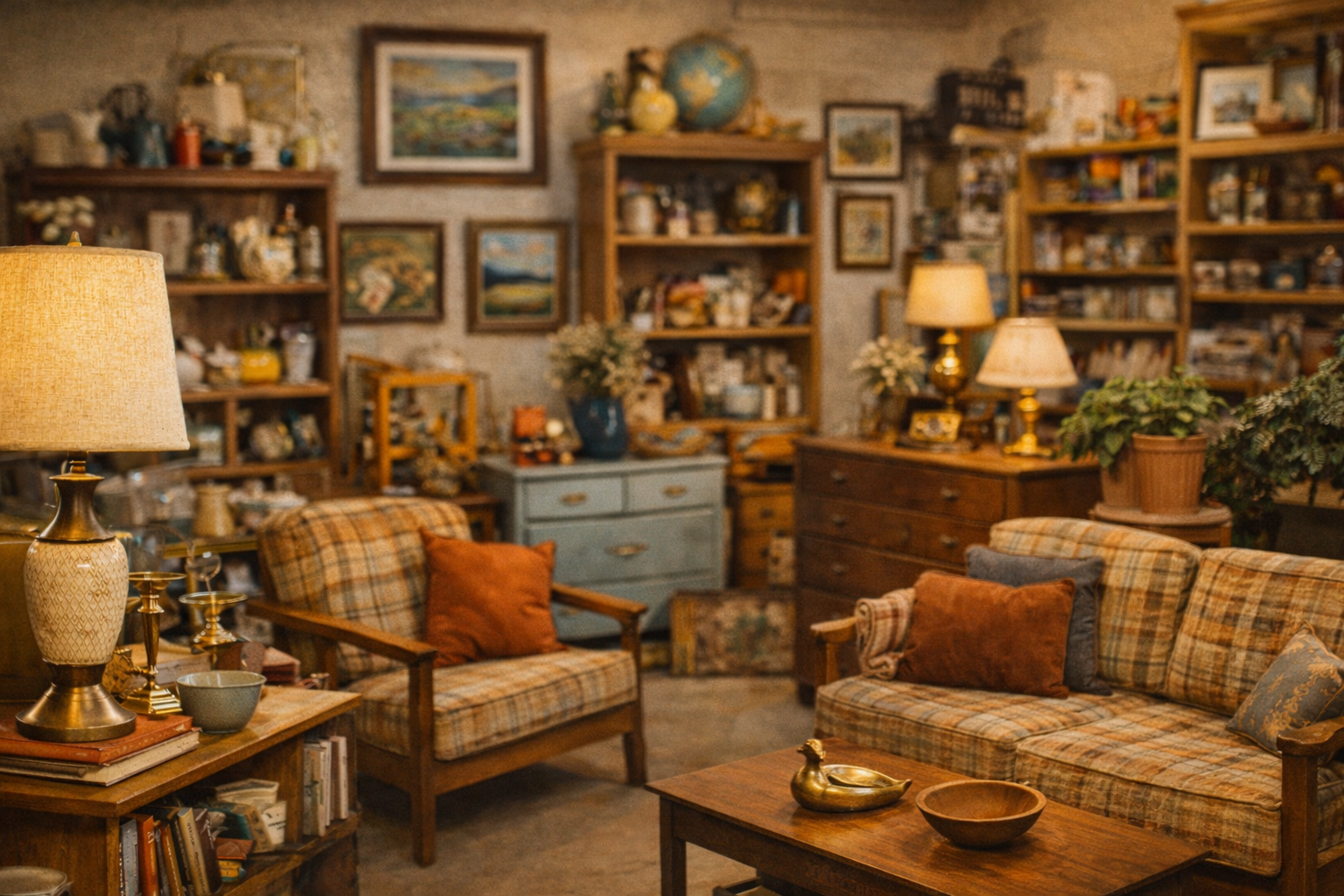
You walk into a thrift store and spot a gorgeous mid-century lamp for $15. Or a solid wood bookshelf that would cost $300 new, priced at $45. Or that perfect vintage throw pillow that ties your whole room together. That moment of discovery? That's what thrift shopping is all about.
But if you've never set foot in a secondhand shop before, the idea might feel intimidating. Racks stuffed with clothes, shelves piled high with housewares, furniture tucked into every corner—where do you even start? How do you know if something's worth buying? What if you miss all the good stuff or make an expensive mistake?
Here's the truth: every seasoned thrifter started exactly where you are now. The treasure hunters who can spot a gem from across the room? They learned by doing, not by magic. And you're about to learn the same way, with a clear roadmap that takes the guesswork out of your first visits.
By the end of this guide, you'll know exactly what to bring, where to start, how to spot quality, and most importantly—how to actually enjoy the hunt. Montreal's thrift scene, from neighborhood shops to destinations like EcoDepot, welcomes everyone from curious first-timers to vintage veterans. Let's get you ready to join them.
Why Beginners Feel Intimidated (And Why You Shouldn't)
Let's acknowledge the elephant in the room: thrift stores can feel overwhelming at first. Maybe you're worried you won't recognize quality when you see it. Maybe you think everyone else knows some secret code you haven't cracked. Maybe you're concerned about appearing out of place, or that everything will be damaged or dirty, or that you'll walk out empty-handed after wasting an hour.
These fears are completely normal, and here's the reality check: every single experienced thrifter felt the exact same way on their first visit. That person confidently pulling vintage treasures from the shelf? They once stood where you're standing, wondering if they'd know a good find from a dud.
Thrift shopping is a learned skill, not some innate superpower. You develop an eye for quality through experience, not overnight. You learn which materials age well, which brands hold up, and where to look for hidden gems—but all of that comes with time and practice, not from reading a single article (though this one will give you a serious head start).
The beautiful part? There are no real stakes here. Unlike learning to drive or perform surgery, the worst-case scenario in thrift shopping is buying something that doesn't work out. And even that teaches you something for next time. Frame this as an adventure where "mistakes" are just tuition in your education as a thrifter.
The thrill isn't always in walking out with an armload of treasures. Sometimes it's in the hunt itself—turning that brass candlestick over to find a maker's mark, discovering a vintage cookbook from the 1960s, or simply spending an hour treasure hunting on a Wednesday afternoon. Some trips yield incredible finds. Others teach you patience. Both are valuable.
Setting Yourself Up for Success: Before You Go
Define Your Mission (Without Limiting Yourself)
Start by keeping a running list on your phone—not a rigid shopping list, but a loose collection of items you actually need or have been thinking about. Maybe you need a bedside lamp. Maybe you've been wanting vintage frames for a gallery wall. Maybe you're furnishing a first apartment and need, well, everything.
Create inspiration boards if that helps. Screenshot Instagram posts that catch your eye, save Pinterest images of styles you love, bookmark looks you want to recreate. These references aren't rules—they're guideposts. The magic of thrifting is that some of your best finds will be things you never knew you needed until you spotted them.
The key is having a general direction without limiting yourself. If you walk in looking only for a brass lamp, you might walk right past the perfect ceramic one. Stay open.
Set a Realistic Budget
For your first trip, set aside $20-50 as a learning budget. This is enough to snag a few smaller items or one substantial piece without feeling the pressure to "make it count." You're here to learn, not to furnish an entire home in one afternoon.
Montreal thrift store prices typically range from $2-10 for small items like dishes, books, or décor, and $15-75 for furniture pieces. Clothing varies wildly but expect $5-20 for most items. Knowing these ballparks helps you recognize a deal when you see one—and spot when something's overpriced.
If you're feeling nervous, try the "one-item rule": commit to finding just ONE thing on this trip. Takes the pressure off completely. You're not trying to score big, just to get comfortable with the process.
Timing Matters
Weekday mornings are your friend. Fewer crowds mean more space to browse, less competition for new arrivals, and a calmer environment for your first visit. You can actually think without someone's shopping cart bumping into yours every five minutes.
End of the month in university neighborhoods like the Plateau or Mile End? That's moving season gold. Students clearing out apartments, young professionals relocating—their treasures become your opportunities.
Winter months, particularly January and February, are excellent for housewares as people declutter after the holidays. Spring brings furniture as families do deep cleans. Every season has its rhythm.
What to Bring
Keep it simple:
-
Reusable shopping bag: You'll appreciate this when your hands are full
-
Your phone: For Google Lens searches, measuring apps, and checking your inspiration boards
-
Hand sanitizer: Makes browsing more comfortable
-
Small tape measure (optional): For furniture or specific measurements, though your phone's measuring app works in a pinch
-
Cash: Some smaller shops prefer it, though most accept cards now
That's it. No special equipment needed.
Your First Visit: A Step-by-Step Game Plan
Step 1: Get the Lay of the Land (5-10 minutes)
When you walk in, don't immediately dive into the nearest rack. Take a breath. Grab a cart or basket—even if you think you won't need it. (You will. Everyone thinks they won't, and everyone ends up juggling six items while trying to examine a seventh.)
Walk the perimeter of the store. Get a sense of how it's organized. Where are the housewares? Where's the furniture section? Where can you find someone if you have questions? Notice any signs about sales or discount areas—sometimes there's a color-of-the-week tag that's an extra percentage off.
This reconnaissance takes just a few minutes but makes the whole visit more efficient. You'll know where to circle back when something catches your eye.
Step 2: Start in Your Comfort Zone
You don't have to systematically work through every single section. Choose ONE area that genuinely excites you and start there.
For Montreal's climate, if you're comfortable with clothing, starting with seasonal items like coats or winter boots can yield great finds—people upgrade these frequently. Or begin with lower-stakes sections like books, housewares, or decorative items. There's less pressure with a $5 vase than a $50 jacket.
The point is to start somewhere that feels natural to you. This isn't a test; it's exploration.
Step 3: Use the Touch-and-Inspect Method
Pick up things that catch your eye. Turn them over. Check for damage. Feel the weight. Read labels. Look underneath.
There's zero pressure to buy anything you touch. This is reconnaissance. You're training your eye, learning what materials feel like, understanding what condition looks acceptable to you.
Notice what draws you naturally: certain colors, particular textures, specific styles. These patterns will help you develop your personal thrifting style over time.
Step 4: The "Maybe Pile" Strategy
Keep items in your cart as "maybes" while you continue browsing. Don't commit immediately. Let pieces travel with you through the store.
As you see more options, you'll naturally compare. That first vase might lose its appeal when you spot a more interesting one three aisles later. Or you'll circle back and realize the first one was perfect all along.
Continue browsing other sections. Give yourself time. Then before checkout, reassess everything in your cart. It's completely okay—encouraged, even—to put things back. Stores expect this. No one's judging you.
Step 5: Take Breaks
Thrift stores pack an enormous amount of visual stimuli into relatively small spaces. Colors, patterns, textures, shapes all competing for your attention. This can be genuinely overwhelming, especially on a first visit.
If you start feeling overstimulated or decision-fatigued, step outside for a moment. Get some air. Reset your brain. Then head back in if you want to continue, or call it a successful first trip if you're done.
For your first visit, 45-60 minutes is plenty. You don't need to see everything or find everything. You're building comfort, not completing a marathon.
What to Look For: Category-by-Category Guide
Furniture & Home Basics
Best beginner finds:
Solid wood pieces are your golden ticket. Unlike the particle board furniture that dominates big-box stores, real wood furniture from decades past was built to last—and it often costs less secondhand than new pressed-wood alternatives.
Look for mid-century modern chairs and tables (Montreal's vintage scene is particularly rich with these), storage solutions like bookshelves and side tables, and unique lighting. The city's European influences mean you'll occasionally spot imported pieces that would cost hundreds new.
Quality checks:
Test drawers and doors—they should open smoothly without catching. Check for loose joints by gently rocking furniture pieces. Some wobble is fixable with wood glue; structural damage usually isn't worth it unless you're committed to a restoration project.
Look for real wood versus particle board. Here's a quick test: Check the edges and unfinished areas (like the back or inside of drawers). Real wood shows grain; particle board shows compressed wood chips.
Don't fear minor scratches and dings. They add character and are incredibly easy to fix with a bit of wood oil or a light sanding. What you want to avoid is deep gouges, water damage, or structural compromises.
Montreal-specific note: Perfect for those Plateau walk-ups or Mile End lofts where every piece needs to work hard and look good. Solid vintage furniture handles moves better than flat-pack options, too.
Kitchen & Housewares
Best beginner finds:
Glassware and dishes are thrift store staples and perfect for beginners. They're easy to clean, affordable (often $1-5 per piece), and immediately useful. Vintage Pyrex, classic white dishes, or that random mismatched collection that somehow works perfectly together—all fair game.
Cast iron pans regularly appear for $5-15. Clean them up, re-season them, and they'll outlast anything you'd buy new. Same with vintage kitchen tools: potato mashers, whisks, wooden spoons. The quality from 40+ years ago often exceeds modern versions.
Unique serving pieces—vintage platters, interesting bowls, decorative tins—add personality to your kitchen without costing a fortune.
Quality checks:
Run your finger along the edges of dishes to check for chips or cracks. Small chips on the underside might be fine; cracks anywhere are deal-breakers (they'll spread).
Avoid cracked glassware entirely—it's a safety issue. Small chips on the rim of a vase intended for flowers? Your call. But drinking glasses need to be intact.
Metal should be rust-free or show only surface rust that cleans off easily. Deep rust pitting means the piece is compromised.
Smell inside containers, especially plastic ones. If the odor persists after a quick sniff test, it's probably embedded and won't wash out.
Décor & Accents
Best beginner finds:
Picture frames in any condition are worth grabbing. Even if the frame itself is dated or damaged, the glass and backing are useful, and a coat of spray paint transforms almost anything.
Vases and planters are everywhere in thrift stores, and you can build an entire collection for under $20. Baskets work for storage, display, or both. Mirrors add light and space to any room—check for silvering issues (black spots), but honestly, some distressing can look intentional and charming.
Artwork and prints cost $3-15 in most shops. Even if you don't love what's in the frame, the frame itself might be perfect for something else.
Quality checks:
Frames should have intact backing and hardware for hanging. The glass can be replaced if needed, but solid frame construction matters.
For mirrors, check all edges—that's where deterioration typically starts. Decide if you like the distressed look or need pristine reflection.
With décor, condition matters less than style and potential. A brass candlestick with patina is a feature, not a bug. A ceramic vase with a chip might be perfect holding dried flowers where the chip won't show.
Don't worry about color. Spray paint, furniture paint, chalk paint—these are your friends. If the shape and material appeal to you, color is fixable.
Textiles & Linens
Best beginner finds:
Quilts and blankets add instant coziness and often cost $10-30 for pieces that would be $100+ new. Throw pillows are easy to wash or recover. Curtains can work if you measure first (write down your window dimensions in your phone before shopping).
Vintage table linens—tablecloths, napkins, tea towels—often feature better fabric quality than modern versions.
Quality checks:
Check for stains (many come out with proper washing and sunning, but set-in stains might be permanent). Look for moth holes in wool items by holding them up to light. Feel fabric quality—natural fibers like cotton, linen, and wool age better than synthetics.
The good news: almost everything is washable with the right approach. Hot water and oxygen bleach work wonders on vintage linens. Just wash before use, and you're set.
The Art of Quality Detection (Without Being an Expert)
Materials to Seek Out
You don't need encyclopedic knowledge to spot quality. Focus on materials:
Solid wood furniture over particle board—it's heavier, shows grain patterns, and lasts generations instead of years. Natural fabrics (cotton, linen, wool) over synthetics—they breathe better, age better, and feel better. Brass, copper, and solid metal fixtures and décor—they develop beautiful patina over time instead of flaking or tarnishing. Quality ceramics and glassware—look for weight and thickness; cheap pieces feel light and fragile.
Bonus: Look for maker's marks on the bottom of ceramics, glassware, and furniture. Even if you don't recognize the name, a mark often indicates better quality and craftsmanship.
Red Flags vs. Character
This distinction is crucial and something you'll refine with experience. Some wear adds character; other damage is a hard pass.
Pass on these:
Strong odors that don't diminish with airing out—smoke and mildew are particularly stubborn. Structural damage to furniture (cracked legs, separated joints that won't re-glue, severely warped wood). Electronics without power cords or with damaged cords—safety issues aren't worth the savings. Broken zippers on bags or clothing unless you're committed to repair. Chipped or cracked glassware for anything that will hold liquid or food.
Character = Good:
Patina on metals is desirable—that greenish color on brass or copper, the darkened areas on silver. This is the good stuff; it shows age and authenticity. Minor scratches on wood are sandable or can be embraced as part of the piece's history. Worn edges on vintage textiles demonstrate age, not damage, as long as the fabric isn't actually disintegrating. Faded colors on items that caught sun over decades can be charming—that worn blue on a vintage quilt, the sun-bleached spine of a book.
Learning this distinction takes time. When in doubt, ask yourself: "Does this damage affect function or just aesthetics?" If it's purely aesthetic and you like the look, you've found character, not a flaw.
The Google Trick
Your phone is your secret weapon. See a maker's mark you don't recognize? Google Lens it. Wondering if a particular item has value? Quick search for "vintage [item name] worth" gives you context.
Brand names you're unfamiliar with? Search them. Sometimes you'll discover you're holding quality designer pieces that happened to end up at a thrift store. Other times you'll learn it's not special—but that's information too.
Check if something unusual might be collectible, but here's the key: buy what you love and will use, not what you think you can resell. If something brings you joy at the thrift store price, it's worth it regardless of resale value.
Common Beginner Mistakes to Avoid
Don't buy something just because it's cheap
This is the number one trap. That $3 sweater seems like nothing, but if you wouldn't wear it, it's $3 wasted plus closet space occupied. If you wouldn't buy it at full price (ignoring cost), you probably shouldn't buy it on sale either.
Cheap clutter is still clutter. You're thrifting to find things you love, not to simply acquire more stuff.
Don't skip the inspection
Most thrift stores have strict no-return policies. Take the extra two minutes to check thoroughly before you commit. Open drawers, examine seams, look for stains, test zippers. Discovering damage at checkout is too late.
Don't buy items "for someday"
That picture frame you'll definitely paint. That chair you'll absolutely reupholster. That craft supplies you'll surely use for a project. Unless you have the skills, tools, time, and genuine motivation to complete the project within the next month, leave it.
Buy items you'll use immediately or very soon. The "someday" pile rarely gets addressed and usually ends up back at a thrift store eventually.
Don't be afraid to walk away empty-handed
Some trips won't yield finds. That's completely normal and part of the thrift shopping experience. Inventory rotates constantly, and sometimes the timing just doesn't align with what you need.
There's always next week's arrivals. In fact, this is precisely why successful thrifters visit regularly—they understand that the hunt itself is ongoing, not a one-time event.
Don't limit yourself to one section
You never know where gems hide. Shops mis-categorize items constantly. That vintage serving platter might be with the picture frames. The designer lamp might be tucked behind kitchen appliances. The perfect throw pillow could be in the textile section, the bedding section, or randomly on a furniture piece.
Browse everything at least once on your first visit. You'll learn where your particular store tends to put things, but don't assume you know until you've explored.
Don't feel pressured to know everything
You're learning as you go. If you're unsure about something, ask staff. People who work at places like EcoDepot Montreal genuinely enjoy helping folks discover great pieces. They see incredible items every day and love when someone appreciates a particular find.
The vintage knowledge, the ability to instantly recognize quality, the sense of what's a good price—all of this comes with experience, not from reading one guide. Be patient with yourself.
Making It a Habit: Your First Month of Thrifting
Building comfort with thrift shopping comes from regular exposure, not a single perfect trip. Here's a realistic progression:
Week 1: Single-category focus visit. Spend your time only in housewares, or only books, or only the furniture section. Go deep in one area. This lets you really understand variety, pricing, and quality within a specific category without feeling overwhelmed.
Week 2: Visit a different store or location. If you started at a large warehouse-style thrift store, try a smaller curated shop. Different stores have different vibes, pricing, and inventory. EcoDepot Montreal's two locations (Lachine and Plateau) each have their own character—experiencing both helps you understand what speaks to you.
Week 3: Bring a friend for a second opinion. Make it social. Having someone to say "yes, that's amazing" or "honestly, not your best find" takes pressure off while adding fun. Plus, you'll learn from watching what catches their eye versus yours.
Week 4: Revisit your favorite store from the first three weeks. Notice how much the inventory has changed. This demonstrates why regular visits matter—the store you shopped last week has completely different options this week.
By Month 2: You'll start recognizing quality instantly, understanding what constitutes a good price, and developing your own eye for treasures. You'll have favorite sections, preferred shopping times, and maybe even some staff who recognize you.
Create your routine: Weekly or bi-weekly visits work best for staying current with inventory. Follow local stores on social media for new arrival alerts—stores like EcoDepot Montreal post their incoming treasures regularly, so you can time visits around particularly exciting drops.
Join online community groups for thrift tips, local finds, and inspiration. Montreal has active secondhand shopping communities across platforms where people share scores, trade advice, and celebrate each other's finds.
Your Montreal Thrift Shopping Journey Starts Here
The path from "intimidated beginner" to "confident thrifter" isn't as long as you might think. It's built from small moments: the first time you spot quality wood under ugly paint, the morning you score the exact item you needed, the afternoon you find something you didn't know you wanted until you saw it.
Every expert started where you're standing right now, wondering if they'd recognize a gem or walk past it. They learned by showing up, touching things, making occasional mistakes, and gradually developing an eye for treasures hidden among the ordinary.
Remember, thrift shopping isn't about perfection. It's about discovery. About the satisfaction of finding a $200 item for $15. About giving beautiful things a second act. About creating a home filled with pieces that have stories, character, and personality that no big-box store can replicate.
Start small. Stay curious. Have fun with it. The sustainable, affordable, unique finds aren't hiding—they're waiting for someone to recognize them. That someone might as well be you.
EcoDepot Montreal in Lachine and the Plateau welcomes first-timers with open arms. Weekly new arrivals mean there's always something fresh to discover, from everyday essentials to those "how did they even find this?" designer pieces that make your friends jealous. The staff knows their inventory, enjoys helping shoppers spot potential, and celebrates when someone finds exactly what they've been hunting for.
Come browse, ask questions, and start your treasure-hunting journey. Your first thrift store visit might feel uncertain, but your tenth will feel like home. And the best part? Every single item you choose helps reduce waste and gives something beautiful a second act—proving that your style doesn't have to cost the earth.