Chariot
0
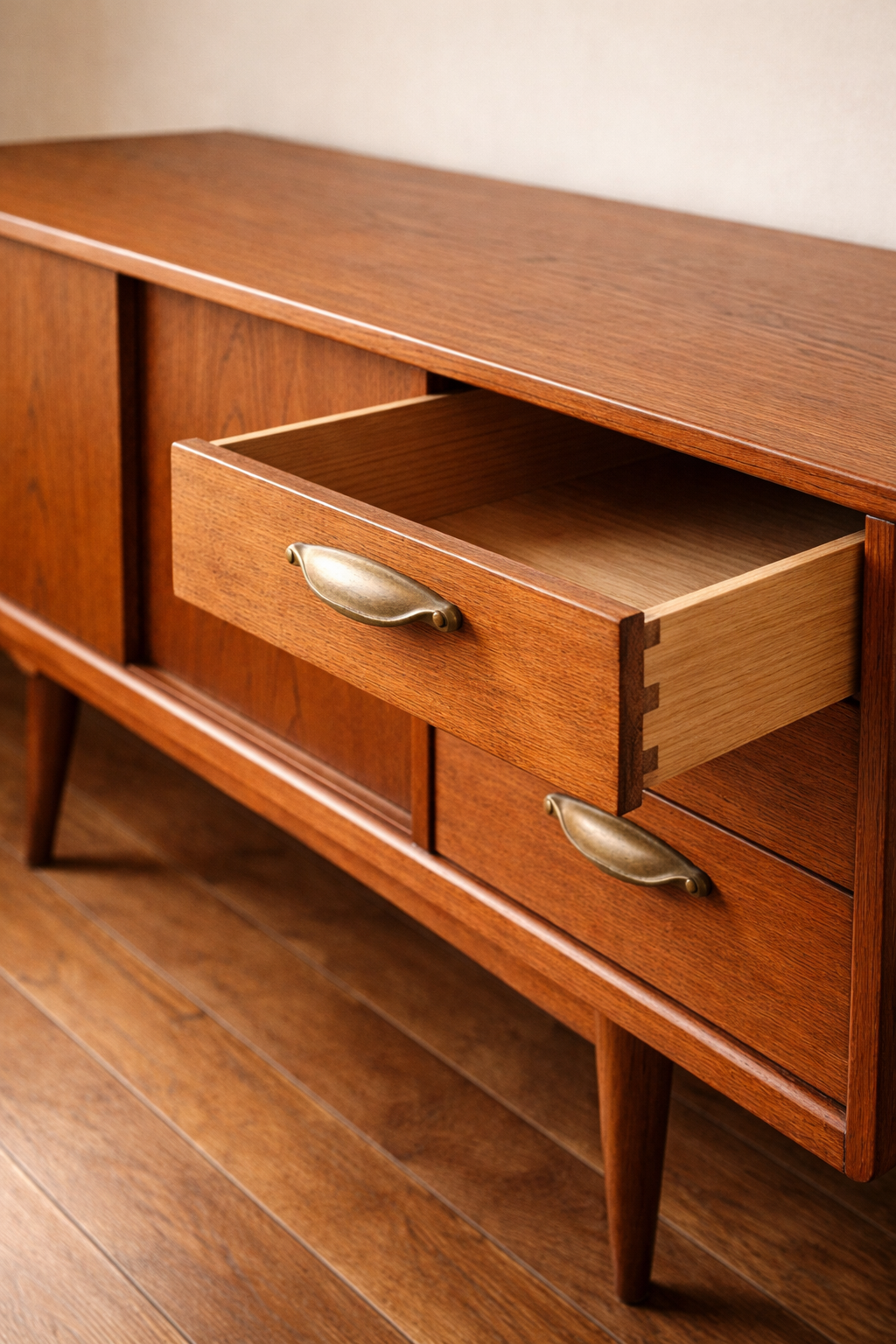
You're browsing the aisles at your favorite thrift store when you spot it—a sleek teak credenza with those unmistakable tapered legs, warm wood tones catching the afternoon light. It's priced at $180. Your heart says yes, but your practical side hesitates. Is this actually a quality piece worth the investment, or just old furniture masquerading as vintage treasure?
This moment happens to vintage furniture hunters all the time. The difference between a smart find and an expensive mistake often comes down to knowing what to look for. Most shoppers can't distinguish between genuine quality vintage and mass-produced reproductions, which means they either pass on incredible finds or waste money on furniture that won't last another season.
The good news? Learning to spot quality vintage furniture isn't as complicated as it seems. With a few key indicators, you can walk into any thrift store, estate sale, or vintage shop and assess furniture like an expert. You'll know which pieces are worth bringing home and which ones to leave behind—no matter how charming they look.
Whether you're browsing EcoDepot's weekly arrivals or exploring Montreal's vintage scene, these 10 signs will help you recognize furniture worth bringing home. Let's transform you from hesitant browser to confident vintage furniture connoisseur.
Why Quality Matters in Vintage Furniture
Before we dive into the specific signs, let's talk about why quality actually matters when you're shopping for vintage furniture.
First, quality pieces last decades longer than their cheaply made counterparts. That mid-century dresser built with solid wood and dovetail joints? It's already proven it can survive 50+ years, and with proper care, it'll easily last another 50. This isn't just smart shopping—it's sustainability in action. Every quality vintage piece you choose is one less item headed to a landfill and one less new piece that needs to be manufactured.
Second, better materials mean better value over time. Well-made furniture can be refinished, reupholstered, and repaired. Scratched solid wood can be sanded and restained. Quality frames can handle new fabric. Cheap particle board furniture? Once it's damaged, it's garbage. There's no fixing it, no giving it a second life.
Here's the surprising part: quality vintage furniture often costs less than new mass-market furniture. That $180 teak credenza might seem pricey compared to a $99 piece from a big-box store, but the vintage piece is solid wood with craftsmanship that modern manufacturers don't replicate. The new one is particle board with a thin veneer that will chip within a year. The vintage piece is the better investment, and you can find it at EcoDepot's curated vintage furniture collection, where every piece has already been vetted for quality.
When you know how to spot quality, you're not just decorating your home—you're investing in pieces with staying power, character, and a story.
1. Look for Solid Wood Construction
The foundation of quality vintage furniture is simple: solid wood. This is your first and most important quality indicator, and fortunately, it's not hard to identify once you know what to look for.
Solid wood furniture is exactly what it sounds like—the entire piece is made from real wood, not particle board, MDF (medium-density fiberboard), or even veneer over cheaper materials. Quality vintage pieces were typically constructed from hardwoods like teak, walnut, oak, mahogany, cherry, or rosewood. These woods are dense, durable, and age beautifully.
So how do you tell the difference? Start with weight. Solid wood furniture is substantial—pick up a solid wood chair and you'll immediately notice the heft compared to a particle board piece. If you can easily lift a dresser with one hand, it's probably not solid wood.
Next, look at the edges and any unfinished areas. On solid wood, the grain pattern continues around corners and edges. With veneer (a thin layer of real wood glued over cheaper material), you'll see the edge where the veneer ends. Check the back panel, the underside of tabletops, or inside drawers—these areas often reveal the truth about construction. Solid wood shows consistent grain patterns; particle board shows a pressed, uniform texture that looks nothing like natural wood.
Run your hand along the surface. Solid wood feels warm and has subtle variations in the grain. Particle board with a photo-printed "wood" pattern feels cold and perfectly uniform—because it's fake.
Why does this matter? Solid wood can be refinished, repaired, and will last generations. It also holds value. That particle board dresser might look fine today, but give it a few years and any moisture exposure or rough handling will cause it to swell, chip, and fall apart. Solid wood, on the other hand, just gets better with age.
2. Check the Joinery Techniques
If solid wood is the foundation of quality furniture, joinery is the craftsmanship that holds it together. The way furniture pieces are connected tells you everything about the skill and care that went into construction.
Dovetail joints are the gold standard—these are those interlocking "teeth" you see when you pull out a drawer and look at the corners. They look like puzzle pieces that fit together, with wedge-shaped projections from one board fitting into matching notches in another. Dovetail joints are incredibly strong and indicate hand-craftsmanship or high-quality manufacturing. If you see dovetails, you're looking at quality furniture.
Pull out every drawer and examine the corners. Quality vintage dressers, desks, and cabinets will have dovetail joinery. Count them—more dovetails (meaning smaller, more numerous joints) generally indicate higher quality and hand construction. Machine-made dovetails are typically uniform and evenly spaced, while hand-cut dovetails have slight variations that add to their charm.
Mortise and tenon joints are another excellent sign. This technique involves a projection (tenon) from one piece fitting into a hole (mortise) in another. You'll find these in chair legs, table aprons, and cabinet frames. They create incredibly strong, stable connections that have held furniture together for centuries.
Now for the red flags: staples, nails, and obvious hot glue. If you see metal staples holding drawer corners together, walk away. If joints are simply glued without any mechanical connection, that's poor quality. These shortcuts indicate mass production and won't hold up over time.
Dowel joints (wooden pegs connecting pieces) fall somewhere in the middle—they're acceptable in certain applications but not as robust as dovetails or mortise and tenon. They're common in mid-range vintage furniture and can last if well-made.
The bottom line? Spend time examining how the furniture is actually put together. Open drawers, look at corners, check underneath. Quality joinery is invisible craftsmanship that reveals itself upon inspection—and it's worth finding.
3. Examine the Hardware and Details
Hardware tells a story. Original vintage hardware—drawer pulls, handles, hinges, locks, and decorative elements—provides clues about a piece's age, quality, and authenticity.
Quality vintage furniture features solid metal hardware, often brass, bronze, or quality steel. Pick up a drawer pull—it should have weight to it. Flimsy, lightweight hardware or obviously plastic elements suggest lower quality or replacements. Original brass hardware develops a beautiful patina over time, shifting from bright gold to warm, aged tones. This patina is a mark of authenticity (though some people polish it away, which is fine too—just a different aesthetic choice).
Check how the hardware is attached. Quality pieces use proper screws through the drawer front into metal backplates. Cheap furniture uses single screws or simply glues pulls directly to the surface. Test the drawer glides and door hinges—they should operate smoothly despite their age. A little stiffness is normal and easily remedied with cleaning and lubricant, but sloppy, loose action suggests wear or poor quality.
Here's where it gets exciting: look for maker's marks on the hardware itself. Many quality furniture manufacturers marked their hardware with company names, logos, or numbers. Flip over drawer pulls, check inside lock mechanisms, look at hinge plates. A small mark might read "Stanley," "Amerock," or feature a manufacturer's symbol. These marks help authenticate age and identify makers.
Beyond hardware, examine other details. Quality furniture often features thoughtful touches: inlays (decorative wood patterns set into the surface), hand-carved elements, beveled edges on mirrors and glass, metal corner brackets for protection, or leather insets on desktop surfaces. These aren't just decorative—they're signals that someone cared about this piece beyond basic function.
One Montreal-specific note: mid-century Scandinavian furniture, which is common in our vintage shops, often features minimal but exquisite hardware—simple teak or rosewood pulls, hidden hinges, push-latch mechanisms. The simplicity is intentional and speaks to quality design.
4. Inspect the Finish and Patina
The finish on vintage furniture is like a fingerprint—it tells you about the piece's history, how it was cared for, and whether someone has attempted to alter it. Learning to read finishes separates confident buyers from uncertain ones.
Original finish on quality vintage furniture has aged gracefully. Look for even color across the piece, with natural darkening in areas exposed to light and subtle lightening where hands have touched frequently (drawer fronts, chair arms). This wear pattern is called patina, and it's actually desirable—it's proof of authenticity and age.
Quality finishes were applied carefully, in multiple thin coats. Get close and look at the surface. You shouldn't see drips, bubbles, or uneven areas. The finish should enhance the wood grain, not obscure it. Many mid-century pieces used Danish oil or tung oil finishes that soaked into the wood rather than sitting on top as a thick lacquer. These oil finishes create that warm, touchable quality that makes you want to run your hand along the surface.
Now for the red flags. Thick paint covering wood grain is suspicious—what are they hiding? Quality wood doesn't need to be painted. If you see paint, there's often a reason: damage, poor-quality wood, or someone's misguided DIY project. Sometimes you can remove paint to reveal beautiful wood underneath, but it's a project, not a quick fix.
Amateur refinishing is another concern. Uneven staining, sanding marks visible in raking light, or finishes that feel sticky or rough indicate someone refinished the piece without proper skill. This isn't necessarily a dealbreaker if the price reflects it and you're willing to have it professionally refinished, but it's worth noting.
Some wear is not just acceptable—it's desirable. A perfectly pristine vintage piece might actually be a reproduction. Real vintage furniture has lived a life. Small scratches, tiny dings, gentle fading—this is character, not damage. It proves authenticity and adds to the story. The difference between "character" and "damage" comes down to whether it affects function and structural integrity.
That Danish teak credenza with the original oiled finish, showing subtle wear on the drawer fronts where hands have pulled them open thousands of times? That's exactly what you want.
5. Test the Structural Integrity
Now comes the hands-on part. You need to physically interact with furniture to assess its structural soundness. Don't be shy—gentle testing is expected when shopping for vintage furniture.
Start with a stability check. For tables and chairs, place your hands on top and give a gentle side-to-side wiggle. A small amount of movement is normal in older furniture—joints can loosen slightly over decades. What you're checking for is the difference between loose joints (repairable) and structural failure (avoid). Slight wobble in a joint can be tightened by a furniture repair person. Fundamental instability, cracking sounds, or pieces that feel like they might collapse? Walk away.
If you're shopping for seating, sit on it (as long as the store allows). A quality vintage chair or sofa should feel stable under your weight. Some creaking is normal—it's old furniture—but the frame shouldn't flex dramatically or feel like it might give way.
Open all drawers fully. They should slide relatively smoothly and not stick or catch (unless they just need cleaning and waxing). Pull them out completely and flip them over—you're checking the bottom panel. It should be solid, secured properly to the drawer frame, without cracks or warping.
Check table leaves to ensure they fit properly and locking mechanisms work. For cabinets, open and close all doors, checking that hinges function and doors hang evenly.
Get down on your knees and look underneath. Yes, really. Flip chairs upside down. Peer under tables. This is where you see the frame, the joinery, and any hidden damage. You're looking for:
-
Intact joints without major cracks
-
Original corner blocks and bracing still in place
-
No signs of water damage (warping, staining, mold)
-
No evidence of wood-boring insects (tiny holes, sawdust)
Here's the key distinction: loose joints, minor scratches, and normal wear are all fixable. Structural damage like major cracks through solid wood, broken frame members, extensive water damage, or active pest infestation are reason to pass.
Quality vintage furniture was built to be repaired. That's another advantage over modern particle board pieces, which can't be meaningfully fixed once damaged.
6. Recognize Designer and Maker Marks
This is where your vintage furniture hunt becomes a treasure hunt. Discovering a maker's mark on a quality piece is like finding a signature on a painting—it tells you exactly what you have and often significantly increases value.
Quality vintage furniture manufacturers marked their work. These marks appear as stamps, labels, metal plates, or burned impressions in inconspicuous locations. Check:
-
Underneath tables and chairs
-
Inside drawer compartments (on the drawer box or cabinet frame)
-
On the back of cabinets and dressers
-
Under removable cushions
-
Behind mirrors
-
On the bottom of drawer fronts
Common quality makers you'll encounter include Herman Miller, Knoll, Lane, Heywood-Wakefield, Broyhill, Drexel Heritage, Bassett, Thomasville, Baker, and Henredon. Mid-century modern enthusiasts particularly prize pieces from designers like Charles and Ray Eames, Hans Wegner, Arne Jacobsen, and George Nelson, manufactured through companies like Herman Miller and Knoll.
Here's your secret weapon: your smartphone. When you find a mark, snap a photo and do a quick search right there in the store. Look up the manufacturer, check what similar pieces sell for online, and verify authenticity. Auction sites' sold listings (not current listings—those show asking prices, not actual value) give you real market data.
A Montreal connection worth noting: our city's vintage shops, including EcoDepot, often feature mid-century Scandinavian pieces brought by European immigrants in the 1950s-70s. These teak and rosewood pieces from Danish and Swedish manufacturers are common here and often undervalued because sellers don't recognize the marks. Your knowledge becomes your advantage.
Not all quality furniture is marked, especially older pieces or those from smaller manufacturers. Absence of a mark doesn't mean poor quality—it just means you'll need to rely on the other indicators in this guide. But when you do find a mark from a known quality manufacturer, it's validation that you're looking at the real deal.
That Artemide lamp sitting in EcoDepot wasn't just lighting—it was a piece of Italian design history, identifiable by its maker's mark and distinctive design elements. The same applies to furniture.
7. Assess the Materials and Upholstery
Upholstered furniture requires a different evaluation approach than case goods (dressers, tables, cabinets), but the same principle applies: quality materials and construction methods reveal themselves upon inspection.
Let's start with fabric. Quality vintage upholstery used natural materials: wool, linen, quality cotton, and leather. These fabrics age well and can be cleaned or replaced. Feel the fabric—wool has body and weight, linen has texture and natural slubs, quality cotton feels substantial. Cheap synthetics from later eras pill, thin out, and deteriorate. But here's the thing: upholstery fabric is replaceable. Don't reject an amazing piece because the fabric is dated or worn—focus on what's underneath.
Lift the cushions and look at the frame. This is what you're really buying. You want to see:
-
Solid wood frame construction (not particle board)
-
Corner blocks securing joints
-
Webbing or springs, not just foam
-
Tight, professional upholstery work
The holy grail of upholstery construction is eight-way hand-tied springs. If you see rows of coil springs tied together with twine in a careful pattern, you're looking at premium construction. This method creates supportive, long-lasting seating that can be completely rebuilt. Webbing (woven strips of material) is also acceptable, especially in mid-century pieces. What you want to avoid is thin foam directly on plywood—that's not quality construction.
Feel the seat cushions. Quality pieces have substantial foam density or down/feather fill. If cushions feel pancake-thin or have no resilience, they've either deteriorated (common) or were never good quality. Again, this can be fixed with new foam, but factor that cost into your decision.
Leather deserves special mention. Quality leather develops beautiful patina and can be reconditioned. Worn leather that's intact and not torn actually looks better than new in many cases. Cracked, peeling "leather" is often bonded leather (leather scraps glued onto fabric backing) and isn't worth investing in.
Here's your permission slip: dated upholstery on great bones is an opportunity, not a dealbreaker. That 1970s gold velvet might not suit your aesthetic, but if the frame is solid walnut with quality joinery and the springs are intact, you've found a piece worth reupholstering. Focus on structure, not surface.
8. Notice the Design and Proportions
Quality furniture isn't just well-made—it's well-designed. There's a reason certain vintage pieces are still coveted decades after they were created: thoughtful design is timeless.
Look at the overall proportions. Quality furniture has balanced, intentional dimensions. Legs are appropriately sized for the piece they support. Drawers graduate in size logically. Tables have tops that relate proportionally to their bases. This sounds abstract, but you can feel it—a well-proportioned piece just looks "right," while poorly designed furniture seems awkward or top-heavy.
Pay attention to period-appropriate design elements. Mid-century modern pieces feature tapered legs, clean lines, minimal ornamentation, and often mix wood with other materials like metal or cane. Victorian furniture showcases carved details, curved lines, and ornate hardware. Art Deco brings geometric patterns, bold materials, and glamorous finishes. Knowing these distinctions helps you identify authentic period pieces versus modern reproductions.
Quality design shows cohesiveness. Hardware matches throughout the piece. Wood tones are consistent. Design elements repeat in intentional ways. Cheaply made furniture often looks like an assembly of random parts—mismatched pulls, different finish tones on different components, awkward proportions.
Here's the treasure-hunter angle: quality design transcends trends. That's why a 1960s Danish modern chair still looks fresh and modern today, while a trendy piece from five years ago already looks dated. Thoughtful design ages well. When you find a vintage piece with beautiful proportions and authentic period design, you're not just buying old furniture—you're investing in proven design that will remain relevant.
This is especially true for mid-century pieces, which align perfectly with contemporary minimalist aesthetics. A quality teak sideboard from 1965 works beautifully in a 2026 apartment—no ironic "retro" styling needed, just timeless design.
9. Feel the Weight and Heft
Here's one of the simplest quality tests: weight. Quality vintage furniture is substantial because it's made from solid materials—hardwood, metal, quality veneers over solid cores. If you can easily lift a dresser, you're probably holding particle board.
Try this test with smaller pieces like chairs, nightstands, or small tables. Lift a corner slightly (don't strain yourself or damage the piece). Quality furniture has noticeable heft. A solid wood chair weighs significantly more than a modern piece made from lightweight materials. Those mid-century dining chairs with the sculptural backs? If they're authentic teak or walnut, they have surprising weight for their size.
This principle applies to drawers too. Pull out a drawer and feel its weight. Solid wood drawer boxes with dovetail construction are heavier than you'd expect from their size. The weight comes from material quality—solid wood throughout, not hollow construction or thin plywood.
One important exception: some quality mid-century modern pieces were intentionally designed to be lightweight. Scandinavian designers prized functional pieces that could be easily moved and reconfigured. These pieces achieve lightness through elegant engineering, not cheap materials. You can tell the difference—a lightweight mid-century piece still feels solid and well-made, with quality joinery and materials. It's not flimsy; it's refined.
The weight test isn't foolproof, but it's a quick initial assessment tool. When combined with the other indicators in this guide—joinery, solid wood construction, quality hardware—weight becomes another confirming data point.
Remember, you're usually not trying to actually lift heavy furniture in a store. Just placing your hands underneath and sensing the weight is enough. If a credenza feels like it might blow away in a stiff breeze, it's not solid wood. If it feels grounded and substantial, you're on the right track.
10. Trust Your Instincts (and Do Quick Research)
After evaluating construction, materials, joinery, and design, there's one more quality indicator: your gut feeling. If something feels quality—looks quality, is built like quality, and carries itself like quality—it probably is.
You've now learned to evaluate specific elements, but experienced vintage furniture hunters develop an eye that assesses pieces holistically in seconds. That intuition comes from practice and exposure. The more vintage furniture you examine, the faster you'll spot quality. Every thrifting trip is training.
That said, intuition should be confirmed with quick research. Here's your mobile research strategy:
-
Photograph any maker's marks, unique design elements, or the overall piece
-
Use Google's image search or lens feature to find similar items
-
Check sold listings on eBay, Chairish, or 1stDibs to see actual selling prices
-
Search for the manufacturer or designer to verify authenticity and learn history
This takes maybe five minutes while you're standing in the store. Those few minutes can mean the difference between passing on a $2,000 piece priced at $200 or spending $200 on something worth $50.
Don't be embarrassed to research in the store. Serious vintage furniture collectors do this routinely. It's not about lacking knowledge—even experts verify marks and check market values before purchasing.
When in doubt at EcoDepot Montreal, ask the staff. Our Lachine and Plateau locations feature knowledgeable team members who can share information about pieces, discuss their history, and help you make informed decisions. That's part of shopping at a curated vintage store versus a general thrift shop—expertise is available.
Your developing eye, combined with the specific quality indicators from this guide and quick mobile research, creates a comprehensive evaluation system. Trust it. When all the signs point to quality—solid construction, thoughtful design, authentic materials, and good condition—and your research confirms value, you've found a piece worth bringing home.
Red Flags: What to Avoid in Vintage Furniture
Knowing what to look for is essential, but equally important is knowing what to avoid. These red flags should make you pause or walk away entirely:
Particle board or MDF disguised as vintage: Some sellers position cheap 1980s-90s furniture as "vintage" when it's really just old particle board. Particle board furniture from any era isn't worth investing in—it can't be refinished or meaningfully repaired. If it's falling apart now, there's no saving it.
Reproduction pieces sold as authentic: Modern reproductions of mid-century designs flood the market. They're not inherently bad, but they're not vintage and shouldn't be priced as such. Look for authentic maker's marks, construction methods, and materials. True vintage pieces show age; reproductions look artificially aged or too perfect.
Serious structural damage: There's a difference between normal wear and structural failure. Major cracks through solid wood members, broken frame components, collapsed joints that can't be repaired—these are reasons to pass. Minor issues are fixable; fundamental structural problems usually aren't worth the repair cost.
Heavy smoke smell or mold: Smoke odor is incredibly difficult to remove from upholstered furniture and can persist even in wood. Mold is a health hazard and often indicates water damage that's compromised the piece. Both issues are generally dealbreakers.
Missing critical components: If a table is missing its leaves, a desk is missing drawers, or a set has only three of four chairs, you need to assess whether you can source replacements. Often you can't, which significantly impacts value and function.
Amateur repairs done wrong: Furniture that's been "fixed" with obvious screws through visible surfaces, globs of wood filler, mismatched replacement parts, or structurally unsound repairs can be worse than furniture that hasn't been touched. Poor repairs are difficult to undo and fix properly.
Here's the critical distinction: character versus damage. Vintage furniture should show signs of age—minor scratches, gentle wear, authentic patina. These are features, not flaws. They prove authenticity and add story. But damage that affects structural integrity, function, or presents health/safety concerns should be avoided unless you're an experienced restorer taking on a project.
Conclusion
Learning to spot quality vintage furniture transforms thrift shopping from guesswork into informed treasure hunting. These 10 signs—solid wood construction, quality joinery, original hardware, authentic finishes, structural integrity, designer marks, quality materials, thoughtful design, substantial weight, and confirmed intuition—give you a comprehensive evaluation framework.
Remember, these skills develop with practice. Your first few shopping trips, you'll reference this guide constantly. After examining dozens of pieces, you'll start recognizing quality instinctively. Your eye will go straight to dovetail joints, your hands will automatically flip furniture to check construction, and you'll develop that sixth sense for spotting undervalued gems.
The beautiful thing about quality vintage furniture is that it represents an investment in sustainability and style. These pieces were built to last, have already proven their durability over decades, and will likely outlast anything you could buy new today. Every quality vintage piece you bring home is a piece that's been saved from a landfill, given new purpose, and will continue serving for generations. That's not just smart shopping—it's sustainable style with soul.
Follow us on Instagram @ecodepotmontreal to see new arrivals first, including those mid-century masterpieces and designer finds that get scooped up fast. Start your own treasure hunt today—armed with knowledge, you're ready to find pieces that will transform your space and stand the test of time.