Cart
0
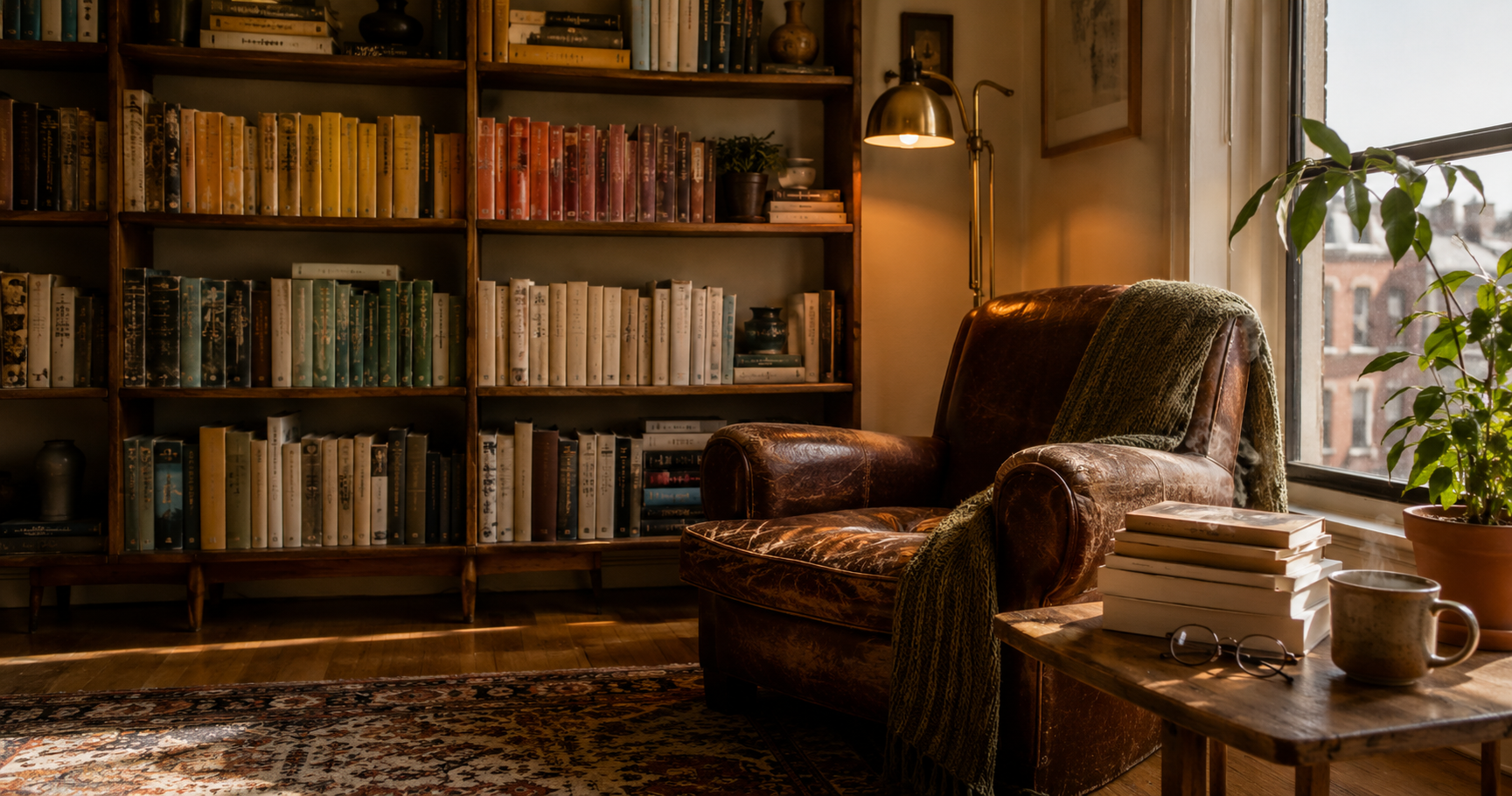
Picture the shelf you've always wanted: spines in every color, a few dog-eared favorites, maybe a cookbook stained with someone else's Sunday dinners. That's the dream of a home library. The reality, if you're buying everything new, is a slow build and a fast-draining wallet — new titles run $20 or more each, and a real collection takes dozens of them.
The good news is that second-hand books solve both problems at once. You get more books for less money, each one already carrying a bit of history, and you keep perfectly good pages out of the landfill. Here's how to build a personal library from second-hand books, one thoughtful shelf at a time.
Step 1: Define Your Library's Focus
Before you start hauling home every paperback you see, decide what your library is actually for. Are you building a cozy fiction collection for rainy afternoons? A wall of cookbooks for weekend experiments? A shelf of design and art books to flip through for inspiration? Maybe you're stocking a kids' corner with classics, or curating French-language titles to reflect Montreal's bilingual bookshelves.
Picking two or three categories to start gives your hunt direction. Instead of "buy any book," you're browsing with purpose — and a focused collection reads as curated rather than random the moment it hits the shelf.
Think practically, too. A library meant for a reading nook calls for different books than one built purely for display on open shelving. Know how you'll actually use the space before you start filling it.
Step 2: Set a Realistic Budget and Frequency
One of the best things about second-hand books is the price. Thrifted titles typically run a few dollars each instead of $20-plus for new releases, which means your budget stretches to cover dozens of books instead of a handful.
Rather than one big spending spree, treat your library as an ongoing project. A modest weekly or monthly browsing habit — even just half an hour — tends to build a better collection than a single expensive haul, because you're shopping when the right book happens to show up, not forcing a purchase to fill a quota.
That rhythm also matches how thrift inventory actually works: shelves refresh constantly, so the best finds come to those who check in regularly. At EcoDepot, that means our weekly book arrivals are worth a repeat visit rather than a one-time trip.
Step 3: Know Where to Look
Not all second-hand sources are created equal, and the best personal libraries usually pull from a mix of them.
Thrift stores are the workhorse of second-hand book hunting — steady stock, low prices, and the occasional unexpected gem tucked between paperbacks. At EcoDepot's Lachine and Plateau locations, book sections restock weekly, so it's worth checking in often rather than assuming you've seen everything on offer. Early in the week and right after a new delivery tend to have the freshest selection.
Library sales and used bookstores are excellent for deeper cuts — out-of-print titles, specific authors, or hard-to-find editions that a general thrift shop might not carry as consistently.
Garage sales and estate sales can turn up entire collections at once, often from someone who's spent decades building the exact kind of library you're after.
Online marketplaces are a good backup when you're hunting a specific title rather than browsing for discoveries — just factor in shipping costs against the thrill of finding it in person.
The treasure-hunt approach works because you never know when a first edition, a beautifully illustrated cookbook, or a set of vintage Nancy Drew mysteries is waiting on the shelf. That's part of the fun.
Step 4: What to Check Before You Buy
A little inspection goes a long way toward making sure your second-hand find earns a permanent spot on your shelf.
Check the spine for cracking or separation, flip through for water damage or mold spots (a musty smell is often a giveaway), and make sure no pages are missing or heavily marked up in a way you'd mind living with.
Edition matters more for some readers than others. If you're a casual reader building a library for enjoyment, a well-loved paperback is just as good as a pristine hardcover. If you're leaning toward collecting, first editions or specific printings might be worth seeking out more deliberately.
And don't let a little wear scare you off. A creased cover or a previous owner's underlining isn't a flaw — it's proof the book already had a life before yours, which is exactly the kind of story a second-hand library is built on.
Step 5: Organize and Style Your Collection
Once the books start piling up, how you arrange them turns a stack into a library. A few popular methods:
-
By color — grouping spines in a gradient or by tone creates a striking, gallery-like effect (this is a favorite trick among vintage decorators for a reason — it turns even a mismatched stack of thrifted paperbacks into a cohesive display)
-
By genre or subject — practical if you actually plan to find a specific book later
-
By author — useful for a growing collection of a favorite writer
-
By size — a simple way to keep uneven vintage and modern editions looking tidy together
Books also pair beautifully with the right supporting pieces — a set of vintage bookends, a weathered wooden crate turned on its side, or a small side table to hold your current read. EcoDepot's vintage shelving and side tables selection is a natural next stop once your book collection needs a proper home.
Step 6: Keep Growing Your Library Sustainably
A personal library isn't a one-time project — it's an ongoing collection that should evolve with you. Every so often, take stock of what you're actually reaching for. Books you've outgrown or read once and won't revisit can go back into circulation through donation, keeping your shelf intentional instead of just full.
Treat the ongoing hunt as part of the enjoyment rather than a chore. Since inventory turns over weekly at thrift stores, there's always a reason to swing by — you never know what's waiting on the shelf until you check.
Building a Library That's Truly Yours
A great personal library isn't built overnight, and it definitely doesn't need to be built with new books. Define your focus, set a sustainable pace, know your best sources, check condition before you buy, style your shelves with intention, and keep the collection moving as your tastes change. What you'll end up with is a library full of second-hand books that's more interesting, more affordable, and better for the planet than anything bought off a shelf at full price.
Ready to start building? Visit EcoDepot Montreal's Lachine or Plateau locations this week to browse our latest book arrivals, or follow @ecodepotmontreal for a first look at new finds before they hit the shelf.