Cart
0
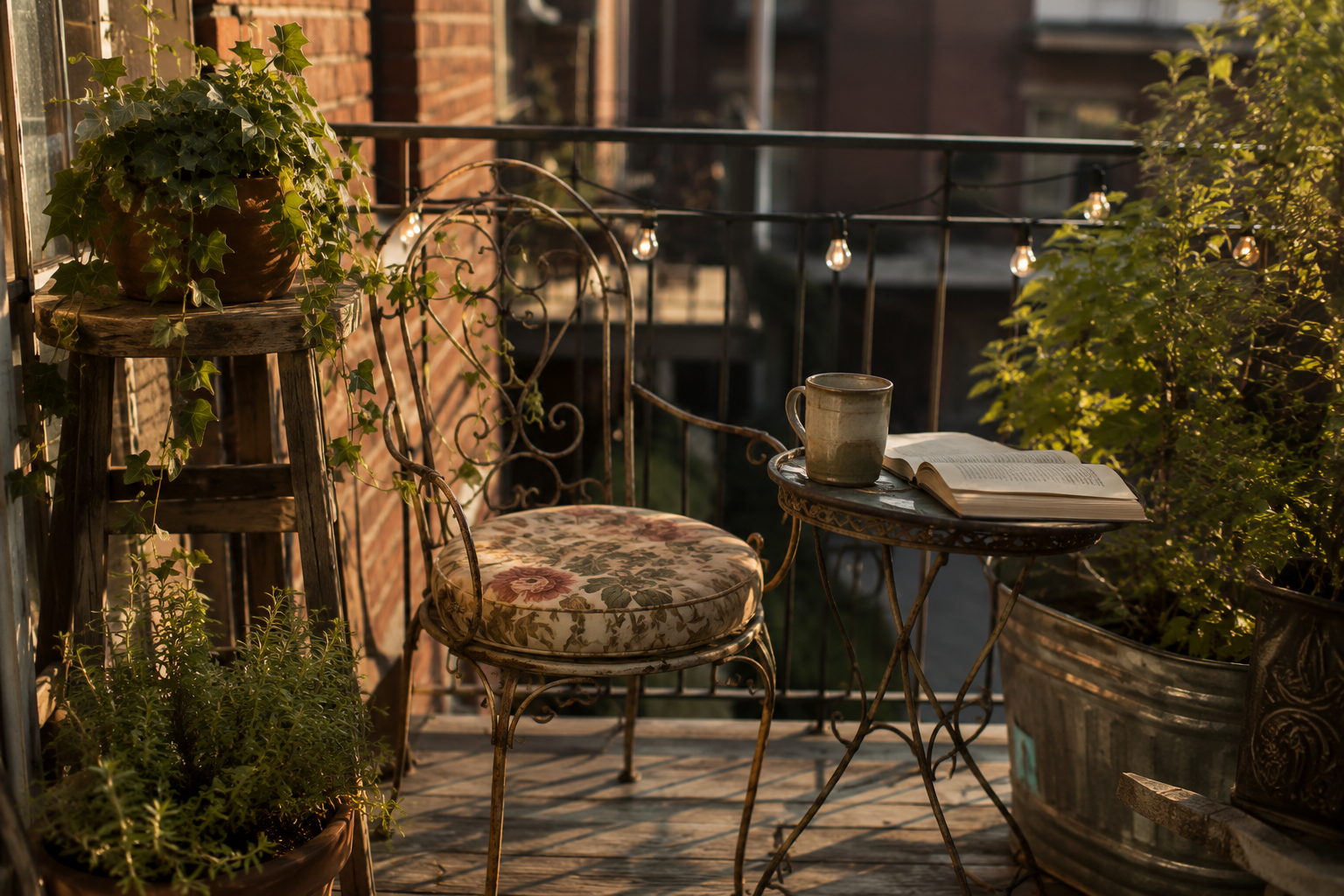
Montreal gives us maybe four good months of patio weather a year. That's four months to make the most of a Plateau balcony, a Verdun back patio, or that sliver of concrete off your Mile End kitchen — and vintage patio furniture is how you do it without spending a small fortune on pieces that'll wobble by next August.
Here's the thing about big-box outdoor furniture: it's built for one season, priced like it should last ten, and looks exactly like your neighbor's. Vintage patio furniture flips that script. A wrought iron bistro chair from the 1960s has already survived fifty Montreal winters in someone's backyard — it's not going anywhere. And you won't see the same set on three other balconies on your street.
This guide walks you through exactly how to find, style, and protect vintage furniture for your outdoor space, whether you're working with a 40-square-foot balcony or a proper backyard patio. No design degree required — just a bit of patience for the hunt and a willingness to let mismatched pieces work together.
Why Vintage Works Outdoors (Sustainability + Character)
Older outdoor furniture was often built to genuinely last. Solid teak, real wrought iron, and heavy-gauge aluminum were standard materials decades ago, long before manufacturers started cutting costs with particleboard and thin resin. That's part of why a vintage piece can outperform something bought new last spring — the bones are simply better.
There's also the sustainability angle. Every chair or table you rescue from a thrift shop is one less item shipped, manufactured, and eventually landfilled. And because vintage pieces come with their own history — a patina here, a curve of design there — your patio ends up looking curated instead of catalog-ordered. Every item deserves a second act, and a sunny balcony is a pretty good place for one.
Browsing EcoDepot's furniture selection is a good place to start getting a feel for what's out there before you set foot in the store — inventory turns over weekly, so what you see today won't be there next week.
Step 1: Measure Your Space and Set a Style Direction
Before you go treasure hunting, grab a tape measure. Balconies in Montreal apartments can be deceptively small, and it's easy to fall for a gorgeous vintage bistro set only to get it home and realize two chairs is one too many.
Measure your space, note doorways and stairwells you'll need to get furniture through, and decide roughly how many people you're furnishing for — a solo reading nook needs a completely different plan than a patio meant for weekend dinners with friends.
It also helps to pick a loose style direction before you shop, so the hunt has some focus:
-
Mid-century modern: clean lines, tapered legs, teak and iron
-
French bistro: wire-mesh chairs, small round tables, café charm
-
Retro tropical: rattan, bold prints, woven textures
You don't need to commit hard — vintage shopping rewards a little flexibility — but having a direction in mind keeps you from bringing home five unrelated finds.
Step 2: Know What to Look For (Materials That Last Outside)
Not every vintage piece is built for weather, so this step matters. A few materials tend to hold up beautifully outdoors:
-
Wrought iron: heavy, weather-resistant, and often the star of a vintage patio set
-
Teak: naturally weatherproof wood that silvers gracefully over time
-
Aluminum: lightweight, rust-proof, common in mid-century patio sets
-
Weather-resistant wicker or rattan: great for texture, best kept somewhat sheltered
What to be more cautious of: particleboard or veneer pieces (they weren't made for humidity), unsealed or untreated wood, and any upholstered cushions with visible mildew.
Before you commit to a piece, give it a quick once-over: check for rust that's more than surface-level, wobble in the joints, and any soft or spongy wood that suggests rot underneath. A little surface rust on iron isn't a dealbreaker — that's often just decades of honest wear, and it can usually be sanded and treated. What you're really watching for is structural rust that's eaten through a joint or leg, since that's much harder to fix safely.
For upholstered pieces, don't be scared off by tired-looking cushions. Cushion covers and foam inserts are some of the easiest and cheapest things to replace, so judge the frame underneath, not the fabric on top. A solid wrought iron or teak frame with dated cushions is still a great find — you can always re-cover it.
Step 3: Source Your Pieces
This is where the treasure-hunt part comes in. EcoDepot Montreal receives new furniture and outdoor decor every single week across both the Lachine and Plateau locations, so inventory is always shifting — the wrought iron set that's not there on Tuesday might show up Thursday.
A few practical tips for the search:
-
Check both locations if you can — Lachine and Plateau tend to see different donation patterns
-
Visit early in the week for the freshest stock after weekend drop-offs
-
Don't just look in the "outdoor" section — vintage side tables, stools, and decor pieces from other departments often work beautifully on a patio too
If you're not sure what you're looking for yet, that's part of the fun. Some of the best patio setups start with one unplanned find — a mid-century stool, a set of café chairs — that becomes the anchor for everything else.
Bring a tape measure and, if you can, a photo of your space on your phone. It's much easier to picture whether a bistro table will actually fit your balcony corner when you can hold the photo up next to it, rather than trying to eyeball it from memory. And don't rule out buying pieces separately over a few visits rather than all at once — a patio built from three different trips almost always looks more interesting than one bought as a matching set in a single afternoon.
Stop by EcoDepot's Plateau or Lachine store this week to see what's currently on the floor.
Step 4: Mix and Match Without It Looking Mismatched
Vintage shopping rarely gives you a matching set straight off the shelf, and that's a feature, not a problem — as long as you tie things together intentionally.
A few ways to make an eclectic mix feel pulled-together:
-
Pick one anchor piece — a standout chair, a striking table — and build the rest of the space around its color or material
-
Repeat a material or finish across two or three pieces (all wrought iron, or two wood tones that complement rather than clash)
-
Watch your scale on smaller balconies — one oversized piece can overwhelm the whole space, so mix a larger item with smaller, lighter ones
The goal isn't uniformity. It's a space that feels considered, like it came together over time rather than out of a single catalog page — because it did.
Step 5: Weatherproof and Protect Your Finds
This step is what separates a patio that looks good for one summer from one that lasts for many. Montreal's climate is hard on outdoor furniture — humid summers, freezing winters — so a little upkeep goes a long way.
-
Wood: reseal or oil exposed wood at the start of the season to protect against moisture
-
Metal: treat any rust spots early and consider a light rust-inhibiting spray for wrought iron or steel
-
Fabric and cushions: choose weather-resistant fabric where possible, and store cushions inside during rain or overnight dew
-
Winter: bring vintage pieces indoors or into storage once the season turns — Montreal winters are unforgiving on materials that weren't built for snow load and deep freeze
Pre-owned shopping has moved firmly into the mainstream across Canada in recent years, rather than staying a fallback option — which is part of why investing a little care into protecting these pieces makes sense. Vintage furniture isn't a stopgap; it's a genuine long-term choice for outdoor living.
Step 6: Style It — Decor Layers That Finish the Look
Once your furniture is in place, the details are what make a patio or balcony feel finished. Treat your outdoor space the same way you'd layer decor indoors:
-
Planters: a vintage ceramic or galvanized planter adds texture instantly
-
Lighting: an old lantern or string lights strung between vintage hooks extends the space into the evening
-
Textiles: a weather-appropriate outdoor cushion or throw in a pattern that nods to your style direction
-
Small surfaces: a vintage stool doubling as a side table for drinks or a book
These smaller pieces are often the easiest and most affordable vintage finds of all — and they're usually what makes a space feel like yours rather than a showroom. They're also the lowest-commitment way to test a style direction before investing in bigger furniture. A single vintage planter or lantern can tell you pretty quickly whether that French bistro look is actually calling to you, or whether you're drawn to something else entirely — and either way, it's an easy piece to work into the rest of your home if your patio plans change.
One more thing worth remembering: you don't have to finish the space in one weekend. Some of the best-looking patios were built slowly, piece by piece, over a season or two — which is really just another way of saying the hunt itself is part of the reward.
A Few Common Questions
Is vintage patio furniture actually cheaper than new? Almost always, yes — especially for anything with real wrought iron or solid wood, which would cost far more new if you could even find it. You're paying for the piece itself, not for a brand or a showroom markup.
Can I leave vintage wicker or wood outside all winter? It's best not to. Even weather-resistant materials age faster under Montreal's freeze-thaw cycles and heavy snow load. Store pieces in a shed, garage, or even just indoors for the winter months, and they'll come back out looking good every spring.
What if I can only find mismatched pieces, not a full set? That's normal, and honestly the better outcome. A collected-over-time look reads as intentional in a way a matching box-store set never quite does — lean into it rather than holding out for a perfect matching pair.
Bring Vintage Character to Your Outdoor Space
A great patio or balcony doesn't need to be expensive or brand-new to feel like a retreat — it needs pieces with some history, chosen with a bit of intention. Vintage patio furniture gives you all three things at once: a lower price tag, a smaller environmental footprint, and a look nobody else on your block has.
Ready to start the hunt? Visit EcoDepot's Lachine or Plateau location this week — with new arrivals every week, you never know what might be waiting for your patio. And if teak credenzas and wrought iron chairs are your thing, follow along for first looks at new inventory before it hits the floor.