Cart
0
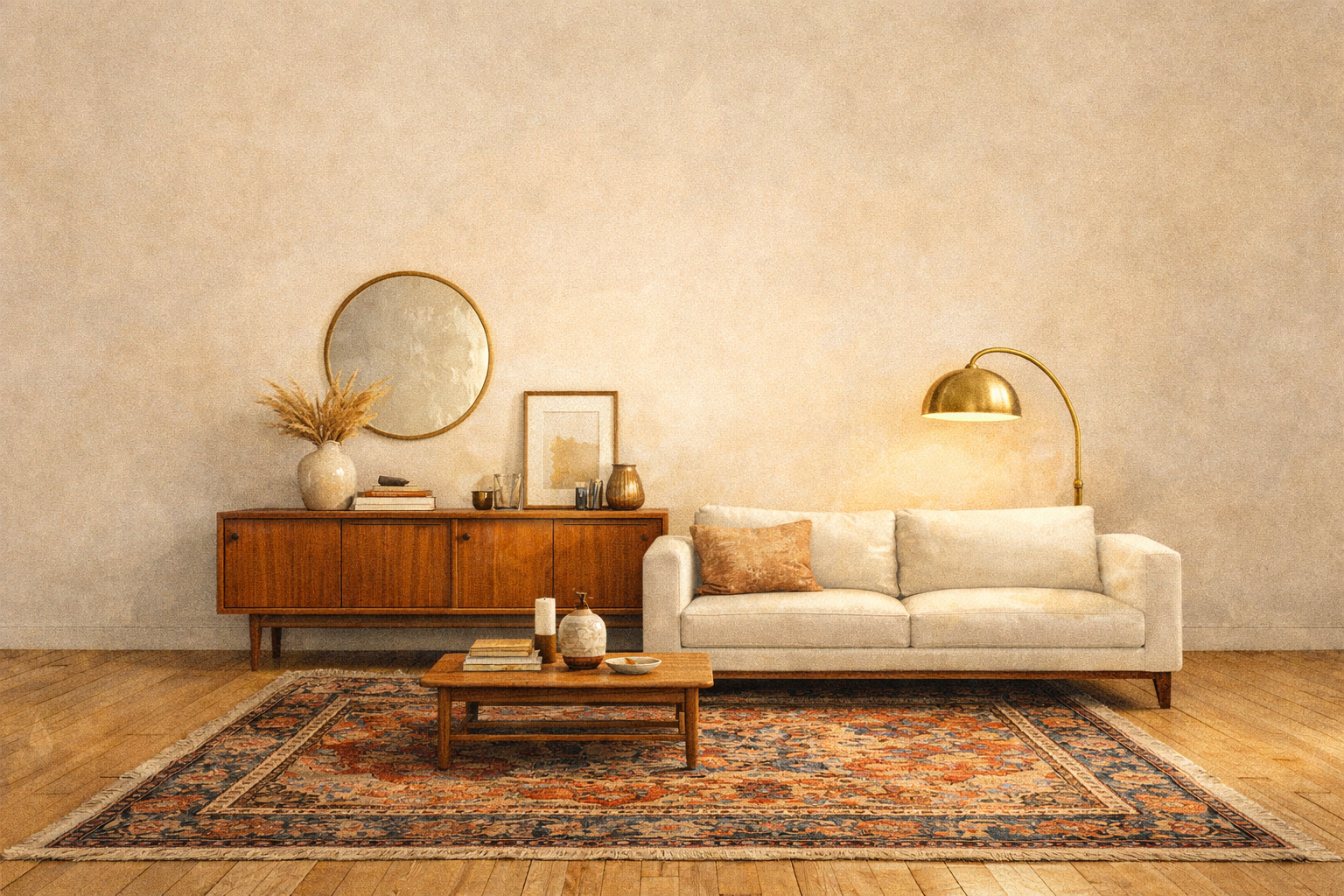
Picture this: you've just scored a stunning 1960s teak credenza from EcoDepot. You bring it home, slide it against the living room wall, and... something's off. The room doesn't feel wrong exactly — it feels unresolved. Like a sentence missing its punctuation.
Here's the thing: the credenza isn't the problem. The mix of old and new isn't the problem. The problem is simply the absence of a strategy.
Mixing vintage and contemporary decor is one of the most exciting — and most misunderstood — approaches to interior design. Done well, it creates spaces that feel layered, personal, and genuinely alive. Done without intention, it tips into clutter. The difference? A handful of principles that any shopper, any budget, any apartment can apply.
Every step in this guide can be achieved with pieces found at thrift stores, vintage markets, and EcoDepot Montreal — no design degree or decorator's budget required. Let's dig in.
Step 1 — Start With a Vibe, Not a Rule
Before you buy a single thing, decide how you want your space to feel. Not what style it should be. Not which decade it should reference. How it should feel.
This is the step most people skip — and it's the reason so many rooms end up looking like they can't make up their mind. "Warm and lived-in" is a vibe. "Sleek with character" is a vibe. "Relaxed, a little eclectic, gathered over time" is a vibe. A checklist of design rules is not.
Spend 20 minutes on Pinterest or Instagram saving images you're drawn to — not rooms you think you should like, but rooms that make you want to sit down. Look at your saves afterward. Patterns will emerge: certain colours, a quality of light, a sense of how crowded or open the space feels. That pattern is your instinct. It becomes your filter.
Every piece you consider buying — whether it's a vintage lamp or a contemporary shelf — gets held up against that filter. Does it fit the feeling? If yes, it earns its place. If not, it doesn't matter how beautiful it is.
💡 Tip: Name your vibe in three words — something like "warm, minimal, found" or "calm, textured, curated." Write it on your phone. Check it every time you're tempted by a trouvaille that might not actually fit.
Step 2 — Anchor With Contemporary, Layer in Vintage
Think of your room like a sentence. Contemporary pieces are the structure — the subject and verb, clear and grounding. Vintage pieces are the modifiers — the words that give the sentence flavour, depth, and personality.
In practical terms: start your room with contemporary anchor pieces. Your sofa. Your bed frame. Your dining table. These should be clean-lined, relatively neutral, and structurally sound. They create visual calm — a backdrop that lets everything else breathe.
Then bring in the vintage as the personality layer. A 1970s brass floor lamp. A mid-century credenza. A single velvet armchair in a perfect shade of rust. One hero vintage piece per room is often enough to completely transform the feel of a space.
The mistake most people make is introducing too many vintage statement pieces at once. Each one is vying for attention, and the room starts to feel like a competition rather than a conversation. Start with one vintage anchor — the piece that made you fall in love — and build slowly from there.
This approach also works beautifully with Montreal's architectural character. The original hardwood floors, the tall ceilings, the radiators of a Plateau walk-up or a Mile End loft — these bones do a lot of the work already. They provide the warmth and history that lets even very clean contemporary furniture feel at home.
💡 Tip: Before your next EcoDepot run, take a photo of your existing anchor pieces and bring it with you. Finding something that plays well with what you already have is infinitely more satisfying than finding something beautiful that has nowhere to live.
Step 3 — Build a Color Palette That Bridges Eras
Here's a truth that professional decorators lean on hard: colour is the great unifier. Pieces from completely different decades — a 1960s lamp, a 2020s side table — can feel like they belong together if they share a palette. And pieces from the same era can look incoherent if their colours clash.
The practical approach: start with a neutral base. Warm whites, soft greys, natural wood tones, sandy linens. These create a backdrop that makes both vintage and contemporary pieces shine without competing. Think of neutral as the silence between notes — it's what makes the music make sense.
From there, choose one or two accent colours that recur throughout the room in both old and new pieces. Maybe it's warm brass — present in a vintage lamp, echoed in a contemporary cabinet handle. Maybe it's a deep green — in a vintage ceramic vase and a modern throw pillow. The colour thread is what makes the mix feel intentional rather than accidental.
When thrifting, bring a phone photo of your existing palette. Hold potential pieces up against it. The 1960s lamp is stunning — but does its orange base work with your warm-greige walls? That gut check saves a lot of regret later.
💡 Tip: A 1960s brass lamp and a contemporary glass side table can feel like natural companions if their warm metal tones echo each other. It's not about matching — it's about rhyming.
Step 4 — Give Every Piece Room to Breathe
This is the step where clutter actually gets addressed. And the answer is simpler than most people expect: negative space.
Negative space is the empty air around an object. It's what allows you to actually see a piece — to appreciate its shape, its patina, its particular quality. When pieces are crowded together, they stop being individual objects worth noticing and start being visual noise. The room stops feeling curated and starts feeling chaotic.
The rule of thumb: after placing any piece, step back to the doorway. Can you appreciate it individually? Does your eye land on it, dwell a moment, move on? If yes, it belongs. If it's disappearing into a crowded corner, something nearby needs to go.
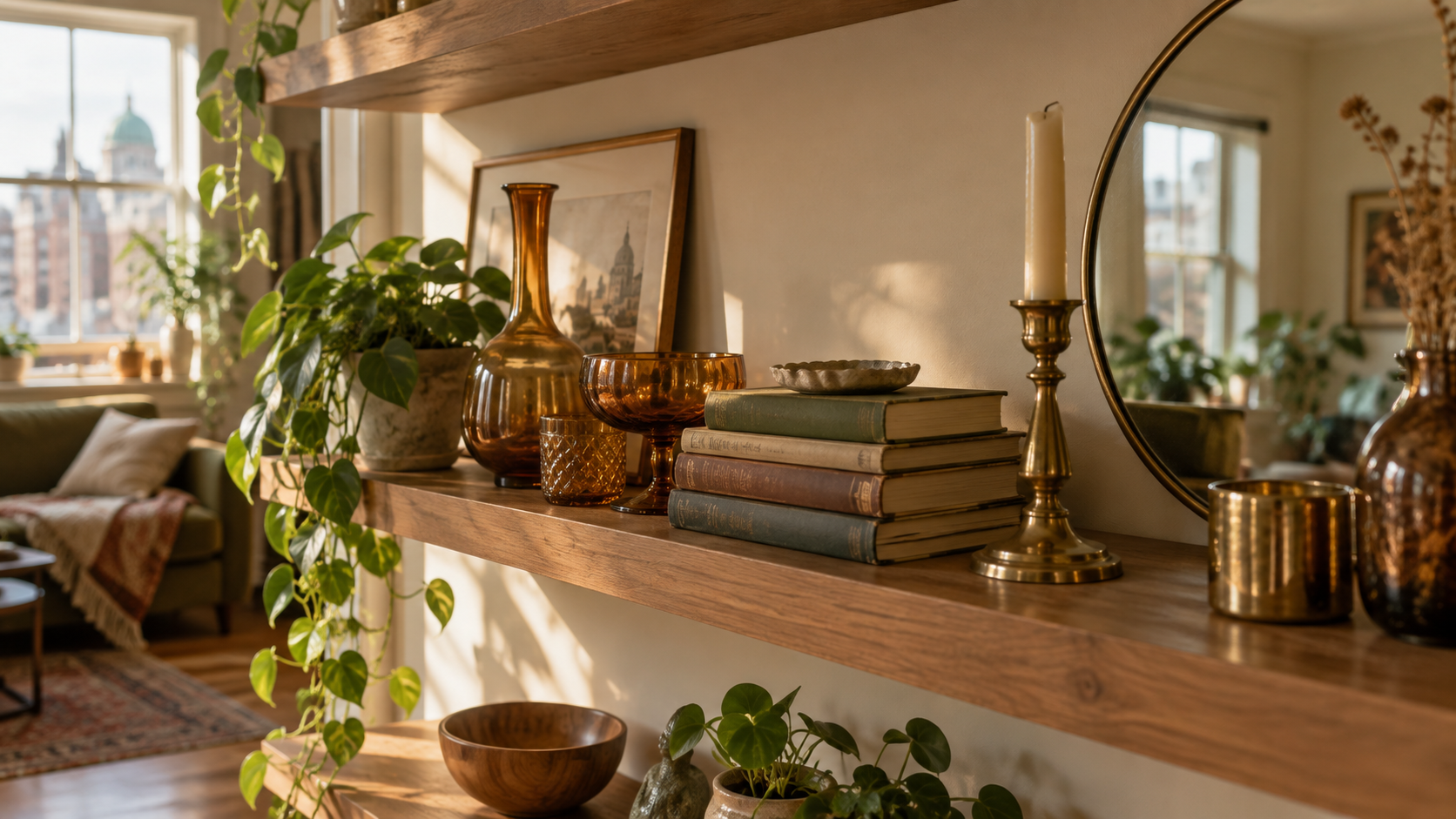
For displaying smaller vintage objects — ceramics, books, collectibles — the difference between a collection and clutter is often just the number three. Three objects on a shelf feel intentional. Nine objects on a shelf feel overwhelming. Group with restraint, and give each grouping a clear visual anchor.
The good news about thrift shopping: because pieces are affordable, you can afford to be ruthless. If something no longer serves the room — if it's crowding out something better — letting it go doesn't have to feel like a loss. That's the beauty of the circular economy. It finds a new home; your room finds its breath.
💡 Tip: The best thrift shoppers are also the best editors. Finding the piece is half the adventure — knowing when to let it go is the other half.
Step 5 — Mix Textures, Not Just Styles
One of the most underrated tools in vintage-contemporary mixing isn't furniture or colour — it's texture. Mixing textures from different eras adds depth and richness to a room without adding visual noise. In fact, a well-layered room can have far fewer pieces than a cluttered one and feel more full.
The key is contrast. Smooth contemporary surfaces — glass tabletops, lacquered cabinets, brushed metal — create a visual relief that makes the tactile richness of vintage pieces sing. The worn leather of a vintage armchair feels richer against a clean linen sofa. The grain of a teak credenza reads beautifully against a whitewashed wall.
Rugs are the easiest entry point. A vintage Persian or Moroccan rug can anchor an entire contemporary room, adding warmth and story without requiring a single furniture change. Vintage lamps are similarly high-impact: their brass, ceramic, or blown-glass forms bring a handmade quality that contemporary lighting often can't replicate.
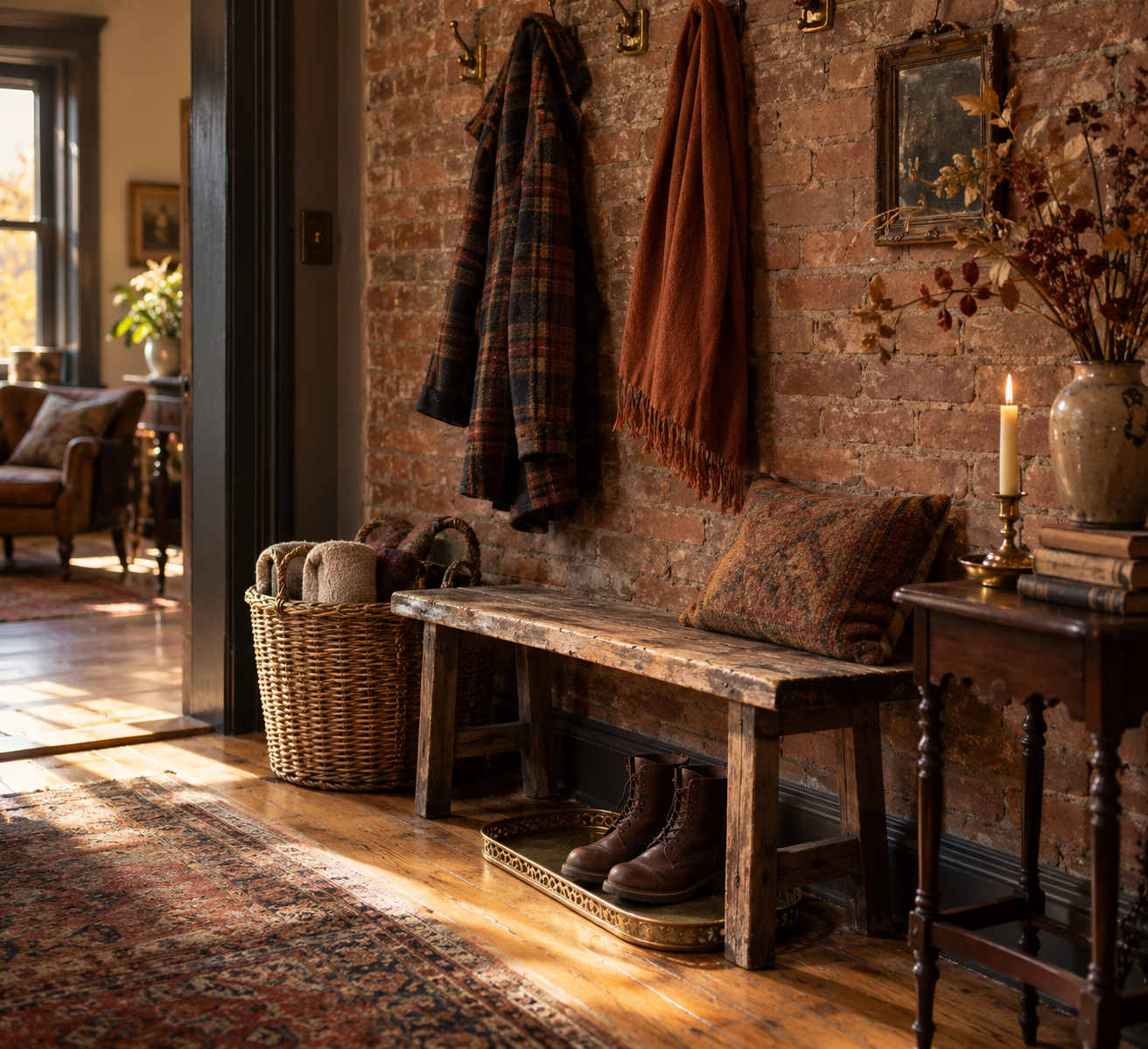
When thrifting for texture, look for pieces with what decorators call patina — the gentle evidence of a life well-lived. The darkened edges of a brass lamp. The slight sheen of worn walnut. These surfaces tell stories that new materials simply can't. And they pair beautifully with the clean, precise surfaces of contemporary design.
💡 Tip: At EcoDepot, vintage lighting pieces — lamps, fixtures, the occasional designer find — move quickly because experienced decorators know their power. Check new arrivals often.
Step 6 — Let Lighting Do the Heavy Lifting
If there's a single category of vintage find that delivers the most impact for the least effort, it's lighting. A single vintage lamp or pendant fixture can shift the emotional register of an entire room — and it does so without moving a single piece of furniture.
The principle here is deliberate contrast. Try pairing a vintage fixture in a contemporary room — a 1970s ceramic pendant over a minimalist dining table, an Artemide-era lamp beside a clean-lined sofa. The old-world warmth of the vintage piece softens the precision of its surroundings. The room gains soul without losing clarity.
The reverse works just as well: a contemporary fixture in a vintage-heavy room brings the whole space into the present tense. Sleek geometric pendants above an antique table. A minimalist arc floor lamp beside a velvet mid-century armchair. The contrast signals intention — this is a room that knows what it's doing.
Lighting is also one of the most affordable and frequently available vintage finds. EcoDepot's Plateau and Lachine locations regularly carry vintage lamps, retro floor fixtures, and the occasional designer piece — and they move fast. New arrivals land weekly, so if you're hunting something specific, it pays to visit often.
Step 7 — Shop With Intention, Not Just Impulse
Here is perhaps the most honest advice in this guide: most clutter doesn't come from having too many vintage pieces. It comes from buying vintage pieces without knowing where they'll go.
A beautiful object without a home becomes a problem. And in thrift shopping — where the thrill of the hunt is real and the prices are forgiving — it's easy to buy first and figure out the placement later. That "later" is where rooms lose their way.
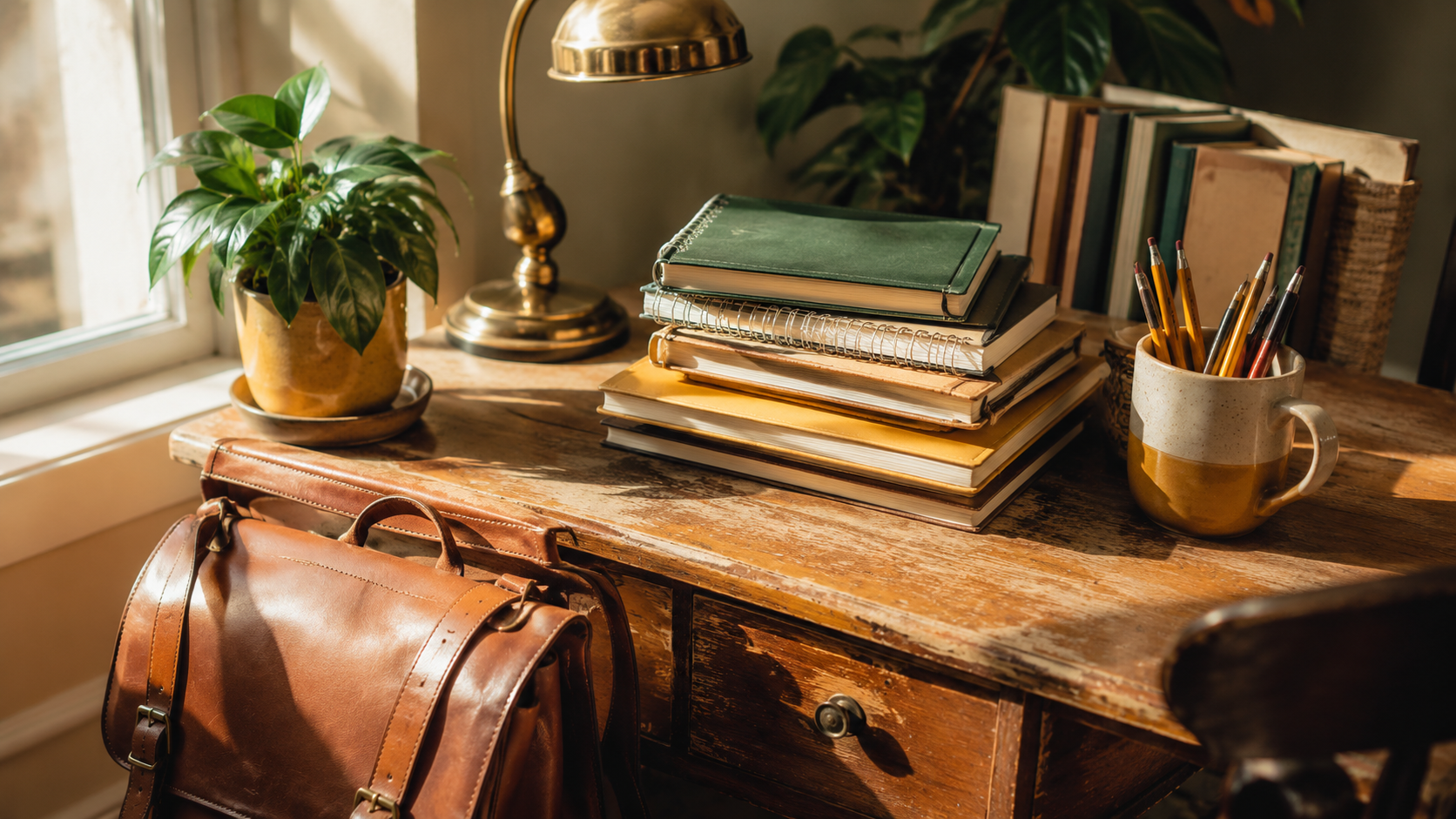
Before any shopping trip, do the prep work: Know the room. Know the function the piece needs to serve. Know the size range that works (measure — always measure). Know the colour palette you're working within. Bring photos of your space on your phone.
A focused brief makes the hunt more satisfying, not less. You're not limiting your options — you're sharpening your eye. And when you do find the right piece, you'll know it immediately.
It also helps to embrace the rhythm of thrift shopping. EcoDepot gets fresh inventory every week — which means patience is part of the practice. The right piece might not be there today. It might be there Thursday. The room isn't in a hurry, and neither are you.
💡 Tip: Make a simple brief on your phone before you thrift: room name, piece needed, size range (with measurements), colour palette, vibe words. Three minutes of prep makes every shop more focused — and more fun.
The Room That Feels Like You
Mixing vintage and contemporary decor isn't about following rules — it's about developing an eye and a practice. Start with a feeling. Anchor with the contemporary. Layer in the vintage. Build a colour palette that rhymes across eras. Give every piece room to breathe. Let texture do quiet work. Use lighting as your most powerful tool. And shop with intention.
The result isn't a perfect room. It's a personal room — one that looks like it's been gathered thoughtfully over time, because it has. That's precisely what makes it interesting.
Your most interesting room is still ahead of you. And it might start with something waiting on the shelves right now.